Toprecision: Al Cold Heading Fasteners – Galvanic Protection for EV, AI & Robotics
Having spent over two decades in the fastener industry, the most frequent question I get asked is: "How much technical know-how can a single screw possibly have?"
Ten years ago, I might have talked to you about thread precision and heat treatment. But today, in 2026, standing at the epicenter of the explosive growth in electric vehicle (EV) production and sales, I’ll tell you this: In the high-end precision fastening sector, we aren't just selling parts; we are selling "weight-reduction solutions" and "certainty in Total Cost of Ownership (TCO)."
By the end of this year, the global automotive fastener market is projected to surpass $18.9 billion. The core driver behind this growth is the EV industry's extreme range anxiety and its almost obsessive pursuit of lightweighting. Today, I want to share an in-depth review: At this pivotal point in 2026, how can fastener companies leverage technological innovation to "tighten" their core competitiveness in this multi-billion-dollar market?
PART.01
(Image)
The Material Game Under the "Weight Reduction" Mandate: The Rise of High-Strength Aluminum Alloys
(Image)
In the era of traditional internal combustion engine (ICE) vehicles, steel fasteners were the undisputed protagonists. But in the EV era, every 10kg of weight reduction translates to an additional range of about 2.5km. In this context, "replacing steel with aluminum" is no longer an option—it is an absolute necessity. For EV manufacturers striving to break through range limitations, every 1kg of weight reduction is a direct enhancement to their core competitiveness.
1. The Cold Heading Miracle at 630MPa
In the past, aluminum alloy fasteners were often criticized for insufficient strength, making them unsuitable for load-bearing scenarios like automotive chassis and three-electric systems (battery, motor, and electronic control). This was the biggest hurdle for the "aluminum replacing steel" trend. Today, however, this technological ceiling has been completely shattered with the iterative upgrades in cold heading technology. High-strength aluminum alloy bolts at the 630MPa level, forged through precision cold heading, have achieved mass production. They have successfully replaced steel connectors in non-critical areas, becoming a core choice for EV lightweighting.
Compared to traditional CNC machining, the advantages of the cold heading process are particularly striking: It not only boosts material utilization from about 70% to over 95%, drastically reducing raw material waste, but more importantly, it preserves the continuity of the metal fiber flow during the forming process. This significantly enhances the tensile and yield strengths of the bolts, resulting in more stable mechanical properties. For the lightweight chassis and three-electric systems of new energy vehicles, this combination of "high strength + lightweight + high cost-effectiveness" is currently the optimal solution and a key weapon for companies vying for market share in the EV fastener sector.
2. Breaking the "Forbidden Zone" of Magnesium Alloy Connections
As the commercialization of humanoid robots accelerates and ultra-lightweight vehicle body R&D upgrades, the application of magnesium alloys is becoming increasingly widespread. Weighing only a quarter of steel and two-thirds of aluminum, magnesium is the ideal material for ultimate lightweighting. However, industry veterans know that magnesium alloys have a fatal flaw: they are highly susceptible to galvanic corrosion. When a stainless steel bolt meets a magnesium alloy base in humid or salt-spray environments, it acts like a continuously discharging battery, rapidly triggering electrochemical corrosion and leading to connection failure. This has long been the core pain point hindering the widespread adoption of magnesium in fastening applications.
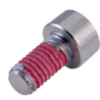
Currently, cutting-edge industry solutions have been implemented: using high-strength aluminum alloy bolts paired with specialized anti-galvanic-corrosion adhesives. This combination not only sustains the lightweight advantage, reducing the weight of the connection point by another 15%-20%, but also fundamentally isolates the occurrence of galvanic corrosion. After thousands of rigorous environmental tests, its connection stability far exceeds traditional solutions, serving as a "ticket" into the supply chains of premium OEMs. For companies laying out ultra-lightweight vehicle bodies and humanoid robots, this solution is the key to cracking material compatibility challenges.
PART.02
(Image)
From AI Servers to Humanoid Robots: The "Cross-Border" Synergy of Fasteners
(Image)
The fastener market in 2026 has long broken free from the confines of the automotive sector alone. With the boom in new energy and high-end manufacturing, the application boundaries of fasteners are constantly expanding. From EV chassis to AI servers, and from automotive three-electric systems to humanoid robots, every high-end scenario is spawning brand-new fastening demands, bringing fresh profit growth points to the industry. Cross-border deployment has become the key for fastener companies to break through growth bottlenecks.
1. The Stable Cornerstone of HPC-AI Servers
As computing centers undergo massive expansion, the computing power density of AI servers continues to rise, placing near-rigorous demands on fasteners. Clinch nuts and studs inside server sheet metal cabinets must not only meet extremely high standards for push-out and torsional resistance but also maintain zero loosening in a 24/7 environment of high temperature and high-frequency vibration. Any loosening could lead to server computing interruptions and hardware damage, causing losses that far exceed the value of the fasteners themselves.
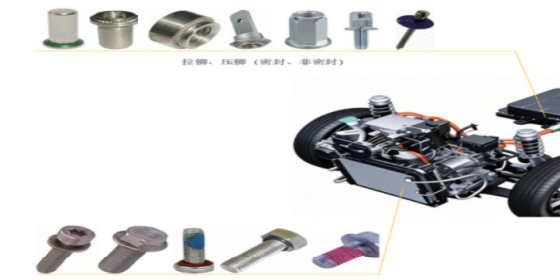
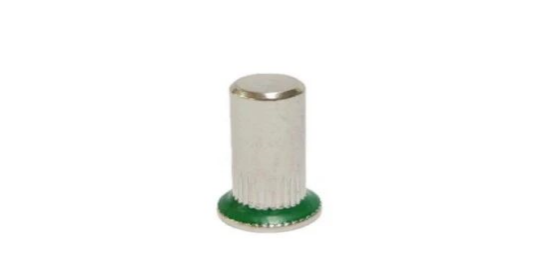
Our clinching and pull-riveting solutions have long surpassed the basic need for "fixing." Instead, they are tailor-made around the thermal management efficiency and structural stability of servers. By optimizing fastener precision tolerances (controlled within ±0.01mm) and upgrading connection processes, we effectively eliminate the risk of loosening caused by high-temperature vibrations. This adapts to the trend of server miniaturization and high density, ensuring the stable operation of computing centers and serving as a core supporting solution in the HPC-AI server sector.
(Image)
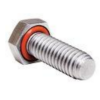
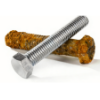
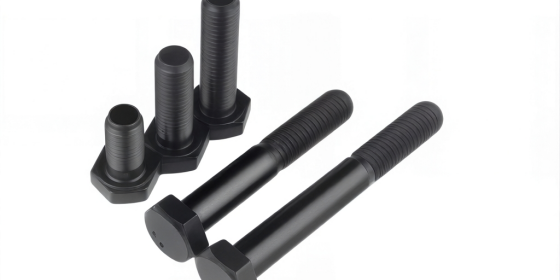
Yongjing 304 Stainless Steel Hexagon Full-Thread Screws
(Image)
2. The Precision Skeletons of Humanoid Robots
In the realm of humanoid robots, fasteners are evolving toward three major directions: "miniaturization," "extreme consistency," and "high reliability." Every connection point at a robot's joints directly relates to the precision and stability of its movements. Even a 0.01mm tolerance deviation can lead to joint stuttering, action errors, or even disrupt the robot's normal operation.
This is no longer simple hardware supply; it requires a one-stop connection solution that deeply integrates from the prototype design phase. Based on the stress conditions, action frequency, and precision requirements of robot joints, we customize miniaturized, high-strength fasteners and optimize connection structures. Through rigorous consistency testing, we ensure that every single fastener can accommodate the high-frequency action demands of humanoid robots, providing core support for their commercial deployment.
PART.03
(Image)
Escaping the "Low-Price Trap": Why TCO is the Lifeline for Enterprises
(Image)
As an operator who has been deeply rooted in this industry for over twenty years, I frequently see many fastener companies fall into a fatal misconception: over-focusing on explicit procurement costs (that 15% unit price of the part) and fighting vicious price wars, while ignoring the 85% of hidden costs. Especially in high-end scenarios like EVs and AI servers, the depletion of hidden costs often impacts a company's long-term profitability far more than the difference in unit price, and can even determine its survival.
What exactly are hidden costs? Many companies aren't actually clear. Let me explain it thoroughly today:
-
Design Collaboration Costs: Improper early-stage selection leads to frequent late-stage design changes and repeated sample testing, which not only delays project schedules but also drastically increases R&D costs.
-
Logistics & Inventory Costs: The risk of material shortages caused by global supply chain fluctuations can lead to customer production line shutdowns. The compensation costs we bear are often dozens of times the unit price of the part.
-
Assembly Efficiency Costs: Fluctuating fastener tolerances and inconsistent dimensions cause stuttering and downtime on customer assembly lines. Every minute of loss erodes the profits of both parties.
-
After-Sales Risk Costs: Product recalls due to anti-loosening failures or galvanic corrosion not only plunge companies into trust crises but may also result in massive compensation and the loss of core clients.
True industry leaders never sell mere parts; they sell "Total Cost Optimization (TCO)." By optimizing production processes (e.g., changing aluminum alloy sleeves from CNC machining to cold heading), we not only directly reduce the unit price by 10%-15% but also save clients millions in hidden expenditures by accelerating delivery and guaranteeing product consistency. For fastener companies, breaking free from low-price involution and focusing on TCO optimization is the core path to achieving long-term profitability and capturing the high-end market.
PART.04
(Image)
Conclusion
(Image)
Though small, fasteners are the "backbone" of modern industry. Whether it’s EVs, AI servers, or humanoid robots, the upgrade of every high-end manufacturing scenario relies on the support of high-quality fasteners; every industrial revolution brings new opportunities and challenges to the fastener industry.


















 Login
Login












 Contact
 WeChat
 粤ICP备2025493240号-1