PV & wind tower fasteners need high corrosion, load & wind resistance. This guide covers selection, types & applications.
With the rapid development of the new energy industry, photovoltaic (PV) and wind power, as core areas of clean energy, are continuously expanding in installed capacity. As the primary supporting components for PV and wind power equipment, PV mounting structures and wind turbine towers are exposed to outdoor environments for long periods. They endure severe conditions such as wind loads, rain and snow, temperature fluctuations, and salt spray erosion. The reliability of their connections directly determines the safe operation and service life of the entire new energy equipment. As the core components connecting various parts of PV mounting structures and wind turbine towers, the rationality of fastener selection and performance stability are crucial for ensuring the long-term stable operation of the equipment.
Compared to ordinary industrial scenarios, fasteners used for PV mounting structures and wind turbine towers have specific requirements: First, strong corrosion resistance is needed to withstand long-term outdoor exposure to moisture, rain, snow, salt spray, and ultraviolet rays, preventing corrosion failure. Second, high load-bearing capacity is required to support the equipment's own weight, wind loads, and ice/snow loads. Wind turbine towers, in particular, endure massive alternating wind loads, demanding extremely high strength and fatigue performance from fasteners. Third, excellent anti-loosening performance is necessary, as long-term outdoor vibration can easily loosen fasteners. Fourth, a long service life is essential; new energy equipment typically has a design life of 20-25 years, and fasteners must match this lifespan to reduce future maintenance costs. Based on these requirements, specialized fasteners must be selected rationally according to the specific characteristics of the scenario.
Specialized Fasteners for Photovoltaic Mounting Structures
PV mounting structures are primarily used to fix PV modules and are categorized into ground-mounted, rooftop, and tracking structures. Although the stress conditions and installation environments vary slightly, the core requirements for fasteners remain consistent: high corrosion resistance, wind load resistance, ease of installation, and long service life.
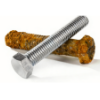
Common fasteners include high-strength bolts, stainless steel bolts, self-tapping screws, expansion bolts, and anchor bolts. High-strength bolts (typically grades 8.8 and 10.9) are mainly used for core connections such as main beams, columns, and diagonal braces. To resist outdoor corrosion, hot-dip galvanizing is the most widely used surface treatment, with a coating thickness of 80-150μm, providing excellent corrosion resistance and a service life of over 20 years. Dacromet coating is another common method, offering good salt spray resistance and low hydrogen embrittlement risk, making it suitable for high-strength bolts.
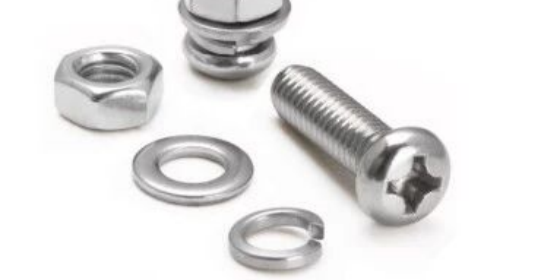
Stainless steel bolts are primarily used to connect PV modules to the mounting structure. Grade 304 stainless steel offers high cost-effectiveness and is suitable for inland areas. Grade 316 stainless steel contains molybdenum, providing superior salt spray and corrosion resistance, making it ideal for coastal areas, seaside locations, and chemical parks. Self-tapping screws, typically made of stainless steel, are used for connecting module frames to the structure. Expansion and anchor bolts connect the mounting structure to the foundation and must possess strong anchoring force to withstand vertical and horizontal wind loads.
Additionally, PV fasteners require appropriate anti-loosening measures and auxiliary components. Due to long-term outdoor vibration, anti-loosening methods such as serrated lock washers, nylon lock nuts, or thread-locking adhesives are commonly used. Flat washers increase the bearing area to protect the structure's surface, while spring washers assist in anti-loosening. When selecting fasteners, installation convenience and cost-effectiveness must also be considered. Standardized, versatile products should be prioritized to facilitate bulk procurement and installation while controlling project costs.
Specialized Fasteners for Wind Turbine Towers
Wind turbine towers are the core supporting components of wind turbines, often reaching heights of tens to hundreds of meters. They endure massive alternating loads from wind, the unit's own weight, and rotational forces. Therefore, the requirements for strength, fatigue performance, corrosion resistance, and anti-loosening performance are far higher than those for PV mounting structures. Fastener failure here can lead to catastrophic accidents such as tower collapse.
Common fasteners include high-strength large hexagon bolts, torque-shear high-strength bolts, anchor bolts, and tower flange connection bolts. Tower flange connection bolts are the core fasteners connecting tower sections and must withstand massive axial, radial, and alternating loads. They typically require grades of 10.9, 12.9, or even 14.9. The mainstream anti-corrosion treatment is hot-dip galvanizing combined with sealing treatment (coating thickness ≥100μm). For high-strength bolts of grade 12.9 and above, Dacromet combined with sealing treatment is also used to avoid hydrogen embrittlement failure.
High-strength large hexagon bolts rely on torque wrenches to control pre-tightening force, offering strong versatility. Torque-shear bolts ensure final pre-tightening force by snapping off a spline head, making construction intuitive, convenient, and easy to control, which is widely used in large-scale wind power projects. Anchor bolts, typically made of high-strength alloy structural steel (grade ≥10.9) with hot-dip galvanizing, secure the tower to the concrete foundation.
Due to the high-frequency vibration environment, tower fasteners require specialized anti-loosening and anti-corrosion auxiliary components. Disc springs are widely used as they effectively compensate for pre-tightening force attenuation and mitigate the impact of alternating loads. Sealing gaskets are also installed at flange connections to prevent rain and dust ingress and avoid crevice corrosion. Furthermore, fatigue performance and adaptability are critical; fasteners must be verified through fatigue testing and precisely matched with tower flanges to prevent uneven stress distribution.
















 Login
Login










 Contact
 WeChat
 粤ICP备2025493240号-1