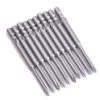
Six common fastener failures (fracture, loosening, thread stripping) explained with causes and prevention to enhance reliability.
In various industries such as mechanical manufacturing, construction engineering, and new energy, fasteners serve as the core foundation for connecting components, and their performance stability directly determines the overall operational safety and service life of the equipment. Whether it is small bolts for ordinary machinery or high-strength fasteners for high-end equipment like wind and solar power, failure can lead to equipment shutdown and production interruptions at best, or trigger major safety accidents, resulting in enormous economic losses and casualties at worst. Therefore, it is of great practical significance for fastener practitioners, equipment operation and maintenance personnel, and related industry professionals to deeply understand common failure modes, clarify their causes, and master corresponding preventive and response measures.
Based on industry practice, common fastener failures can be mainly divided into six categories: fracture, loosening, thread stripping, corrosion, galling, and deformation. Each failure mode has its typical characteristics and core causes; only targeted prevention and control can effectively reduce the probability of failure.
Fracture is one of the most dangerous and common failure modes of fasteners, mostly occurring in core load-bearing components such as high-strength bolts and screws. Based on the causes, it can be divided into three main types: overload fracture, fatigue fracture, and hydrogen embrittlement fracture. Overload fracture is mainly caused by the load on the fastener exceeding its tensile strength limit, leading to sudden fracture. The fracture surface is usually relatively flat, without obvious fatigue marks. This failure is mostly due to unreasonable design, such as failing to select fasteners with appropriate strength grades based on actual stress conditions during selection, or equipment overload and uneven stress during use, causing local fasteners to bear loads beyond their load-bearing capacity. For example, in the connection of building steel structures, mistakenly using Grade 8.8 bolts instead of Grade 10.9 bolts can easily cause overload fracture under heavy loads, affecting the stability of the steel structure.
Fatigue fracture is a progressive fracture caused by long-term repeated stress under alternating loads, vibration impacts, and other working conditions, and it is also the most common fracture form in industrial equipment. The typical characteristic of this type of fracture is the presence of obvious fatigue marks on the fracture surface. The marks start from stress concentration points, gradually expand, and eventually lead to fastener fracture. Common triggers include long-term equipment vibration, frequent load changes, insufficient installation precision of fasteners, and defects on the thread surface. For instance, the connecting bolts of wind turbine towers endure alternating stress and vibration caused by wind loads over the long term. If there are burrs in thread processing or coaxiality is not ensured during installation, fatigue fracture is highly likely to occur, severely threatening the safe operation of wind power equipment.
Hydrogen embrittlement fracture is a unique failure mode of high-strength fasteners, which is highly harmful and concealed. Its core cause is that during surface treatment processes such as pickling and electroplating, hydrogen atoms penetrate into the metal interior, gather under stress to form hydrogen bubbles, reduce metal toughness, increase brittleness, and ultimately cause delayed fracture. This fracture usually occurs within a period of time after the fastener is installed and used, rather than instantaneously, making it difficult to detect in advance. Hydrogen embrittlement fracture mostly occurs in high-strength bolts of Grade 10.9 and above, especially those subjected to electrochemical treatments such as galvanizing. If effective hydrogen baking is not carried out, the risk of hydrogen embrittlement will be significantly increased. For example, if high-strength bolts on automobile chassis fail due to hydrogen embrittlement, it may cause the bolts to suddenly break while the vehicle is driving, leading to traffic accidents.
Loosening is another common form of fastener failure. Although it seems less harmful than fracture, it may actually trigger a series of cascading failures. Fastener loosening is mainly caused by factors such as vibration, impact, temperature changes, and creep of connected parts, leading to a decrease in the pre-tightening force of the threaded connection and ultimately losing its fastening function. Loosened fasteners will cause relative displacement between components, exacerbate wear, and generate abnormal noises. In severe cases, it can lead to component detachment and equipment disintegration. For example, if the fasteners of a PV mounting structure loosen, it will cause the structure to tilt and the modules to shift, affecting the lighting efficiency of the PV modules, and even causing the structure to collapse under severe weather conditions such as strong winds and rainstorms.
There are three main causes of fastener loosening: First, insufficient pre-tightening force. If the fasteners are not tightened according to the standard torque during installation, the friction force of the threaded connection will be insufficient to resist vibration and impact. Second, unstable friction coefficient. Oil stains or impurities on the thread surface, or peeling off of the surface treatment layer, will cause fluctuations in the friction coefficient during tightening, making it impossible to accurately control the pre-tightening force. Third, the influence of working conditions. When the equipment is in a vibrating and high-temperature environment for a long time, the connected parts undergo creep and deformation, or the threads wear out, causing the pre-tightening force to gradually decay. In addition, failing to adopt effective anti-loosening measures, such as not installing anti-loosening washers or not using nylon lock nuts, will also significantly increase the risk of fastener loosening.
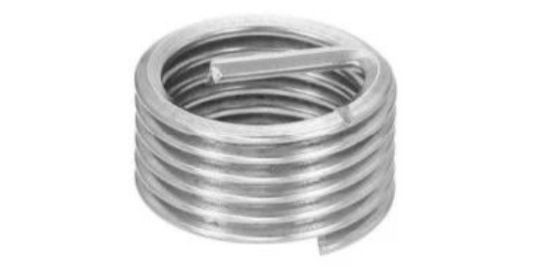
Thread stripping, also known as thread galling, is the main manifestation of fastener thread failure. It refers to the wear and deformation of the thread tooth surface, causing the bolt and nut to fail to mesh normally, making it impossible to achieve fastening or disassembly. The main causes of thread stripping include insufficient thread processing precision, improper material selection, non-standard installation operations, and corrosive wear. During thread processing, if the tooth surface is rough, the pitch deviation is too large, or there are defects such as burrs and cracks, it will lead to uneven stress during meshing and accelerate tooth surface wear. If the selected fastener material has insufficient hardness or does not match the material of the connected part, the thread tooth surface will also be prone to wear and deformation. Excessive force during installation, deviation in tightening angle, or using inappropriate tools will directly damage the thread tooth surface. Long-term exposure to humid and corrosive environments will cause corrosion on the thread surface, also leading to thread stripping failure.
Thread stripping failure will not only make the fastener unusable but also increase equipment maintenance difficulty and costs due to the inability to disassemble it. For example, fasteners in chemical equipment are exposed to corrosive media for a long time, and their threads are prone to corrosive stripping, making it impossible to disassemble and inspect the equipment normally. Destructive disassembly can only be performed, increasing maintenance costs and downtime.
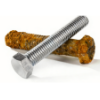
Corrosion failure is a common failure mode of fasteners in harsh environments. It is mainly caused by chemical reactions between the fastener and water, oxygen, corrosive media, etc., in the surrounding environment, leading to surface oxidation and rusting, which in turn affects its mechanical properties and connection reliability. According to the type of corrosion, it can be divided into uniform corrosion, pitting corrosion, and crevice corrosion. Uniform corrosion refers to the overall oxidation and rusting of the fastener surface, leading to a reduction in cross-sectional size and a decrease in strength. It is common in carbon steel fasteners without anti-corrosion treatment or with improper treatment. Pitting corrosion refers to corrosion concentrated in local areas on the fastener surface, forming tiny pits that gradually penetrate into the metal interior, eventually leading to perforation and fracture of the fastener. It mostly occurs on the surface of stainless steel fasteners, especially in chloride-containing media environments. Crevice corrosion occurs in the crevices between the fastener and the connected part. Due to water accumulation and oxygen deficiency in the crevice, a corrosion cell is formed, aggravating local corrosion. It is common in flange connections and the contact parts between washers and fasteners.
The harm of corrosion failure lies not only in reducing the strength and service life of the fastener but also in causing the thread to seize and become impossible to disassemble, and even triggering secondary failures such as connection loosening and fracture. For example, fasteners for PV mounting structures by the sea are exposed to seawater and salt spray erosion for a long time. If effective anti-corrosion treatment is not adopted, corrosion failure is highly likely to occur, affecting the stability and service life of the mounting structure.
Galling, also known as seizing or sticking, refers to the adhesion and wear of the thread tooth surface during the tightening or disassembly of fasteners, making it impossible for the bolt and nut to rotate relative to each other, or even completely seizing. Galling mainly occurs in fasteners made of materials such as stainless steel and high-temperature alloys, especially under harsh working conditions such as high temperature, high pressure, and vibration. Its causes mainly include: unlubricated or improperly lubricated thread surfaces, causing excessive friction during meshing; high inherent viscosity of the material, making it easy to adhere during stress friction; excessive tightening torque during installation, causing plastic deformation of the thread tooth surface and subsequent adhesion; and under high-temperature environments, oxidation of the fastener material, where the formed oxide layer peels off during friction, aggravating adhesion.
Galling failure will make the fastener impossible to disassemble or install, bringing great inconvenience to equipment maintenance. In severe cases, destructive methods such as cutting and grinding are required for disassembly, which not only increases maintenance costs but may also damage the connected parts. For example, if fasteners in high-temperature parts of wind power equipment are improperly lubricated or the material is unreasonably selected, galling failure is highly likely to occur, affecting the normal maintenance of the equipment.
Deformation failure refers to the plastic deformation of fasteners under stress or temperature changes, causing changes in their size and shape, making them unable to normally achieve the connection and fastening function. Common forms of deformation include bending of the bolt shank, deformation of the head, and deformation of the thread. The main causes of deformation failure include: the load borne by the fastener exceeds its yield strength, leading to plastic deformation; uneven stress and angle deviation during installation, causing excessive local stress and deformation; under high-temperature environments, the strength of the fastener material decreases, making it prone to thermal deformation; and defects in the material itself, such as coarse grains and insufficient toughness, will also increase the risk of deformation.
Fasteners with deformation failure cannot continue to be used. If they are not discovered and replaced in time, it will lead to connection loosening and uneven stress, thereby triggering other forms of failure. For example, if the connecting bolts of a PV mounting structure undergo bending deformation, it will cause uneven stress on the structure. Long-term use may cause safety hazards such as structure tilting and collapse.

















 Login
Login










 Contact
 WeChat
 粤ICP备2025493240号-1