Nine 2025 accidents exposed construction corruption. The Jianzha Bridge collapse proves substandard fasteners kill.
Safety is no trivial matter, and responsibility outweighs everything else. On the morning of February 27, the Ministry of Emergency Management held a special press conference. Li Haowen, Director of the Department of Investigation and Statistics, provided a detailed briefing on the national work safety situation in 2025. While acknowledging the achievements made throughout the year, he directly pointed out the prominent problems currently existing in the field of work safety. In particular, the exposure of deep-rooted issues in the construction sector and the details of the catastrophic collapse of the Jianzha Bridge in Qinghai were deeply distressing, sounding a deafening alarm for safety in the fastener industry. As operators of a fastener website with years of industry experience, we know well that although fasteners are small, they serve as the "last line of defense" for engineering safety. Today, guided by the spirit of the press conference, we analyze the root causes of the accident to warn the entire industry to hold the bottom line of quality.
At the press conference, Director Li Haowen clearly stated that the national safety situation in 2025 was generally stable, achieving hard-won results: major accidents were kept in the single digits, with a total of 9 major accidents and 129 fatalities. No particularly major accidents occurred, the number of major and severe accidents remained flat year-on-year, and the death toll dropped by 11.6%. Various production safety accidents and fatalities decreased by 8.7% and 7% year-on-year, respectively, showing a stable and improving safety trend. This achievement is inseparable from the unremitting efforts of the national emergency management system and the implementation of safety responsibilities across all industries. However, behind these achievements, hidden safety hazards and profound lessons must not be ignored.
"Each of the nine major accidents is heartbreaking, and each deserves deep reflection," Director Li Haowen emphasized at the press conference. Looking at these nine major accidents and various typical accidents since last year, some prominent problems in the field of work safety have not been eradicated and are even showing a tendency to occur frequently in some regions and units. Among them, illegal and irregular subcontracting, simply winning bids based on the lowest price, and层层 "skimming" (siphoning profits at every level) in the construction sector have become the main inducements for major safety accidents. Moreover, loopholes in the procurement of materials and equipment have directly pushed engineering safety to the brink of danger.
Among the numerous typical accidents, the catastrophic collapse of the Jianzha Yellow River Grand Bridge in Qinghai last year was highlighted by Director Li Haowen as a key case. The tragedy that claimed 16 lives had a deeply distressing truth behind it, highlighting the decisive role of basic components like fasteners in engineering safety. According to the press conference, this accident was not an accident but an inevitable tragedy caused by the cascading failure of human responsibilities. Illegal subcontracting and substandard fasteners were the two fatal factors that brought down the bridge.
The investigation results showed that a total of 21 labor contracts were signed for the Jianzha Bridge construction project, of which 18 involved illegal subcontracting, reaching a staggering rate of 85.7%. This figure is shocking. After winning the bid, the legitimate enterprise did not organize professional construction teams to carry out the work as required. Instead, through subcontracting and profit skimming, the project was dismantled and handed over to multiple "makeshift teams" that lacked corresponding qualifications, professional technology, and safety management capabilities. In order to cut costs and maximize profits, these construction teams ignored engineering safety regulations. Key links such as technical briefings, safety training, and quality control were reduced to mere formalities, planting fatal hidden dangers from the very beginning of the project.
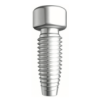
More fatally, there were severe loopholes in the procurement of materials and equipment, which served as the direct trigger for the bridge collapse—a few substandard screws ultimately claimed 16 precious lives. It is reported that as a key railway bridge, the fasteners used in the critical load-bearing parts of the Jianzha Yellow River Grand Bridge directly relate to the stability and safety of the bridge structure. According to national engineering construction standards, such core fasteners must undergo strict quality testing to ensure that parameters such as strength, toughness, and corrosion resistance meet design requirements before they can be put into use.
However, in this project, the procurement process was a mere formality, and quality testing became a decoration. In order to reduce procurement costs, relevant personnel ignored the safety bottom line and selected substandard, inferior screws. These screws failed to meet strength standards and lacked sufficient toughness, making them completely unable to withstand the load and operational vibrations during bridge construction. Under long-term overload, they eventually fractured and failed, triggering a chain reaction: the anchor beam broke, the steel cables snapped, and the main arch collapsed. The main arch rib, a steel beam hundreds of meters long, collapsed in a very short time. The 16 construction workers performing steel strand tensioning operations at high altitudes had no time to react and were swept into this sudden disaster, ultimately losing their lives. Sixteen families were plunged into endless grief.
A tiny screw, with negligible value, was almost insignificant compared to the hundreds of millions of yuan cost of the entire bridge, yet it became the "last straw" that broke the bridge. Behind this accident lies not only the chaos in the construction sector but also reflects the indifference of some enterprises to the quality of basic components like fasteners. As the "industrial rice" of engineering construction, fasteners are core components that connect various structures and bear various loads. Even a single unqualified screw can trigger systemic safety accidents, causing irreparable loss of life and property.
Director Li Haowen emphasized at the press conference that illegal subcontracting and simply winning bids based on the lowest price in the construction sector are essentially a lack of sense of responsibility and a fluke mentality driven by profit. In pursuit of profit maximization, some enterprises do not hesitate to sacrifice engineering quality and safety.层层 subcontracting continuously compresses project profits, and ultimately, costs can only be reduced by using inferior materials and lowering construction standards. Fasteners and other basic components often become the objects of "sacrifice."
This phenomenon is not an isolated case; similar problems still exist in the current construction sector. Some enterprises focus excessively on price when purchasing fasteners, blindly choosing low-priced and inferior products while ignoring product quality and compliance. Little do they know that the seemingly saved costs may eventually be exchanged for major safety accidents and huge losses. As operators of a fastener website, we have also found in our daily work that some purchasers hold the misconception that "screws are pretty much the same, so low price is fine," ignoring the direct link between fastener quality and engineering safety. This perception not only harms themselves but also threatens the safety and stability of the entire project.
In fact, the quality of fasteners directly determines the service life and safety performance of a project. Whether it is large-scale infrastructure such as bridges, buildings, and roads, or industrial equipment, aerospace, and new energy vehicles, fasteners play the core role of connecting, fixing, and bearing loads. Especially in the construction sector, high-strength, high-precision, and corrosion-resistant fasteners are key to ensuring the stability of engineering structures. Once unqualified products are selected, it is like burying a "ticking time bomb" in the project, which could trigger safety accidents at any time.
Combining the spirit of the press conference and the lessons from the Jianzha Bridge accident, we can easily see that regulating construction processes and holding the bottom line of fastener quality have become the top priorities in current work safety. On the one hand, relevant regulatory authorities need to increase the investigation and punishment of illegal subcontracting and low-price bidding in the construction sector, improve the regulatory system, strengthen whole-process supervision, curb illegal and irregular behaviors from the source, and consolidate the main responsibilities of enterprises. On the other hand, fastener industry enterprises must adhere to their original aspiration for quality, strictly follow national and industry standards, strengthen quality control during the production process, and prevent unqualified products from entering the market.
For engineering purchasers, it is even more important to abandon the erroneous concept of "price first" and establish a procurement awareness of "quality first, safety foremost." When purchasing fasteners, priority should be given to suppliers with complete qualifications, reliable quality, and inspection reports. Strict warehouse inspection systems must be implemented to ensure that every fastener meets engineering safety requirements. At the same time, supervision of fastener use during construction must be strengthened to eliminate corner-cutting and passing off fake for genuine products. From procurement, use, to testing, every link must build a solid defense line for engineering safety.
The stable and improving national work safety situation in 2025 is the result of joint efforts by the whole society, but we cannot relax for a moment. The tragedy of the Jianzha Bridge in Qinghai and the loss of 16 precious lives have given the entire industry a profound safety lesson—there is no fluke in safety; details determine life and death. A substandard screw destroyed not only a bridge but also the happiness of 16 families and the trust of the whole society in engineering safety.
As operators of a fastener website, we always bear the responsibility of conveying positive energy in the industry, popularizing safety knowledge, and regulating industry development. Here, we call on the entire industry: hold the bottom line of quality and reject substandard fasteners. We call on all engineering construction units: abandon the fluke mentality, consolidate safety responsibilities, attach importance to the quality of basic components like fasteners, and prevent safety accidents from the source. We call on relevant regulatory authorities: strengthen supervision, severely investigate illegal and irregular behaviors, and safeguard the lives and property safety of the people.





















 Login
Login









 Contact
 WeChat
 粤ICP备2025493240号-1