2025 NEV sales >16M units, penetration >50%. Driving high-performance, lightweight fastener demand — big opportunities for domestic enterprises.
Recently released data from the China Association of Automobile Manufacturers (CAAM) shows that China's automotive industry delivered an outstanding performance in 2025. Both production and sales surpassed 34 million units, setting a new all-time high and maintaining the top global position for the 17th consecutive year. Among them, new energy vehicles (NEVs) served as the core growth engine, with production and sales both exceeding 16 million units. The share of NEVs in domestic new car sales surpassed 50%, marking that China's automotive industry has officially entered a new era dominated by new energy. This shift has also brought structural growth opportunities to the upstream fastener industry.
Specifically, China's automobile production and sales in 2025 reached 34.531 million and 34.4 million units respectively, representing year-on-year growth of 10.4% and 9.4%. This marks the third consecutive year of maintaining a scale of over 30 million units, demonstrating strong industrial resilience. The momentum of new growth drivers was particularly evident, with NEV production and sales reaching 16.626 million and 16.49 million units respectively, a year-on-year increase of nearly 30%. China has topped the global NEV market for 11 consecutive years. This achievement is the result of the resonance between policy support, technological breakthroughs, and market demand.
Chen Shihua, Deputy Secretary-General of the CAAM, stated that in 2025, the intensified expansion of the "two new" policies, the intensive launch of new models by enterprises, and the continuous release of terminal demand drove automobile production and sales to achieve better-than-expected growth. As the main sector, the passenger vehicle market performed steadily, with annual production and sales both breaking the 30 million mark. The market share of Chinese brand passenger vehicles climbed to 69.5%, an increase of 4.3 percentage points year-on-year, indicating the continuous strengthening of core competitiveness of domestic automakers in the NEV sector. The commercial vehicle market also showed signs of recovery, with production and sales returning to over 4 million units, injecting recovery momentum into the specialized fastener market for commercial vehicles. Foreign trade also performed strongly, with annual automobile exports exceeding 7 million units, including 2.615 million NEVs. The expansion of overseas markets further amplified the supporting demand for fasteners.
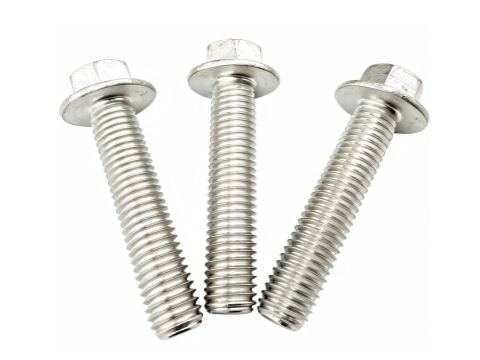
The explosive growth of NEVs is profoundly reshaping the upstream supply chain landscape. As core basic components of automobile manufacturing, the fastener industry is encountering unprecedented development opportunities. Compared to traditional internal combustion engine vehicles, NEVs have stricter performance requirements for fasteners, with lightweight, high strength, and corrosion resistance becoming core demands. Since key components such as battery packs and electric drive systems must withstand complex working conditions, fasteners not only require higher strength grades but also need to adapt to multi-material hybrid connection scenarios. The application proportion of high-performance materials like stainless steel and aluminum alloys continues to rise.
Industry data shows that the fastener usage per NEV is 20%-30% higher than that of traditional fuel vehicles, with a significant increase in value. In battery pack structures, special-shaped bolts for fixing modules require strength grades of 800-1000MPa and tolerance precision of 0.5N·m, making the integration of cold heading and machining technologies a core enterprise competitiveness. The surge in demand for corrosion-resistant fasteners in electric drive and control systems has propelled stainless steel fasteners from partial applications to critical structural components. Domestic enterprises such as Zhejiang Dongming and Shandong Tengda have taken the lead in developing related products to meet the complex working condition requirements of NEVs.
The rise of Chinese brand passenger vehicles has brought opportunities for upgrading supporting parts for domestic fastener enterprises. As domestic automakers like BYD, NIO, and Li Auto expand their market share, more fastener companies have passed the IATF 16949 quality system certification and entered core supply chains. Relying on their customization capabilities, companies like Zhejiang Huayuan have supplied special-shaped fasteners and seat locks to multiple popular NEV models. They have also entered international brand supply chains through global Tier-1 suppliers, achieving dual breakthroughs in "domestic supporting and overseas expansion." This deep binding relationship is driving fastener enterprises to transform from mere product suppliers to system solution providers.
Under the trend of industrial upgrading, the pace of technological iteration in the fastener industry is accelerating. Intelligent manufacturing and digital quality traceability have become key competitive advantages for enterprises. In 2025, it is expected that over 40% of key enterprises will build smart factories, achieving full-process data monitoring and significantly improving product consistency. Driven by the "dual carbon" goals, the application proportion of environmentally friendly processes such as chromium-free passivation and hot-dip galvanizing replacement continues to increase, making green production an industry consensus. Meanwhile, the popularization of 800V high-voltage platforms and integrated die-casting body technologies has spurred demand for special fasteners with high-temperature resistance and anti-electrochemical corrosion properties. Smart fasteners, such as preload monitoring bolts with sensors, have begun small-batch installation trials.
In terms of market scale, China's standard fastener market for automobiles is expected to exceed 82 billion yuan in 2025, with NEV-related fasteners accounting for 34%. The export market also holds considerable potential. Driven by the growth in NEV exports, the export scale of automobile fasteners is projected to reach 18 billion yuan, mainly flowing to "Belt and Road" countries such as Southeast Asia and the Middle East. The 16th Shanghai Fastener Professional Exhibition, scheduled for June 2026, will also focus on NEV application scenarios, building a platform for technical exchange and market matchmaking to help the industry seize development opportunities.















 Login
Login











 Contact
 WeChat
 粤ICP备2025493240号-1