











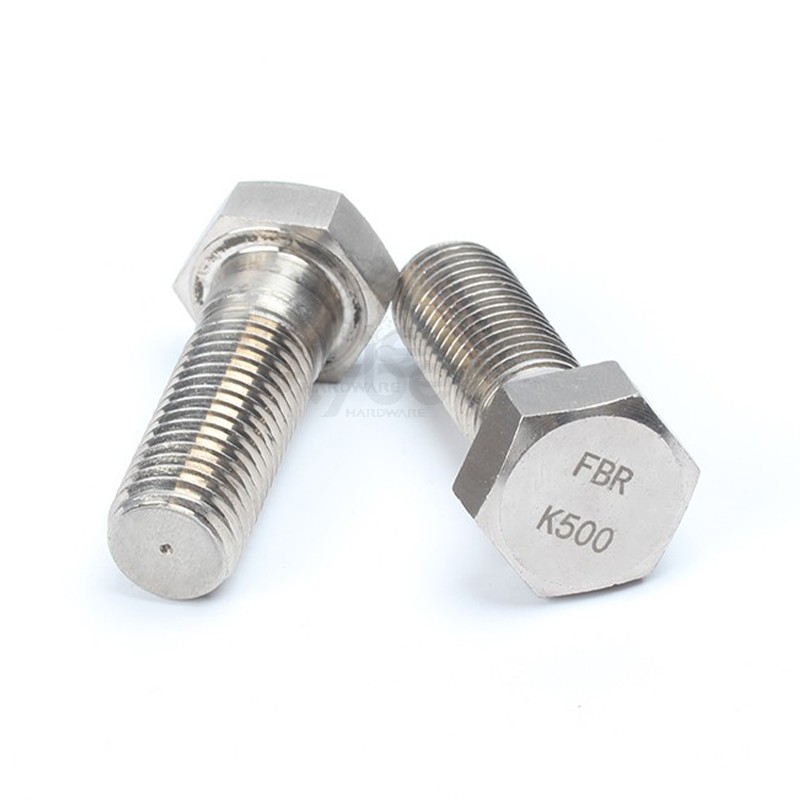
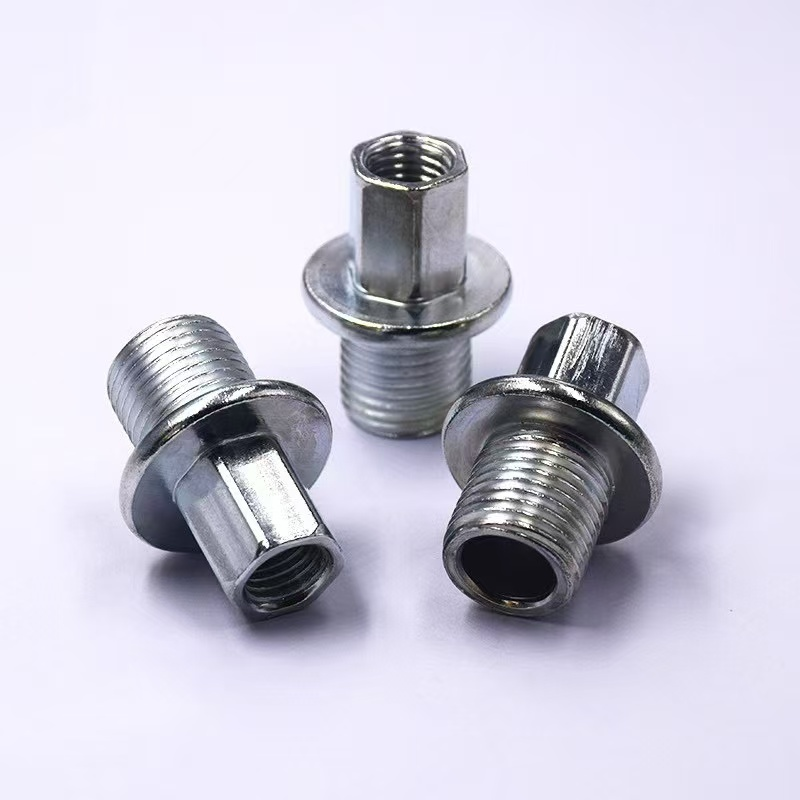

As a traditional manufacturing sector, the fastener industry has long faced significant pain points, including low production efficiency, difficult quality control, and high management costs. The industry's average yield rate sits at only 92%, lagging 5 percentage points behind international advanced standards. Manual inspection accounts for 60% of operations, resulting in low efficiency and high error rates, while manual statistical methods for production data lead to delayed decision-making. With the 14th Five-Year Plan for Intelligent Manufacturing Development setting a goal to build 20 intelligent fastener demonstration factories, the construction of digital factories has become the core pathway for industrial upgrading, driving enterprises to achieve a qualitative leap from "automated production" to "intelligent operations."
The Core Architecture of Digital Factories
The core architecture of a digital factory consists of three layers: equipment interconnection, data integration, and intelligent applications. Equipment interconnection at the foundational layer is essential. By installing sensors and industrial gateways, enterprises achieve comprehensive networking of production equipment. Leading companies in the Yangtze River Delta have increased their production line automation rates from 65% to 92%. For instance, Ningbo Sijin Machinery connected over 20 pieces of equipment—including cold heading machines, thread rolling machines, and heat treatment furnaces—to the Industrial Internet. This enables real-time monitoring and remote diagnosis of equipment status, reducing the equipment failure rate from 8% to just 1.5%.
Digital upgrades in the inspection phase have yielded remarkable results. Enterprises are introducing AI visual inspection systems to replace manual tasks for inspecting dimensions and surface defects. This achieves an inspection accuracy of 0.001mm and boosts inspection efficiency by 10 times. One enterprise saw its bolt yield rate jump from 93% to 98.5%. Furthermore, automated logistics circulation through the use of automated stereoscopic warehouses and AGV (Automated Guided Vehicle) robots has improved raw material inbound and finished product outbound efficiency by 60%, while increasing inventory turnover rates by 40%.
Data Integration as the Factory "Brain"
Data integration and analysis form the "brain" of the digital factory. Enterprises establish data middle platforms to consolidate eight categories of data—including equipment, production, and quality metrics—into unified data assets. Shanghai Zhengyuan New Energy's data middle platform connects over 1,200 data collection points and processes more than 5 million data entries daily. Through big data analysis, they identified correlations between heat treatment temperature fluctuations and bolt strength. After optimizing process parameters, product strength consistency improved by 25%.
Additionally, digital twin technology enables virtual mapping of production processes. An enterprise in Haiyan, Zhejiang, built a full-process digital twin model capable of simulating production outcomes under different process parameters. This shortened the process optimization cycle from 15 days to just 2 days and increased material utilization to 95%. Blockchain technology is also being applied to supply chain traceability; by recording data on raw material sources, production processes, and inspection results on-chain, enterprises achieve full lifecycle product traceability, significantly enhancing customer trust.
Realizing Value Through Intelligent Application Scenarios
The implementation of intelligent application scenarios unleashes the true value of digitalization:
-
Intelligent Production Scheduling: Algorithms optimize production plans by considering order priority, equipment capacity, and raw material inventory. This increases equipment utilization from 75% to 90% and shortens the order delivery cycle from 15 days to 7 days.
-
Predictive Maintenance: Based on equipment operational data, this system provides early warnings for potential failures. One enterprise reduced equipment maintenance costs by 30% and downtime by 60%.
-
Energy Management Systems: Precise energy saving is achieved by monitoring energy consumption across various stages and optimizing usage schemes. This lowers unit capacity energy consumption by 27%, saving over 2 million yuan in electricity costs annually.
-
Closed-Loop Quality Management: Every step, from raw material inspection to finished product dispatch, is recorded. When quality issues arise, root causes can be quickly pinpointed, slashing quality traceability time from 2 days to just 10 minutes.
Phased Implementation and Policy Support
Building a digital factory is not an overnight task; enterprises must advance in stages based on their scale and foundation. Small and medium-sized enterprises (SMEs) can start with single-point digital retrofits, focusing on connecting key equipment and automating inspections. With an investment of approximately 5 to 10 million yuan, they can achieve a 20% increase in production efficiency in the short term. Large and medium-sized enterprises can pursue full-process digital construction by building data middle platforms and intelligent application systems. With investments ranging from 50 million to 200 million yuan, they can realize a long-term comprehensive benefit increase of over 30%. Policy support has further lowered transformation costs; the Yangtze River Delta's 5 billion yuan intelligent factory retrofit fund offers subsidies covering up to 30% of retrofit costs, while the Ministry of Industry and Information Technology's (MIIT) special funds for strong foundation projects also prioritize digital transformation initiatives.
As of 2025, China has built 8 intelligent fastener demonstration factories, driving over 30 billion yuan in intelligent retrofit investments across the industry. It is projected that by 2030, the penetration rate of automated production lines will reach 85%, digital factory coverage will exceed 60%, yield rates will rise to 97.5%, and production efficiency will improve by over 50%. Digital transformation is not only reshaping the production models of the fastener industry but also cultivating core corporate competitiveness, laying a solid foundation for the sector's transition toward high-end manufacturing.