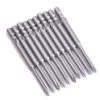
Yongjing Precision debunks the myth: friction coefficient depends on material, surface, and lubrication, not tightening force.
On fastener assembly sites, we frequently hear the saying: "The tighter you tighten the bolt, the lower the friction coefficient, and the more secure the fastening." Many veteran assembly technicians and procurement personnel even treat this as an industry consensus. In critical applications such as wind power, automotive chassis, and chemical equipment, they blindly pursue "tightening force," believing that tighter is always safer.
As Yongjing Precision, a company deeply rooted in the precision fastener industry for years, we have witnessed numerous accidents caused by this misconception during client engagements and on-site operations. Over-tightening leads to stripped threads, abnormally reduced friction coefficients causing loosening, and even bolt fractures, resulting in equipment downtime and safety hazards. Today, Yongjing Precision will use a professional perspective to thoroughly explain the core relationship between bolt tightening force and friction coefficient, correct this industry myth, and share practical insights. Whether you are involved in assembly, procurement, or production, this guide will help you avoid pitfalls, select the right components, and connect with Yongjing Precision's customized solutions to ensure assembly safety and stability.
Let’s clarify the core conclusion first: The tighter a bolt is screwed, the friction coefficient does not continuously decrease. Instead, it follows a pattern of "initial stability, followed by a drop, and instability beyond the limit." Many people confuse the relationship between "tightening torque," "preload," and "friction coefficient," mistakenly believing that greater tightening force will continuously lower the friction coefficient. In reality, there is a clear critical threshold between the two. Exceeding this threshold not only causes an abnormal drop in the friction coefficient but also leads to bolt failure. This is a key point Yongjing Precision emphasizes when providing assembly guidance to clients.
Yongjing Precision is committed to "providing products and solutions that earn customer trust, enhancing product performance, and reducing total costs for our clients." Today, we will dissect the underlying logic of this misconception from a professional standpoint, helping you understand the factors affecting the friction coefficient, the critical threshold for tightening force, and the correct assembly methods, thereby completely eliminating hazards caused by cognitive biases.
01 Clarifying the Misconception: Are the Core Factors of the Friction Coefficient Unrelated to "Tightening Force"?
To understand whether "the tighter the bolt, the lower the friction coefficient," we must first be clear: the core factors influencing the friction coefficient are not the tightening force, but rather three main elements: material, surface condition, and lubrication. Tightening force only has an indirect effect and exists within a critical range—this is the core conclusion summarized by Yongjing Precision based on thousands of assembly tests.
The root cause of the "tighter equals lower friction coefficient" misconception is essentially confusing "frictional resistance" with "friction coefficient." Simply put, the friction coefficient is an inherent property of the material (affected by surface condition and lubrication), while frictional resistance is the product of the friction coefficient and normal pressure. Tightening force determines the "normal pressure," not the friction coefficient itself.
Take a common example: The 10.9-grade high-strength bolts produced by Yongjing Precision are made of 42CrMo material and feature a zinc-aluminum coating. Their friction coefficient is typically stable between 0.12 and 0.15 (the industry standard range). Whether you tighten the bolt to 80% or 90% of its preload, as long as the critical threshold is not exceeded, the friction coefficient remains basically unchanged. However, if over-tightened beyond the critical preload, the bolt's thread surface will undergo plastic deformation, and the lubricating layer will be damaged. Only then will the friction coefficient abnormally decrease, leading to loosening.
Yongjing Precision reminds all industry peers and assembly personnel: The friction coefficient is a "fixed attribute," while tightening force is an "external action." The two are neither "positively correlated" nor "negatively correlated," but rather "critically correlated." Within the critical preload range, increased tightening force leads to greater frictional resistance and a more secure fastening. Beyond the critical threshold, the friction coefficient drops, frictional resistance decreases, and the bolt becomes prone to loosening and failure.
02 In-Depth Analysis: Why Does the Friction Coefficient Drop When Over-Tightened?
Having understood the core misconception, let’s address the most pressing question: Why does the friction coefficient abnormally decrease when a bolt is over-tightened? Combining years of production, R&D, and on-site assembly experience, Yongjing Precision has summarized three core reasons to help everyone thoroughly understand the underlying logic and avoid assembly pitfalls.
First, plastic deformation of the thread surface destroys the friction interface. High-strength bolts have extremely high thread precision. The precision bolts produced by Yongjing Precision have thread tolerances controlled within ±0.01mm, and their surface coatings (zinc-aluminum coating, mechanical galvanizing) are uniform and dense, which is the foundation for a stable friction coefficient. When the tightening force exceeds the critical threshold, the bolt's thread surface bears excessive normal pressure, causing plastic deformation of the thread teeth. The surface coating is damaged or falls off, destroying the friction interface.
At this point, the originally stable friction state is broken. The friction coefficient can plummet from the standard range (e.g., 0.12–0.15) to below 0.08. The "locking force" between bolts turns into "sliding force," making loosening highly likely. This is also the primary reason many bolts loosen shortly after assembly—it is not due to poor bolt quality, but because excessive tightening force destroys the friction interface.
Second, lubrication failure leads to abnormal friction states. During bolt assembly, lubricants (such as anti-seize compounds or lubricating oils) are usually applied to stabilize the friction coefficient and prevent thread galling. However, when the tightening force is too high, the pressure on the thread surface rises sharply, squeezing the lubricant out of the friction interface or even causing it to carbonize and lose its lubricating effect.
Without the protection of the lubricant, "dry friction" occurs on the thread surface. Initially, frictional resistance increases, but as the tightening force continues to rise, the thread surface overheats and wears, causing the friction coefficient to drop instead, ultimately leading to bolt loosening. In our assembly guidance, Yongjing Precision explicitly requires clients to control tightening force and select appropriate lubricants to prevent abnormal friction coefficients caused by lubrication failure.
Third, stress concentration in the bolt triggers localized failure. The root of the threads and the transition fillet under the bolt head are weak points prone to stress concentration. During production, Yongjing Precision uses shot peening to enhance the strength of these areas and reduce the risk of stress concentration. However, if over-tightened, the bolt will bear tensile stress beyond its design limits, causing micro-cracks at the thread root and subsequent localized plastic deformation.
This localized failure disrupts the bolt's load balance, causing the friction coefficient to drop while drastically reducing the bolt's load-bearing capacity. In severe cases, it directly leads to bolt fracture—this is why over-tightening is strictly prohibited in critical scenarios like wind turbine towers and chemical equipment. A fractured bolt can trigger major safety accidents.
03 Yongjing Precision Practical Guide: 3 Steps to Proper Bolt Tightening and Stable Friction Coefficients
As a deep-rooted player in the precision fastener field, Yongjing Precision aims to "become the TOP1 brand in niche industries and achieve global leadership in single-product technology." Combining years of customer service experience, we have summarized a 3-step practical guide to help enterprises precisely control tightening force, stabilize friction coefficients, avoid assembly hazards, and improve equipment operational stability.
Step 1: Define the critical preload and refuse blind tightening. The critical preload varies depending on the strength grade and specifications of the bolt. Yongjing Precision provides precise preload parameters based on the client's application scenario and bolt specifications. For example, for a 10.9-grade M16 bolt used in automotive chassis assembly, the critical preload is typically 75% of the yield strength, corresponding to a tightening torque of 180N·m. Exceeding this value will cause the friction coefficient to drop.
We recommend that enterprises consult Yongjing Precision before assembly to obtain customized preload parameters. Additionally, use professional tools such as torque wrenches and torque sensors to precisely control tightening force, avoiding "tightening by feel" and eliminating the risk of abnormal friction coefficients at the source.
Step 2: Optimize surface treatment and lubrication to stabilize the friction coefficient. A stable friction coefficient relies on high-quality surface treatment and compatible lubrication. Yongjing Precision's precision bolts prioritize processes like zinc-aluminum coating and mechanical galvanizing, with surface roughness controlled at Ra0.8–1.6μm, ensuring the friction coefficient remains within the standard range. We also recommend suitable lubricants based on client scenarios to prevent friction coefficient fluctuations caused by improper lubrication.
If your current bolts exhibit abnormal friction coefficients, contact Yongjing Precision. We offer services such as surface treatment upgrades and lubrication solution optimization to help stabilize the friction coefficient and enhance assembly reliability.
Step 3: Standardize assembly processes to avoid human error. Many issues with abnormal friction coefficients and bolt loosening are not caused by excessive tightening force, but by non-standard assembly processes. For instance, oil or impurities on the thread surface, or tilting the bolt during installation, can lead to abnormal friction coefficients and affect tightening effectiveness.
Yongjing Precision recommends: Before assembly, clean oil and impurities from the bolt threads and mounting holes. During assembly, ensure the bolt is subjected to vertical force and avoid tilting. After assembly, conduct a torque recheck to confirm the preload meets requirements. Yongjing Precision also provides on-site assembly guidance services to help enterprises standardize processes and reduce human errors.
04 Yongjing Precision Summary: When Tightening Bolts, "Precision" Matters More Than "Force"
The misconception that "the tighter the bolt, the lower the friction coefficient" is essentially a cognitive bias regarding "friction coefficient" and "tightening force." Many enterprises have paid a heavy price for this—equipment downtime, bolt failure, and safety hazards not only increase production costs but also impair production efficiency.
As an enterprise focused on the R&D and production of precision fasteners, Yongjing Precision relies on superior product quality and professional technical capabilities to provide customized fastener and assembly solutions for clients in wind power, automotive, and chemical industries. We precisely control friction coefficients, avoid assembly hazards, and help clients enhance product stability while reducing production costs.


















 Login
Login












 Contact
 WeChat
 粤ICP备2025493240号-1