


















 Login
Login



Products
Solutions
Applications





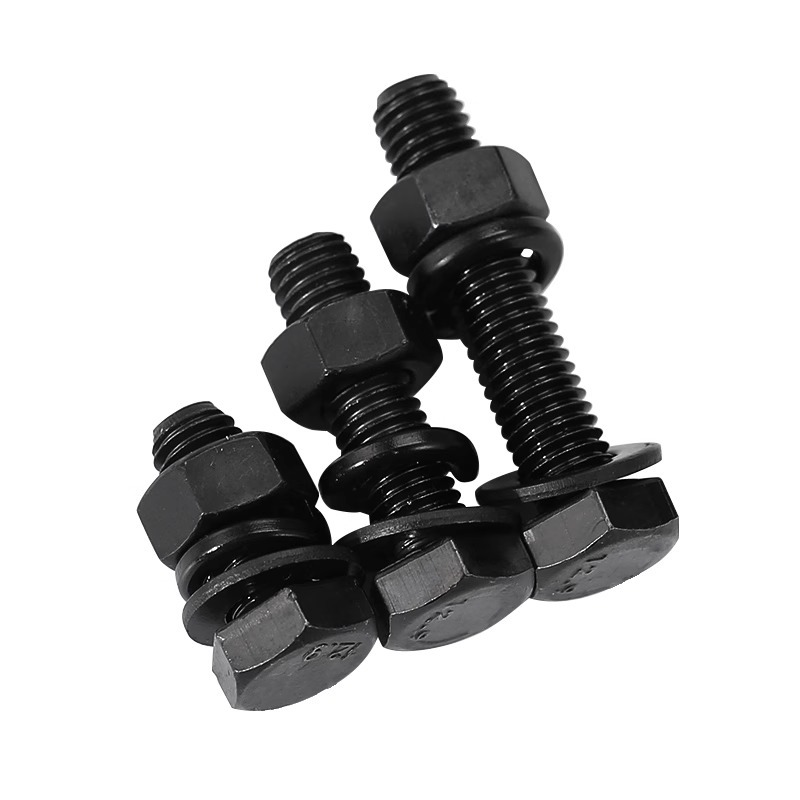
In major engineering projects such as bridges, wind turbine towers, and steel structure factories, high-strength bolts serve as critical load-transferring connectors, and their performance stability directly determines the safe service life of the overall structure. These bolts are subjected to long-term service in complex outdoor and marine environments, where they must endure not only recurring fatigue loads from vehicle traffic and equipment operation but also corrosive attack from rainwater, salt spray, and other media. The coupling effect of corrosion and fatigue produces a "1+1>2" destructive synergy, significantly shortening bolt service life and even potentially triggering catastrophic structural collapse. Therefore, clarifying the fatigue performance degradation patterns of high-strength bolts after corrosion is of critical importance for engineering safety assurance.
I. Coupled Corrosion-Fatigue Damage: A Hidden Risk That Cannot Be Ignored
The fatigue failure of high-strength bolts is essentially a "damage accumulation" process, and corrosion accelerates this accumulation by altering both the surface condition and internal stress distribution of the bolt. In the uncorroded state, fatigue cracks in bolts typically originate at stress concentration areas such as the thread roots, with relatively moderate crack propagation rates. Corrosive environments, however, exacerbate fatigue damage through two dimensions: "surface erosion" and "stress perturbation."
In terms of surface erosion, corrosive media form oxide rust layers on the bolt surface. The volume of these rust layers is typically 2–3 times larger than that of the base metal, and this volumetric expansion generates localized tensile stresses on the bolt surface, creating numerous micro-cracks. Simultaneously, corrosion destroys the surface smoothness of the bolt, forming corrosion pits at locations such as thread crests and head transition radii. These pits become new fatigue crack initiation sites, shortening the crack initiation period by more than 50%. Inspection data from a bridge project showed that when surface pit depths reached 0.2 mm after 5 years of service, the fatigue life of high-strength bolts decreased by 60% compared to new bolts.
In terms of stress perturbation, corrosion products have weak bonding strength with the base metal and are prone to detachment under cyclic fatigue loading, creating a "exposure–re-corrosion–re-detachment" cycle on the bolt surface that causes continuous fluctuations in localized stress. More critically, when corrosion penetrates deeper into the bolt, forming pitting or intergranular corrosion, it destroys the grain boundary cohesion of the metal, significantly reducing both tensile strength and toughness. Under the same fatigue load, crack propagation rates can increase by 3–5 times.
II. Current Research Status: Focus on Notches, Urgent Need for Breakthroughs
Research on the fatigue performance of high-strength bolts has been ongoing for many years, but existing studies exhibit a clear bias toward "uncorroded over corroded" and "static over fatigue," making it difficult to meet practical engineering needs. In the field of fatigue performance research, early studies predominantly focused on uncorroded, brand-new bolts, establishing S-N curves (stress-life curves) through fatigue testing to determine baseline fatigue life values at different stress levels. While these studies provided fundamental data for bolt selection, they did not account for the influence of corrosive environments, resulting in deviations between laboratory-derived fatigue life and actual engineering performance that can reach severalfold.
As corrosion issues have become increasingly prominent, some researchers have begun to investigate the effects of corrosion on bolt performance, but the focus has largely remained on corrosion product analysis and static performance degradation. For example, X-ray diffraction has been used to analyze the composition of corrosion products (such as Fe₃O₄ and Fe₂O₃), and tensile tests have been conducted to measure changes in tensile strength and yield strength after corrosion. These studies have revealed the patterns by which corrosion affects the static performance of bolts, but they cannot reflect the coupled interaction mechanism between fatigue loading and corrosion.
At present, systematic research on the axial fatigue performance of high-strength bolts after corrosion is still in its infancy. In actual engineering practice, high-strength bolts primarily bear axial pre-tension and reciprocating axial fatigue loads, and their axial fatigue performance directly determines connection reliability. Therefore, conducting targeted research to clarify the quantitative relationships among corrosion degree, fatigue loading, and bolt service life has become an urgent need for both the fastener industry and the civil engineering field.
III. Experimental Design: Simulating Real Environments for Precise Performance Analysis
To fill this research gap, this study employs a comprehensive methodology combining "corrosion pretreatment + fatigue testing + microstructural analysis," using 10.9-grade M24 high-strength bolts as the research subjects to systematically investigate the fatigue performance degradation patterns after corrosion. The experimental design rigorously simulates actual engineering environments to ensure the reliability and practicality of the research findings.
Corrosion pretreatment was conducted using neutral salt spray testing in accordance with GB/T 10125 standards, with the following parameters: salt solution concentration of 5% (mass fraction), temperature of 35°C, and salt spray deposition rate of 1–2 mL/(h·80 cm²). The bolts were divided into four groups and corroded for 0 h (control group), 240 h, 480 h, and 720 h, respectively, to simulate different service-age corrosion levels. After corrosion completion, macro- and micro-scale rust layer morphology analysis was performed on each group—macroscopically observing rust layer color, thickness, and spalling, and microscopically using scanning electron microscopy (SEM) to examine the rust layer microstructure.
Fatigue testing was conducted using an axial fatigue testing machine in accordance with GB/T 3075 standards, with the following conditions: sinusoidal waveform, stress ratio R = 0.1, frequency of 10 Hz, and stress levels set at 60%, 70%, and 80% of the bolt yield strength. Five specimens from each group were tested in parallel, recording the fatigue life (number of cycles to failure) for each specimen and plotting S-N curves for different corrosion levels. After testing, SEM observation of the fatigue fracture surfaces was performed to analyze crack initiation sites, propagation paths, and fracture morphology characteristics.
IV. Experimental Results: Corrosion Accelerates Fatigue Failure with Clear Mechanisms
The experimental results clearly reveal the degradation patterns and failure mechanisms of fatigue performance in high-strength bolts after corrosion, providing critical data support for engineering applications. In terms of rust layer morphology, as corrosion duration increased, the surface rust layer transitioned from a loose yellowish layer in the early stages to a dense dark brown layer, reaching a thickness of 0.3–0.5 mm after 720 h of corrosion. Microscopic observation revealed that the early-stage rust layer was predominantly Fe₃O₄ with a relatively dense structure; in later stages, substantial amounts of Fe₂O₃·nH₂O (red rust) formed, exhibiting a loose, porous structure with significantly reduced adhesion to the base metal.
In terms of fatigue life, the negative impact of corrosion on bolt fatigue performance followed an "exponential growth" pattern. At the 80% yield strength stress level, the average fatigue life of uncorroded bolts was 2.5×10⁵ cycles; after 240 h of corrosion, the life dropped to 1.1×10⁵ cycles, a 56% reduction; after 720 h of corrosion, the life was only 0.3×10⁵ cycles—an 88% decrease compared to uncorroded bolts. Even at the lower stress level (60% yield strength), the corrosion effect remained significant, with 720 h corroded bolts showing an 82% reduction in fatigue life compared to the control group. This indicates that even under low-load conditions, corrosion still substantially shortens bolt service life.
Fatigue fracture surface analysis revealed the specific failure mechanisms: uncorroded bolt fractures exhibited the classic three-zone characteristic of "fatigue source–propagation zone–final fracture zone," with a single fatigue source located at the thread root. After corrosion, the number of fatigue sources increased; in addition to the thread root, surface corrosion pits became primary crack initiation sites. The fatigue striation spacing in the propagation zone was notably wider, indicating accelerated crack propagation rates. The final fracture zone area increased, suggesting reduced bolt toughness and diminished energy absorption during fracture.
V. Engineering Implications: Precise Prevention and Control for Extended Service Life
Based on the experimental findings, to enhance the fatigue life of high-strength bolts in corrosive environments, engineering practices can adopt measures from two aspects: "anti-corrosion optimization" and "inspection and maintenance." In terms of anti-corrosion optimization, priority should be given to high-performance anti-corrosion coatings such as hot-dip galvanizing and Dacromet. Tests have shown that Dacromet coatings can extend the salt spray corrosion life of bolts by 3–5 times. For highly corrosive environments such as marine settings, stainless steel or composite-coated bolts can be employed to fundamentally reduce corrosion rates.
In terms of inspection and maintenance, establishing a "corrosion grade–fatigue life" correlation database enables differentiated maintenance strategies based on the corrosion degree of bolts. For example, when surface pit depth exceeds 0.1 mm, fatigue performance evaluation should be conducted; bolts with corrosion exceeding 480 h are recommended for replacement in critical engineering applications such as bridges and wind power installations. Additionally, non-destructive testing techniques such as ultrasonic testing and magnetic particle inspection should be employed to periodically inspect bolt surfaces and internal cracks, enabling early detection and timely intervention.
In summary, corrosion of high-strength bolts exacerbates fatigue failure through mechanisms including surface pit formation and stress perturbation, with longer corrosion durations leading to more pronounced reductions in fatigue life. Conducting fatigue performance research after corrosion is essential to engineering safety. Future work should further refine the performance patterns under different corrosive media and loading conditions to provide more comprehensive support for precision bolt design and maintenance.
Professional consultant team online, ready to provide solutions for you
Contact NowProducts
Solutions
Applications
Contact
 Contact
 WeChat
Contact: Manager Fan - Tel/WeChat: 135-6073-0094 Email: Flora.Fan@toprecision.com | Manager Ao - Tel/WeChat: 13560729614 Email: Olia.Ao@toprecision.com
Sales Director: Mr. Zhang - Tel: 13510369429 Email: xiaowei.zhang@zcjtech.com
© Copyright 2011 - 2026 Shenzhen Toprecision Precision Technology Co., Ltd. All Rights Reserved.
 粤ICP备2025493240号-1

Cutter Screws
Thread Inserts
Sealing Products
Riveting Products
Locking Products
Direct Assembly
SMT Components
Precision Screws
Screwdriver Bits