














 Login
Login



Products
Solutions
Applications





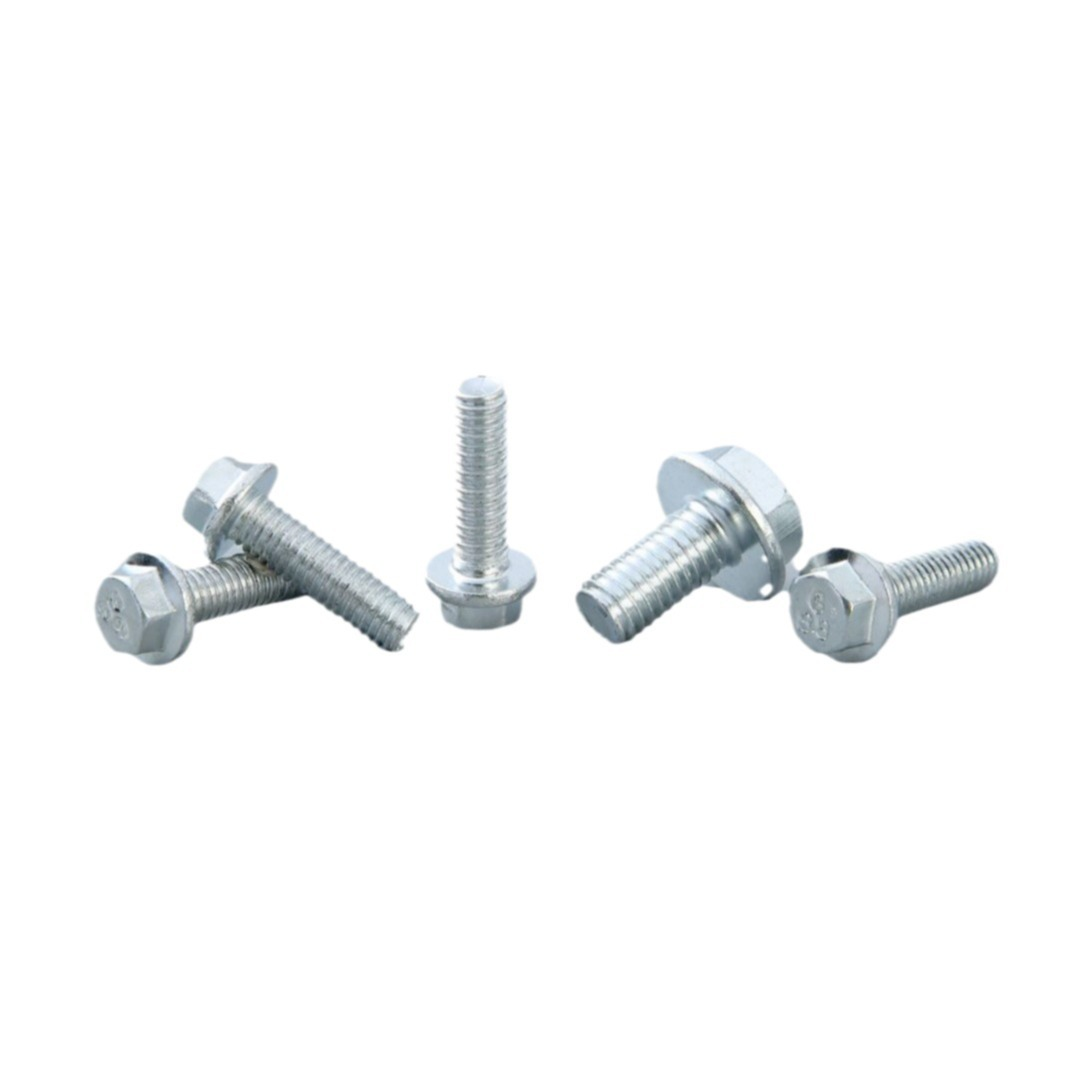
In critical applications such as pipeline connections, heavy machinery assembly, and bridge construction, the fastening quality of flange bolts directly determines sealing and structural stability. As a special fastener integrating a hex head, flange plate (fixed to the head), and external threads, the fastening process must consider the flange's anti-slip characteristics, thread load distribution, and application load requirements. This article provides a comprehensive analysis of scientific flange bolt fastening methods from basic understanding to practical application.
1. Core Understanding: Structure and Classification
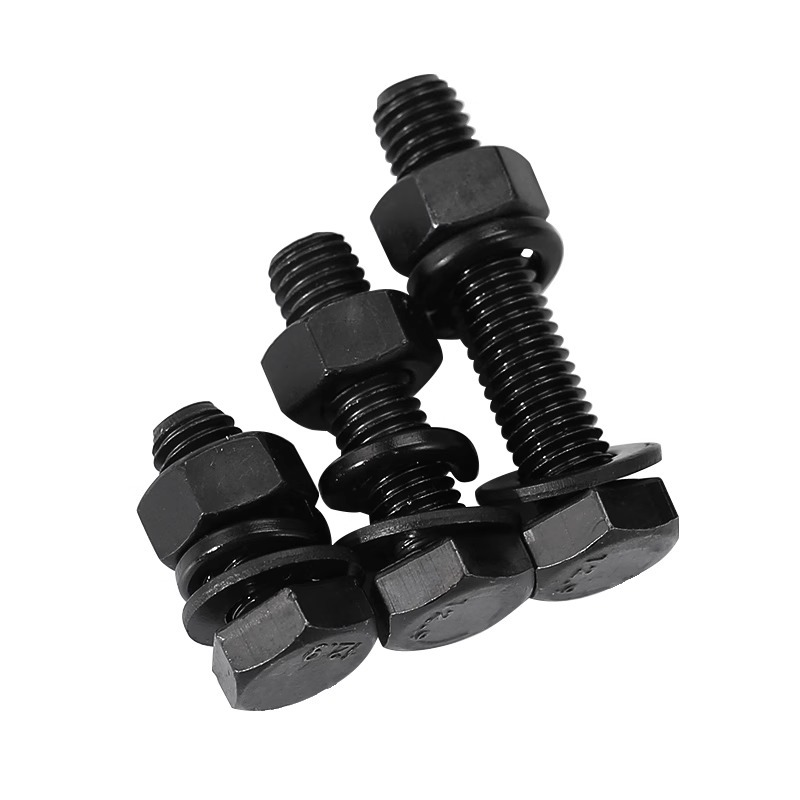
The unique structure of flange bolts is the basis for their fastening process. The integrated flange plate replaces the traditional bolt plus flat washer combination. The flange's anti-slip design, either plain or serrated, directly enhances connection stability. Serrated flanges embed into the workpiece surface to resist transverse shear forces, making them effective in vibration conditions. Plain flanges rely on large-area contact to disperse pressure and are suitable for stable load scenarios.
Surface treatment processes directly affect corrosion resistance after fastening. Zinc plating is suitable for dry indoor environments. Phosphating provides mild corrosion resistance for industrial equipment. Yellow zinc offers both decoration and basic corrosion protection for exposed connections in civil construction. Dacromet coating provides over 500 hours of salt spray resistance and is the first choice for harsh environments such as outdoor bridges and marine engineering.
Based on structural function, flange bolts can be classified into ordinary type, reamed hole type, reduced shank type, anti-loosening type with hole, and high-strength type for steel structures. Material selection directly determines the maximum fastening torque and service life. Medium carbon steel such as 35# and 45# can be made into Grade 8.8 bolts after heat treatment. Alloy steel such as 40Cr and 20MnTiB is used for Grade 10.9 and 12.9 high-strength flange bolts for heavy industry and bridges. Stainless steel grades 304 and 316 are used for corrosive environments in chemical and food machinery.
2. Key Preparation Before Fastening
First, selection matching must follow the principle of application suitability. For static loads such as civil building supports, M8 to M16 ordinary medium carbon steel flange bolts can be selected. For dynamic loads such as crane booms, M16 or larger high-strength alloy steel bolts must be selected. For transverse force dominated scenarios such as machine tool worktables, reamed hole flange bolts must be selected. For outdoor bridges, high-strength alloy steel with Dacromet coating is preferred. For chemical pipelines, 316 stainless steel must be used. For vibration scenarios, serrated flange bolts are mandatory.
Second, component inspection must cover both the bolts and the connecting workpiece. For bolts, check whether the threads have damage or galling, measure pitch deviation with a thread gauge which should be no more than 0.03 millimeters, check whether flange serrations are intact, and verify hardness markings on high-strength bolts. For the workpiece, the flange face must be flat without deformation with flatness error no more than 0.1 millimeter per meter, bolt holes must be deburred, and any rust on contact surfaces must be removed with a wire brush.
Third, tool preparation and calibration are essential for precise fastening. Common tools include torque wrenches, socket wrenches, hydraulic tensioners, and heating rods. For bolts M24 and smaller, preset torque wrenches are preferred. For M30 and larger high-strength bolts, digital torque wrenches or hydraulic tensioners are required. Torque wrenches must be calibrated every three months with error controlled within plus or minus 3 percent. Hydraulic tensioners must be matched with a dedicated pressure gauge to ensure conversion accuracy between pressure and torque. Additionally, auxiliary materials such as anti-seize compound and cleaner should be prepared.
Professional consultant team online, ready to provide solutions for you
Contact NowProducts
Solutions
Applications
Contact
 Contact
 WeChat
Contact: Manager Fan - Tel/WeChat: 135-6073-0094 Email: Flora.Fan@toprecision.com | Manager Ao - Tel/WeChat: 13560729614 Email: Olia.Ao@toprecision.com
Sales Director: Mr. Zhang - Tel: 13510369429 Email: xiaowei.zhang@zcjtech.com
© Copyright 2011 - 2026 Shenzhen Toprecision Precision Technology Co., Ltd. All Rights Reserved.
 粤ICP备2025493240号-1

Cutter Screws
Thread Inserts
Sealing Products
Riveting Products
Locking Products
Direct Assembly
SMT Components
Precision Screws
Screwdriver Bits