

















 Login
Login



Products
Solutions
Applications





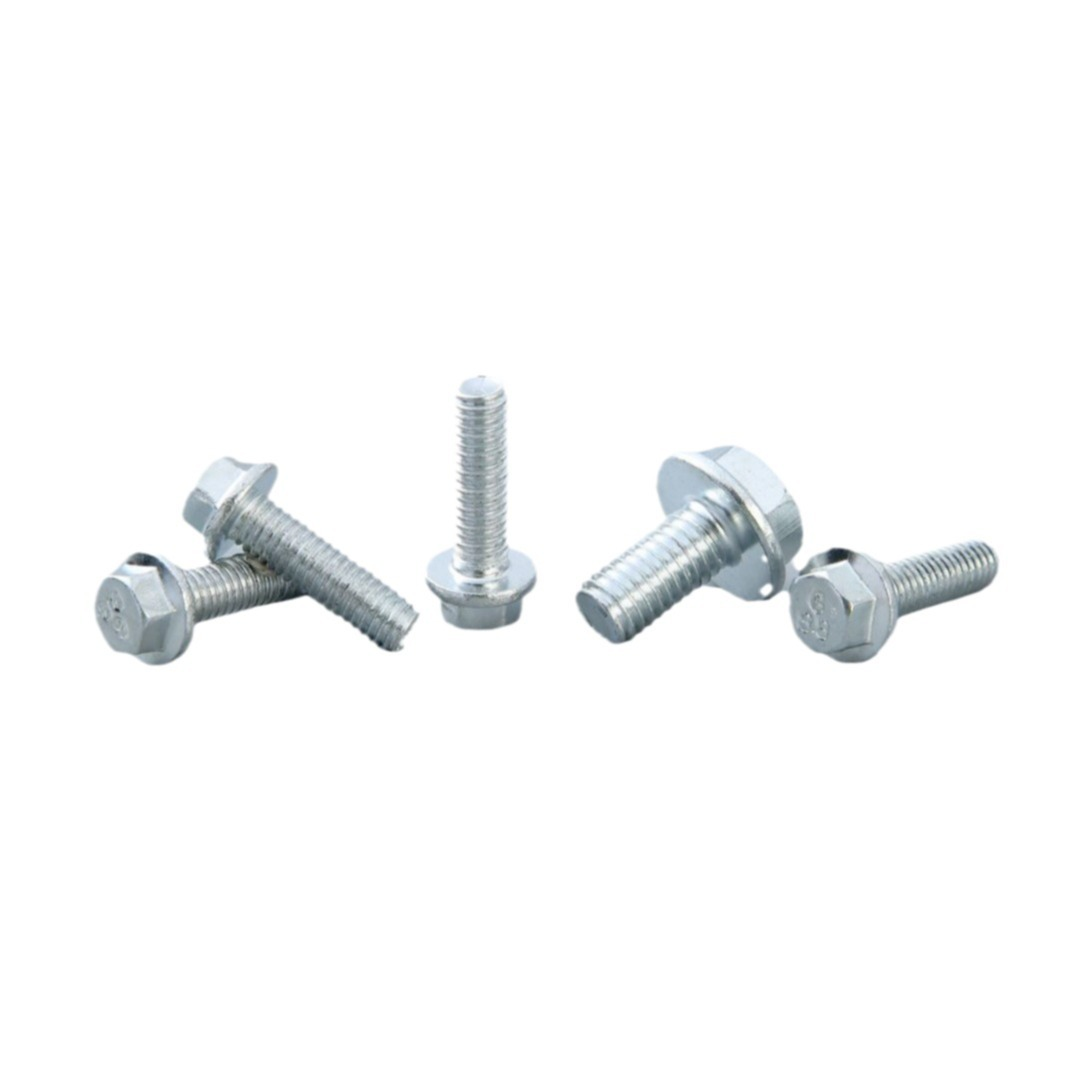
3. Core Fastening Methods: Scenario-Based Application
For static load scenarios such as civil building pipelines and static equipment supports, the symmetrical step-by-step fastening method is suitable. First, pre-tighten all flange bolts in a diagonal sequence until the flange faces have no gap, with pre-tightening torque at 30% of the final torque. Second, apply initial torque at 60% of the final torque using a torque wrench in the same diagonal order, marking each bolt. Third, apply the final torque in diagonal order and hold for 3 to 5 seconds.
For dynamic vibration scenarios such as fans, pumps, and excavator hydraulic lines, the torque plus anti-loosening double fastening method is required. The basic fastening process follows the symmetrical step-by-step method, but the final torque should be increased by 10% to 15%. For high-frequency vibration, use the double nut method. For space-constrained scenarios, use a cotter pin.
For large flange heavy-load scenarios such as bridge steel box girders and chemical high-pressure pipes, the hydraulic tensioning fastening method must be used. Clean the flange face and threads, then apply high-temperature anti-seize agent. Install hydraulic tensioners evenly on the flange bolts. Apply tension in circular stepwise groups of 3 to 4 bolts, with tension pressure converted from the final torque. Hold for 10 seconds, tighten the nut, then release the pressure.
For high-temperature and high-pressure scenarios such as boilers and steam pipes, the hot torquing method is required. This includes cold pre-tightening during installation and hot re-tightening after operation begins. Cold pre-tightening uses the symmetrical step-by-step method with final torque increased by 20% compared to room temperature scenarios. After the equipment reaches operating temperature and stabilizes, perform hot re-tightening with torque adjusted according to a temperature correction factor.
4. Torque Control and Anti-Loosening
Torque values must be determined based on material, specification, and scenario. For ordinary medium carbon steel flange bolts in room temperature static scenarios, final torque can be estimated as torque equals 0.2 times diameter times yield strength. For high-strength alloy steel bolts, refer to relevant standards and adjust for thread friction coefficient. For high-temperature scenarios, reduce torque by 5% to 8% for every 100 degree Celsius increase.
Torque inspection should be performed throughout the fastening process. After pre-tightening, torque deviation should be within plus or minus 5 percent. After final tightening, recheck torque after 10 minutes with deviation within plus or minus 3 percent. For critical scenarios, use ultrasonic torque detection.
Anti-loosening measures should be selected based on scenario durability. For temporary or low-frequency maintenance scenarios, use friction-based anti-loosening such as removable threadlocker or spring washers. For long-term outdoor or vibration scenarios, use mechanical anti-loosening such as cotter pins with slotted nuts or stop washers. For permanent connection scenarios, use permanent anti-loosening such as welding or punch staking. Different anti-loosening methods should not be used together.
5. Common Fastening Problems and Solutions
For flange leakage, the causes are uneven tightening leading to poor flange face contact or insufficient torque. The solutions are to clean the flange face, replace the damaged gasket, and re-tighten using the symmetrical step-by-step method.
For bolt fracture during fastening, the causes are excessive torque exceeding the material yield strength or internal cracks in the bolt. The solutions are to use a torque wrench and check the material quality of the bolt.
For bolt loosening after long-term use, the causes are reduced thread friction coefficient due to vibration or preload loss due to thermal expansion and contraction. The solutions are to clean the threads, apply threadlocker, and add mechanical anti-loosening components.
For slippage between the flange face and workpiece, the causes are worn flange serrations or an overly smooth workpiece surface. The solutions are to replace with a serrated flange bolt, roughen the workpiece surface, or apply anti-slip agent.
In summary, flange bolt fastening is a systematic project requiring full process standardization from product knowledge and preparation to method selection and torque control. Only by developing targeted solutions based on scenario characteristics can the structural advantages be fully utilized to ensure sealing and stability.
Professional consultant team online, ready to provide solutions for you
Contact NowProducts
Solutions
Applications
Contact
 Contact
 WeChat
Contact: Manager Fan - Tel/WeChat: 135-6073-0094 Email: Flora.Fan@toprecision.com | Manager Ao - Tel/WeChat: 13560729614 Email: Olia.Ao@toprecision.com
Sales Director: Mr. Zhang - Tel: 13510369429 Email: xiaowei.zhang@zcjtech.com
© Copyright 2011 - 2026 Shenzhen Toprecision Precision Technology Co., Ltd. All Rights Reserved.
 粤ICP备2025493240号-1

Cutter Screws
Thread Inserts
Sealing Products
Riveting Products
Locking Products
Direct Assembly
SMT Components
Precision Screws
Screwdriver Bits