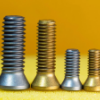
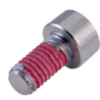
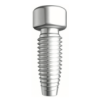
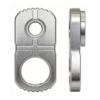
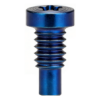
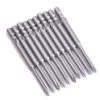
In the fields of industrial manufacturing and structural engineering, welding bolts serve as fastening elements for permanent, high-strength connections. They are widely used in critical areas such as steel structures, heavy equipment, shipbuilding, and pressure vessels. By fusing the bolt end to the base metal through welding, they form a non-detachable, secure connection capable of withstanding high tensile stress, shear stress, and complex alternating loads. However, improper selection or incorrect welding operations can severely compromise connection strength and even pose structural safety hazards. Therefore, it is crucial to fully understand and strictly adhere to the precautions for using welding bolts. Based on years of production and practical experience, Shenzhen Toprecision Technology Co., Ltd. systematically outlines the key control points throughout the entire process, from selection and storage, pre-weld preparation, welding processes, to post-weld inspection.
I. Precise Selection: Laying the Foundation for Safety
Selection is the first step to ensuring a successful welded bolt connection, requiring comprehensive consideration of working conditions and the bolt's inherent characteristics.
-
Material Compatibility: The material of the welding bolt must possess good weldability and compatibility with the base metal. Generally, bolt materials with chemical compositions similar to or matching the base metal should be selected to avoid issues such as weld cracking, embrittlement, or corrosion caused by material differences. For example, when welding carbon steel substrates, low-carbon steel or low-alloy steel bolts are preferred; when welding stainless steel, corresponding grades of stainless steel bolts should be used.
-
Type Selection: Choose the appropriate bolt type based on welding position, accessibility, and strength requirements. Common types include:
-
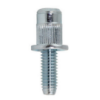
Welding Studs (with arc initiation tip/ceramic ferrule): Suitable for automatic or semi-automatic arc welding, offering high efficiency and stable quality. They are the preferred choice for thick plates or mass production.
-
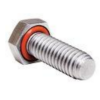
Welding Screws (with bosses or flanges): Utilize bosses or flanges to increase the contact area, typically employing resistance welding or projection welding, making them suitable for thin-plate connections.
-
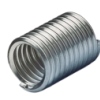
Threaded Inserts: Pre-embedded via welding to form high-strength internal threads on thin plates or castings.
-
Specifications and Performance Grades: Determine the nominal diameter, length, and performance grade (e.g., 4.8, 8.8, 10.9) based on design loads. Ensure the bolt's load-bearing capacity meets design requirements with an appropriate safety margin.
II. Pre-Weld Preparation: Details Determine Success
Adequate pre-weld preparation is the prerequisite for ensuring welding quality; any negligence may lead to welding defects.
-
Cleaning: The welding area (including the bolt's welding end and the base metal contact surface) must be thoroughly cleaned of oil, rust, paint, moisture, scale, and other impurities. These contaminants decompose under high welding temperatures to produce gases, causing porosity and slag inclusions in the weld and severely affecting fusion quality. Mechanical grinding (e.g., using an angle grinder), chemical cleaning, or specialized cleaning agents are recommended until a metallic luster is revealed.
-
Storage and Moisture Prevention: Welding bolts, especially those with surface coatings (e.g., galvanized) or those prone to rust, should be stored in a dry, well-ventilated warehouse to prevent moisture absorption. Moist bolts can cause porosity during welding as water evaporates and may also trigger hydrogen embrittlement risks.
-
Equipment Inspection: Ensure welding equipment (such as stud welders or arc welders) is in good working condition and that the ground connection is secure and reliable. Verify that welding parameters (current, voltage, time, lift height, etc.) match the bolt specifications, material, and base metal thickness. When using bolts with arc initiation tips, ensure the ceramic ferrules are dry and undamaged.
III. Welding Process: Precise Control is Key
Parameter control and operational standardization during the welding process directly affect the internal quality and external appearance of the weld.
-
Parameter Optimization: Strictly set parameters according to the Welding Procedure Specification (WPS) provided by the bolt manufacturer. Excessive welding current can lead to burn-through, undercutting, or coarse grains; insufficient current easily causes lack of fusion or incomplete penetration. Welding time affects heat input and must be precisely controlled.
-
Operational Key Points:
-
Perpendicularity: During welding, the welding gun or bolt should be kept as perpendicular to the base metal surface as possible to ensure a symmetrical weld pool and uniform stress distribution.
-
Pressure and Stroke: For capacitor discharge welding or arc welding, initial pressure, lift height, and upset pressure are critical parameters that must ensure sufficient fusion between the bolt end and the base metal, producing appropriate plastic deformation.
-
Environmental Factors: Avoid welding in strong winds, rain, snow, or high-humidity environments to prevent rapid cooling of the weld, which can cause cracking or porosity. When the ambient temperature is below 0°C, preheating the base metal should be considered.
-
Arc Initiation Tip Protection: When using bolts with ceramic ferrules, allow the ferrule to cool naturally after welding before gently tapping it off. Never remove it while it is red-hot to avoid damaging the weld.
IV. Post-Weld Inspection: An Indispensable Quality Loop
After welding, systematic quality inspection must be conducted to verify the reliability of the connection.
-
Visual Inspection: Inspect the weld visually or with a low-magnification magnifying glass. A qualified weld should have a continuous and uniform appearance, meet weld leg size requirements, and be free of visible cracks, undercutting, excessive porosity, or obvious lack of fusion.
-
Destructive Testing: For critical structures or process qualification in mass production, bending, tensile, or hammer tests must be conducted according to standards (e.g., GB/T 10433, ISO 13918). For example, when a bolt is bent to 30°, no cracks should appear in the weld or heat-affected zone.
-
Non-Destructive Testing (NDT): For particularly critical connections, methods such as Magnetic Particle Testing (MT), Liquid Penetrant Testing (PT), or Ultrasonic Testing (UT) can be employed to detect internal micro-cracks, inclusions, or other defects.
-
Torque Verification (If Applicable): For bolts requiring nut installation after welding, use a torque wrench for a test run after cooling to check if the threads are smooth and to verify that the bolt remains secure and unloosened when subjected to installation torque.
V. Safety Standards and Personnel Qualifications
-
Operators: Welding personnel must undergo professional training, hold relevant welder qualification certificates, and be familiar with specialized equipment and process requirements for welding bolts.
-
Safety Protection: Operators must wear personal protective equipment, including welding helmets, protective gloves, and flame-resistant clothing, to prevent arc radiation, splash burns, and fume inhalation.
-
Fire Prevention and Ventilation: Ensure there are no combustible materials in the work area and equip the area with effective ventilation or fume extraction systems to reduce the concentration of harmful gases and smoke.
Conclusion
The connection strength of welding bolts depends not only on the bolt's own performance but also on a systematic engineering process involving selection, preparation, welding techniques, inspection, and personnel competence. Any oversight in these links can become a hidden danger for connection failure. Shenzhen Toprecision Technology Co., Ltd. reminds all users to establish standardized application processes for welding bolts and strictly enforce them. Through scientific selection, meticulous preparation, precise welding, and rigorous inspection, every welded connection point can be made solid and reliable, safeguarding the safety and long-term operation of the overall structure.





















 Login
Login








 Contact
 WeChat
 粤ICP备2025493240号-1