This article outlines flange bolt tightening: preparation, cross-tightening, torque control, and gasket compatibility.
The tightening of flange bolts directly determines the sealing safety and operational stability of pipelines and equipment. This article provides a detailed explanation of standardized tightening methods, operational key points, material compatibility, and common pitfalls to avoid, offering practical and professional guidance for industry practitioners.
Flange connections are a core joining method in the industrial sector, widely used in pipelines, chemical equipment, and new energy power stations. The quality of flange bolt tightening is critical to ensuring connection sealing, load-bearing capacity, and service life. Compared to standard bolts, flange bolts must withstand complex conditions such as high temperatures, high pressures, and corrosion. Tightening operations must follow standardized procedures, as any oversight can lead to leaks, equipment failures, or safety accidents. Based on industry practices, this article breaks down the scientific methods and core key points of flange bolt tightening to help practitioners standardize their operations.
Three core preparations must be completed before tightening to avoid future risks. First is proper selection and matching: the specifications, materials, and strength grades of the flange bolts must precisely match the flange model and operating conditions. High-strength alloy bolts of Grade 12.9 should be used in high-pressure scenarios, and 316L stainless steel is preferred in corrosive environments; arbitrary substitutions are strictly prohibited. Second is cleaning and inspection: thoroughly remove oil, rust, and debris from the flange sealing surfaces and bolt threads. Inspect the sealing surfaces, threads, and gaskets for integrity, and promptly replace any defective components. Third is tool calibration: torque wrenches and other tools must be calibrated in advance to ensure torque error is controlled within ±5%.
Flange bolt tightening must adhere to the principles of "diagonal symmetry, step-by-step progression, and uniform load distribution." Two standardized methods are commonly used. The diagonal tightening method is suitable for small and medium-sized flanges. Bolts are first hand-tightened in a diagonal sequence to align the flange faces, then tightened in steps to the rated torque, with each step controlled at 30%–40% of the rated value. The cross-tightening method is suitable for large flanges or high-sealing scenarios. Bolts are divided into two groups and initially tightened in a cross pattern, followed by a three-step progression (20%–30%, 60%–70%, and 100% of the rated torque). Alignment is checked at each step, and it is strictly prohibited to tighten a single bolt to full torque at once.
Torque control is a core key point and must be precisely adapted to operating conditions. Different bolt specifications correspond to different rated torques; for example, the rated torque for M16 Grade 10.9 flange bolts under normal temperature and pressure is approximately 80–100 N·m, while for M20 Grade 12.9 bolts, it is about 150–180 N·m. In high-temperature conditions, torque should be reduced by 10%–15%; in low-temperature conditions, it should be increased by 5%–10%; and in high-pressure scenarios, it should be increased by 5%–8%. During tightening, a calibrated torque wrench must be used to apply force at a steady pace, avoiding excessive force that could strip the threads.
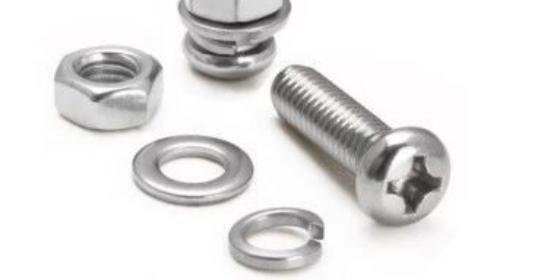
Gasket compatibility and anti-loosening measures are also indispensable. Gasket materials must match the operating conditions: rubber gaskets for normal temperature and pressure, graphite or metal spiral wound gaskets for high temperature and high pressure, and PTFE gaskets for corrosive environments. Ensure the gasket is centered and evenly compressed (compression should be 20%–30% of its thickness). Anti-loosening measures must be selected according to the specific scenario: use anti-loosening washers or thread-locking adhesives in vibrating environments; for outdoor humid environments, use hot-dip galvanized bolts and apply anti-rust grease; for equipment with long-term operation, adopt double-nut locking.
Three common misconceptions must be avoided: first, arbitrarily substituting bolt components, such as using standard or low-strength bolts instead of specialized ones; second, improper torque control, such as blindly increasing or decreasing torque; and third, neglecting post-installation maintenance. Maintenance should be conducted regularly based on operating conditions—every 3–6 months for outdoor applications and monthly for harsh environments. Promptly tighten any loose bolts and replace rusted or damaged components.
























 Login
Login











 Contact
 WeChat
 粤ICP备2025493240号-1