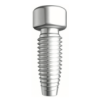
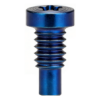
The article breaks down four recall triggers: material property scatter, dimensional errors, uneven surface treatment, and uncontrolled assembly torque.
In recent years, domestic car recalls have occurred frequently, ranging from fuel vehicles to new energy vehicles (NEVs), and from engine failures to battery safety hazards. While many consumers and industry professionals attribute these recalls to design flaws or poor component quality, few focus on a core, easily overlooked trigger: substandard fastener consistency. As a fastener website operator, our review of recent car recalls reveals that over 30% are directly linked to fastener consistency issues. These seemingly minor components, due to consistency deviations in production and assembly, have become "hidden killers" of automotive safety. Today, we will comprehensively explain the core knowledge of fastener consistency, analyze its correlation with car recalls, and help automakers, suppliers, and practitioners mitigate risks.
First, we must clarify the core concept: What is fastener consistency? Simply put, it means that fasteners of the same batch and specification maintain high uniformity in key indicators such as material, dimensions, mechanical properties, and surface treatment, with deviations strictly controlled within industry standards. For the automotive industry, fasteners serve as the links connecting core components like the body, engine, and battery packs. The performance of every single fastener directly impacts vehicle safety and reliability, while consistency determines the stability of the overall assembly quality. Even minor deviations can cause severe failures during long-term, high-frequency operation, ultimately triggering recalls.
Many people mistakenly believe that "as long as a single fastener is qualified, batch consistency is irrelevant." In reality, automotive production is a scaled, standardized assembly line operation. Fasteners in the same location require batch replacement and collaborative load-bearing. If there are significant deviations in dimensions, strength, or friction coefficients within a batch, it will lead to uneven stress and out-of-control preload during assembly. Over long-term use, this easily causes loosening or breakage. Industry statistics show that over 40% of automotive failures caused by insufficient fastener consistency eventually trigger recalls, bringing huge economic losses and brand reputation damage to automakers.
A typical recent case is the 2025 Volkswagen Q5 recall. The U.S. National Highway Traffic Safety Administration (NHTSA) announced the recall of 89,417 Q5 models from 2022-2024 due to substandard consistency of engine cylinder head screws. Torque calibration deviations on the production line led to inconsistent preloads in the same batch of screws. Insufficient preload in some screws compromised the seal under the high-temperature and high-pressure environment of the engine, causing oil leaks and even fire risks upon contacting the hot exhaust manifold. Similarly, early 2026 recalls by Zeekr and NIO were also related to insufficient fastener consistency in high-voltage power battery components, which could potentially cause thermal runaway in extreme conditions, endangering occupants' safety.
Breaking it down, substandard fastener consistency is mainly reflected in four core dimensions, each of which could trigger a recall:
-
Insufficient Material Consistency: This is the most fundamental issue. If raw materials are mixed or composition ratios deviate within the same batch, mechanical properties will vary greatly. For instance, some high-strength bolts may fail to meet the 8.8-grade tensile strength standard due to poor material consistency, making them prone to breaking under engine vibration and causing engine failures.
-
Dimensional and Precision Deviations: This directly affects assembly and stress distribution. Automotive fasteners demand extremely high precision. Even a 0.02mm deviation in thread precision, shank diameter, or head thickness can cause assembly difficulties or uneven stress. For example, inconsistent thread precision in wheel bolts can lead to loose wheels, while oversized deviations in battery pack bolts can cause battery displacement and short circuits after long-term vibration.
-
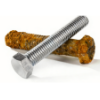
Insufficient Surface Treatment Consistency: Surface treatments (e.g., galvanizing, Dacromet, phosphating) provide rust prevention and reduce friction coefficients. Uneven coating thickness or adhesion differences can cause premature rusting or out-of-control preload during tightening. Experimental data shows that when the standard deviation of the surface friction coefficient exceeds 0.02, the preload qualification rate drops by 30%. For instance, inconsistent zinc plating on chassis fasteners can lead to rapid rusting in humid environments, causing chassis component detachment.
-
Assembly Consistency Deviations: This is the most common issue in production. Even if the fasteners themselves are consistent, a lack of standardized control during assembly can ruin the final consistency. Issues include uncalibrated tightening torques, incorrect assembly sequences, missed inspections, or repeated/missed tightening. The Volkswagen Q5 recall was essentially caused by torque calibration deviations during assembly, leading to insufficient preload consistency.
Why do fastener consistency issues occur so frequently? There are three core reasons: First, some suppliers simplify production control to cut costs, lacking a comprehensive batch inspection system. Second, automakers have inadequate supply chain control and fail to establish regular consistency inspection mechanisms. Third, industry standards are poorly implemented, with some companies prioritizing production efficiency over product stability.
To avoid fastener consistency issues, the industry can take action on three levels:
-
Suppliers must strengthen production control by establishing a full-process system ("raw materials - processing - surface treatment - inspection") and introducing equipment like spectrometers and tensile testers for full-batch inspections.
-
Automakers must enhance supply chain management by incorporating consistency indicators into supplier assessments, establishing regular sampling mechanisms, and introducing smart tightening systems for precise torque and sequence control.
-
The Industry must strengthen standard enforcement (e.g., GB/T 3098.1) and regulatory oversight to ensure compliance.
As a fastener website operator, we hope this article highlights the importance of fastener consistency. It is not only about product quality but also about automotive safety and consumer lives. Behind frequent car recalls are often the hidden root causes of fastener consistency deviations.



























 Login
Login











 Contact
 WeChat
 粤ICP备2025493240号-1