Auto bolt recalls stem from their zero-tolerance nature as safety components, not quality control failure.
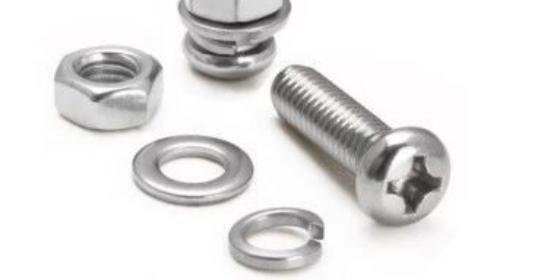
Although car bolts may seem inconspicuous, they are critical components for ensuring driving safety. Frequent recalls do not indicate a complete loss of quality control; rather, they stem from core issues such as design defects, substandard materials, and installation deviations. This article decodes the industry logic and safety secrets behind bolt recalls.
As an industry veteran with over a decade of experience in fasteners, I frequently receive messages from followers asking, "Why do automakers constantly recall bolts? Is it really necessary to make such a fuss over such small parts?" In fact, many automotive professionals cannot clearly explain the root causes of these recalls. Today, let's break down the underlying logic in plain language so you can understand that these tiny bolts carry the weight of the entire vehicle's safety, and every recall is a profound respect for human life.
Core Conclusion: Car bolt recalls are never "making a mountain out of a molehill." They are the inevitable result of the collision between the "high requirements" and "zero tolerance" for fasteners in automotive applications. While many assume bolts are just "threaded iron blocks" that simply need tightening, every single bolt in a car has strict standards. A problem in any link—from material and design to installation—can pose fatal risks.
1. Car Bolts Are "Customized Safety Parts," Not Ordinary Fasteners
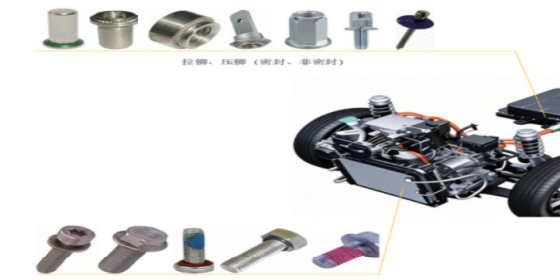
A typical family car has thousands of bolts, each with vastly different requirements. Engine block bolts must withstand high temperatures and pressures, chassis bolts must resist bumps and impacts, and seatbelt anchor bolts must endure sudden collision forces. Even door panel and dashboard bolts must balance sturdiness with lightweight design. Any deviation from strict standards during design, material selection, or processing can become a safety hazard.
2. Design Defects: Innate Insufficiency
Bolt design is not just about getting the thickness and length right; it must balance strength, toughness, and fatigue life while matching specific installation scenarios. For example, some automakers simplify bolt structures or select mismatched thread specifications to cut costs, leading to fatigue fractures over time. A real-world case involved a joint-venture brand recalling vehicles due to defective engine connecting rod bolts. Poor thread profile design caused uneven stress distribution during high-speed operation, eventually leading to loosening, fracture, engine failure, and even vehicle stalling. The root cause was insufficient simulation of extreme engine conditions during the design phase.
3. Substandard Materials: Instability After Production
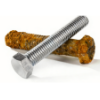
Automotive bolts typically use high-strength alloy steel and undergo multiple heat treatment processes (like quenching and tempering) to ensure strength and toughness. However, some suppliers use inferior steel or simplify heat treatments to compress costs, causing actual strength to fall far below design standards. For instance, substandard chassis suspension bolts can suffer plastic deformation or fracture under repeated impacts on bumpy roads, causing suspension failure and loss of vehicle control. Additionally, inadequate anti-rust treatments can lead to corrosion in humid or salty environments, ultimately causing thread failure.
4. Installation Deviations: Human Errors
Even with perfect design and materials, installation errors can trigger hazards. Car bolts have strict torque requirements: too loose causes them to fall off, while too tight causes excessive stress, leading to fractures or damaged threads. On production lines, critical bolts must be installed using professional torque wrenches and double-checked. Under production pressure, some automakers simplify processes or allow non-standard worker operations. For example, an independent brand once recalled hundreds of thousands of vehicles because workers failed to strictly follow standards when installing wheel bolts, leading to loosening and potential wheel detachment under extreme conditions.
5. Environmental Impact and Aging
Long-term exposure to complex environments (high/low temperatures, moisture, vibrations, and corrosion) accelerates bolt aging. Engine compartment bolts suffer from high temperatures, reducing material performance and shortening fatigue life. Chassis bolts exposed to rain and mud easily corrode. In new energy vehicles, battery pack bolts must endure both heat from the battery and driving vibrations, gradually leading to failure.
6. The "Balance" Dilemma and Hidden Hazards
Why not just use better bolts? It comes down to balancing strength, lifespan, cost, and weight. Over-pursuing high strength increases weight and hurts fuel economy, while over-pursuing lightweight compromises strength. Breaking this balance creates hidden dangers. Furthermore, many bolts are hidden inside the body, engine bay, or chassis, making them hard to inspect during routine maintenance. Issues are often only discovered when they cause obvious malfunctions or safety risks. Therefore, once a defective batch is identified, automakers must recall vehicles for comprehensive inspection and replacement to ensure safety.
Practical Advice for Car Owners:
-
Regular Comprehensive Maintenance: Especially for chassis and engine compartment bolts, have mechanics check torque and wear.
-
Avoid Unauthorized Modifications: Do not arbitrarily change bolt specifications for the chassis or engine, as this can lead to mismatches.
-
Address Abnormalities Promptly: If you hear unusual noises or feel vibrations, get your car inspected immediately to prevent bolt hazards from escalating.
Conclusion:
Though small, bolts carry massive responsibility. Frequent recalls are not an industry "stain"; rather, they reflect automakers' commitment to safety and the continuous improvement of industry standards. As the automotive industry evolves, especially with the rise of new energy vehicles, demands for higher strength, lighter weight, and better corrosion resistance will only grow. While technological advancements will gradually reduce bolt hazards, recalls will remain an indispensable final line of defense.

























 Login
Login












 Contact
 WeChat
 粤ICP备2025493240号-1