


















 Login
Login



Products
Solutions
Applications





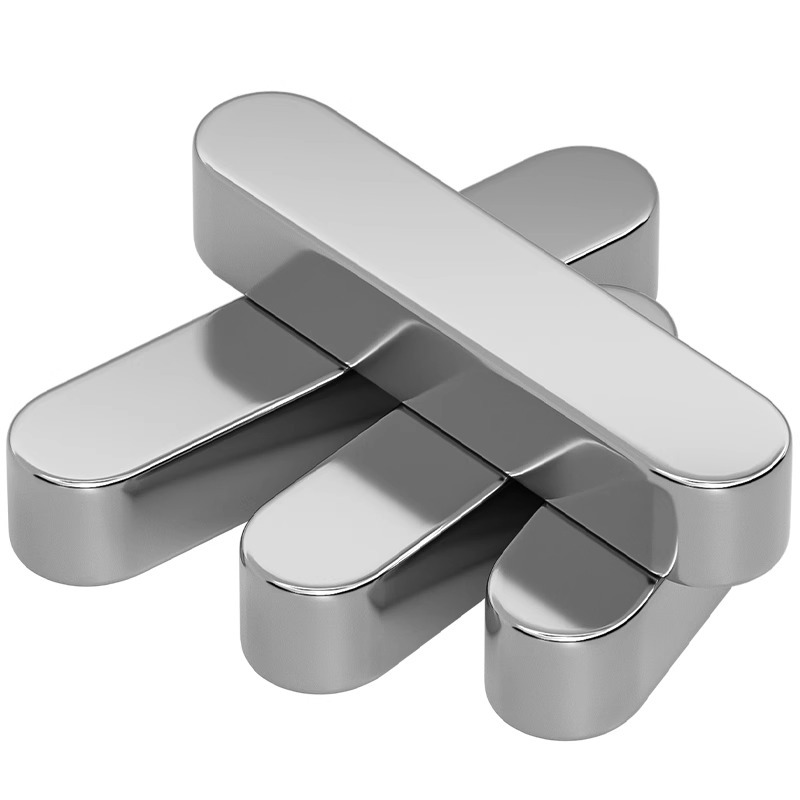
Throughout the entire lifecycle of fasteners, surface treatment directly determines their corrosion resistance, aesthetic quality, and assembly reliability. Electroplating, with its mature technology, controllable costs, and broad adaptability, has become the most widely applied surface treatment technology in the fastener industry. From galvanized screws for general civilian use, to nickel-plated bolts for the automotive industry, to chromium-plated fasteners for aerospace applications, electroplating forms a uniform metallic coating on the fastener surface that effectively isolates corrosive media and extends service life. This article provides a comprehensive analysis of fastener electroplating technology from the perspectives of process principles, core workflows, mainstream types, quality control, and application scenarios.
I. Basic Concepts: Core Principles and Value of Electroplating
Fastener electroplating is fundamentally a chemical processing technology that deposits one or more metallic coatings onto the surface of a metal substrate using electrolytic principles. The core principle is as follows: the fasteners to be plated serve as the cathode, and the plating metal (or its alloy) serves as the anode, both immersed in an electrolyte solution containing ions of the plating metal. When a direct current is applied, the metal ions in the electrolyte migrate toward the cathode under the influence of the electric field, where they gain electrons and deposit onto the fastener surface, forming a uniform and dense metallic coating.
The value of electroplating for fasteners manifests in three key dimensions. First, corrosion protection—this is the most essential function. Untreated carbon steel fasteners will rust within days in humid environments, whereas galvanized fasteners can achieve salt spray corrosion resistance of 200–1,000 hours, significantly extending outdoor service life. Second, performance enhancement—certain coatings can improve the hardness, wear resistance, and lubricity of fasteners. For example, chromium plating can achieve a hardness above HRC 60, reducing wear during thread engagement. Third, appearance and identification—different coatings (such as bright nickel or black zinc) enable diverse aesthetic finishes, and some specialized coatings can also serve as grade markings for product identification, facilitating production management.
II. Core Process: Full Control from Pretreatment to Post-Treatment
The quality of fastener electroplating depends on precise control throughout the entire "pretreatment–electroplating–post-treatment" workflow. Any oversight at any stage can lead to defects such as blistering or peeling of the coating.
Pretreatment is the key to ensuring coating adhesion, with the core objective of removing contaminants such as oil, rust, and scale from the fastener surface to ensure close bonding between the substrate metal and the coating. The specific steps include: Step 1—degreasing, using alkaline degreasers (such as a sodium hydroxide and sodium carbonate mixed solution) with immersion or spraying at 60–80°C for 10–15 minutes to thoroughly remove residual oil from cold heading and heat treatment processes. Step 2—rust removal, using a 10–15% hydrochloric acid solution for acid pickling of rusted workpieces at 20–30°C for 3–5 minutes (this step may be omitted for non-rusted workpieces). Step 3—activation, soaking in a 5% sulfuric acid solution for 2–3 minutes to remove residual oxide films on the surface and enhance coating adhesion. Finally, thorough rinsing with clean water is performed to prevent residual acids or alkalis from affecting the electroplating outcome.
The electroplating stage requires precise parameter control based on the coating type. Taking the most commonly used zinc plating as an example, the electrolyte uses a zinc chloride or zinc sulfate system, with temperature controlled at 15–40°C, current density at 1–3 A/dm², and plating time adjusted according to the required coating thickness (typically 5–8 μm of coating forms every 10 minutes). During electroplating, the electrolyte should be periodically agitated to ensure uniform metal ion concentration, while the anode dissolution rate is controlled to maintain a stable electrolyte composition. For fasteners with complex geometries (such as nuts with blind holes), shaped anodes or adjusted fixture angles are employed to ensure uniform coating thickness.
Post-treatment aims to enhance coating performance and stability, primarily including passivation, sealing, and drying. Passivation is an essential step for zinc-plated parts, involving immersion of the plated workpieces in a chromate or chromium-free passivation solution for 3–5 minutes to form a dense passivation film on the coating surface, which can increase corrosion resistance by 3–5 times. Sealing treatment is suitable for high-precision or decorative fasteners, using organic sealant spraying to enhance coating wear resistance and gloss. Finally, hot-air drying (at 80–100°C for 15–20 minutes) removes surface moisture to prevent secondary rusting.
III. Mainstream Types: Coating Selection for Different Applications
Fastener electroplating offers a wide variety of coating types, which should be scientifically selected based on the service environment, performance requirements, and cost budget. Zinc plating, nickel plating, and chromium plating are the three most widely applied types.
Zinc plating is the most mainstream electroplating type for fasteners, offering low cost and mature technology, accounting for more than 70% of all electroplated fasteners. Based on process differences, it can be divided into hot-dip galvanizing and electroplated zinc: hot-dip galvanizing provides coating thicknesses of 80–150 μm with excellent corrosion resistance, suitable for heavy anti-corrosion applications such as outdoor bridges and steel structures, though the thicker coating may affect thread fit and requires pre-reserved clearance. Electroplated zinc provides coating thicknesses of 5–20 μm with high precision and a smooth appearance, suitable for precision applications such as automotive and home appliances. Corrosion resistance can be further enhanced through passivation, with blue-white passivation suitable for decorative applications and black passivation for concealed parts.
Nickel plating is divided into dull nickel and bright nickel, offering good wear resistance, electrical conductivity, and corrosion resistance, making it suitable for higher-demand applications. Dull nickel coatings of 10–30 μm thickness have no gloss but good toughness, suitable for mechanical fasteners subjected to vibration. Bright nickel coatings achieve a mirror finish through the addition of brightening agents, with thicknesses of 5–15 μm, commonly used in medical devices, electronic equipment, and other applications with high requirements for appearance and precision. Nickel-plated fasteners can achieve salt spray corrosion resistance of 500–800 hours, but the cost is 2–3 times higher than zinc plating, making it more common in mid-to-high-end applications.
Chromium plating offers high hardness, strong wear resistance, high-temperature resistance, and good decorative properties, suitable for fasteners subject to friction and high temperatures, such as engine valve bolts and mold locating pins. Chromium plating is divided into decorative chromium plating (coating thickness 0.5–2 μm, requiring a copper and nickel underlayer) and functional chromium plating (coating thickness 5–50 μm, applied directly to the substrate). Functional chromium-plated fasteners can achieve surface hardness above HV 1000 and maintain stable performance at high temperatures, though the process is complex, costly, and involves environmental treatment requirements, resulting in a relatively concentrated application scope.
IV. Quality Control: Key Indicators for Defect Prevention
Quality control for electroplated fasteners must focus on three core indicators: coating thickness, adhesion, and corrosion resistance, while also inspecting for surface defects to ensure compliance with industry standards.
Coating thickness is a fundamental indicator and should be set according to the application scenario: outdoor heavy anti-corrosion applications (such as hot-dip galvanizing) require thickness ≥80 μm; general industrial applications (such as electroplated zinc) require 5–15 μm; precision applications (such as nickel plating) require 5–20 μm. Thickness is measured using magnetic thickness gauges (for iron-based fasteners) or eddy current thickness gauges (for non-iron-based fasteners), with a sampling rate of 10% per batch and single-point thickness deviation controlled within ±10%.
Adhesion is the key to ensuring coating integrity, tested using the cross-cut test: a 1 mm × 1 mm grid is scribed on the coating surface down to the substrate using a cross-cut knife, adhesive tape is applied and then peeled off, and the coating detachment area within the grid must be ≤5% to pass (GB/T 9286 standard). For critical components such as high-strength bolts, a bend test is also required—bending the bolt to 90° with no cracking or detachment of the coating constitutes a pass.
Corrosion resistance is the core performance indicator, tested using neutral salt spray testing (GB/T 10125): 5% sodium chloride solution at 35°C with continuous spraying. Hot-dip galvanized parts must achieve 1,000 hours without red rust, blue-white passivated electroplated zinc parts must achieve 200 hours without white rust, and nickel-plated parts must achieve 500 hours without corrosion. Appearance inspection must identify defects such as blistering, peeling, pinholes, and color variation. Thread areas must be inspected using go/no-go gauges to ensure the coating does not affect assembly.
V. Application Scenarios: Comprehensive Coverage from Civilian to High-End Applications
With diverse coating types and flexible process adjustments, electroplated fasteners cover all scenarios from civilian to industrial to high-end manufacturing. In the civilian sector, construction expansion bolts and furniture self-tapping screws predominantly use electroplated zinc treatment, balancing cost and basic corrosion protection. In the industrial sector, automotive chassis bolts use hot-dip galvanizing, while precision bolts inside engines use nickel plating, satisfying both corrosion resistance and precision requirements. In the high-end sector, aerospace fasteners employ chromium plating or composite coatings (such as nickel-chromium composite) to maintain stable performance under high-temperature, high-pressure environments.
It is worth noting that with increasingly stringent environmental requirements, electroplating processes are being upgraded in greener directions, such as chromium-free passivation and low-cyanide electrolytes, while also incorporating new technologies like vacuum coating to further expand application boundaries.
In summary, as the core surface treatment technology for fasteners, electroplating process control directly determines product value. From impurity removal during pretreatment to precise selection of coating types to rigorous quality indicator testing, every step requires scientific and standardized practices. Practitioners must rationally select coatings based on application requirements and optimize process parameters to produce high-quality fasteners that combine corrosion resistance, reliability, and cost-effectiveness.
Professional consultant team online, ready to provide solutions for you
Contact NowProducts
Solutions
Applications
Contact
 Contact
 WeChat
Contact: Manager Fan - Tel/WeChat: 135-6073-0094 Email: Flora.Fan@toprecision.com | Manager Ao - Tel/WeChat: 13560729614 Email: Olia.Ao@toprecision.com
Sales Director: Mr. Zhang - Tel: 13510369429 Email: xiaowei.zhang@zcjtech.com
© Copyright 2011 - 2026 Shenzhen Toprecision Precision Technology Co., Ltd. All Rights Reserved.
 粤ICP备2025493240号-1

Cutter Screws
Thread Inserts
Sealing Products
Riveting Products
Locking Products
Direct Assembly
SMT Components
Precision Screws
Screwdriver Bits