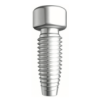
Stainless steel threaded connections are widely applied in vehicle manufacturing, mechanical equipment, construction engineering and other fields thanks to excellent corrosion resistance, attractive metallic luster and sound mechanical properties. However, compared with conventional carbon steel bolts, stainless steel threads are prone to seizure during assembly and disassembly. Minor seizure leads to difficult removal and schedule delays, while severe cases cause complete thread jamming, which requires destructive treatments such as cutting and grinding. This not only raises production costs but also may damage connected substrates. Frequent thread seizure has become a major bottleneck restricting production efficiency in large-scale assembly lines like vehicle manufacturing. Therefore, systematic analysis of the seizure mechanism and formulation of scientific prevention measures deliver great practical value to the industry.
1. Limitations of Current Understanding on Seizure Mechanism
Current understanding of stainless steel thread seizure is mainly derived from on-site fault observation and empirical summary, lacking a unified theoretical system and systematic experimental verification. Existing theories generally fall into two categories centered on wear:
The first theory attributes seizure to the adhesion and welding process. When stainless steel threads mesh, microscopic asperities on thread surfaces adhere under compression. Relative sliding during tightening breaks the adhesion points and induces adhesive wear. Continuous friction generates local high temperatures exceeding 800°C, triggering instant micro-welding at contact areas and eventually full thread seizure. On-site disassembly reveals severe surface scratching and metal transfer on both internal and external threads, with no obvious phase transformation in metallographic structures, which serves as indirect evidence for this theory.
The second theory focuses on the oxide film rupture and debris blockage mechanism. A native chromium oxide (Cr₂O₃) film of 5-10 μm thick forms on stainless steel surfaces, acting as the core barrier against corrosion. Nevertheless, this film features low hardness and high brittleness. Compression and friction during preload easily crack the oxide film, producing hard oxide particles that accelerate abrasive wear between threads. Mixed metal debris and oxide particles accumulate in thread clearances. As screwing depth increases, the particles are continuously compacted to block the thread path and result in seizure. This theory explains the hard deposits found in thread gaps during disassembly.
Both theories recognize wear as the primary inducement, yet disagree on the direct cause of final seizure. Neither is supported by quantitative data from controlled experiments, leading to poorly targeted prevention solutions.
2. Experiment-Verified Analysis of Seizure Mechanism
A series of comparative tests were conducted to clarify the essence of seizure. Common 304 and 316 stainless steel bolts and nuts were selected. Three variables were set: screwing speed (5 r/min, 15 r/min, 30 r/min), lubrication condition (dry, grease lubrication, molybdenum disulfide lubrication) and material pairing (same material, dissimilar materials). Preload torque was monitored in real time via torque sensors, and thread surface morphology was observed with a Scanning Electron Microscope (SEM).
Test results prove that stainless steel thread seizure is a progressive process of
wear, oxidation, blockage or welding. The two traditional theories describe phenomena under different working conditions:
Under high speed (≥15 r/min) and dry conditions, frictional heat accumulates rapidly. Local temperature exceeds the recrystallization temperature of stainless steel, causing micro-welding at thread contact points. Obvious metal fusion traces are observed under SEM, where adhesion and welding dominate the seizure.
Under low speed (≤5 r/min) or poor lubrication, abrasive particles from broken oxide films continuously wear thread surfaces. Accumulated debris changes the thread lead angle, resulting in a stepwise rise of torque and eventual mechanical blockage. No evident welding features are detected in this case.
Further tests show material pairing exerts a remarkable impact on seizure susceptibility. Pairing 304 with 316 stainless steel reduces adhesive wear by 40% due to lattice structure differences. For bolts with surface roughness Ra>1.6 μm, oxide films tend to rupture at surface asperities, leading to a 65% higher seizure rate compared with those with Ra≤0.8 μm (Ra≤0.8 μm). These quantified data complement and improve the theoretical system of seizure mechanism.
3. Practical Prevention System
Combined with the verified mechanism and assembly requirements for vehicle manufacturing, a three-in-one prevention system covering material pairing, surface treatment and process control is proposed:
-
Optimized Material Selection & Pairing
Prioritize dissimilar material combinations, e.g. 304 bolts matched with 316 nuts, to mitigate adhesion via hardness differences. For high-strength connections, adopt molybdenum-containing 316L stainless steel, whose oxide film stability is 30% higher than standard 304.
-
Surface Modification & Lubrication
Apply phosphating treatment to form a porous protective layer on threads for better grease adhesion. Special high-temperature grease must be coated on threads before assembly to protect vulnerable oxide films. This measure cuts the seizure rate by over 70% in tests. Ordinary grease is prohibited, as it carbonizes and fails at high temperatures.
-
Assembly Process Optimization
Control screwing speed within 5-10 r/min to avoid heat accumulation. Adopt the torque-angle tightening method: when torque reaches 80% of the rated value, slowly rotate to the specified angle to reduce impact damage to threads. Thoroughly clean threads to remove residual iron scraps and scale before assembly.
Additionally, implement regular inspection protocols. For repeatedly assembled threaded joints, check surface wear after every 5 assemblies. Replace components timely if thread damage exceeds 10%, so as to prevent unexpected seizure.
Conclusion
Stainless steel thread seizure is a combined effect of material properties, assembly processes, lubrication and other factors, rather than a single mechanism. Targeted solutions including dissimilar material pairing, dedicated lubrication and standardized assembly can fundamentally eliminate seizure risks. The research findings provide important guidance for large-scale assembly such as vehicle production, and deliver technical support for cost reduction and efficiency improvement across the industry.



















 Login
Login








 Contact
 WeChat
 粤ICP备2025493240号-1