























 Login
Login






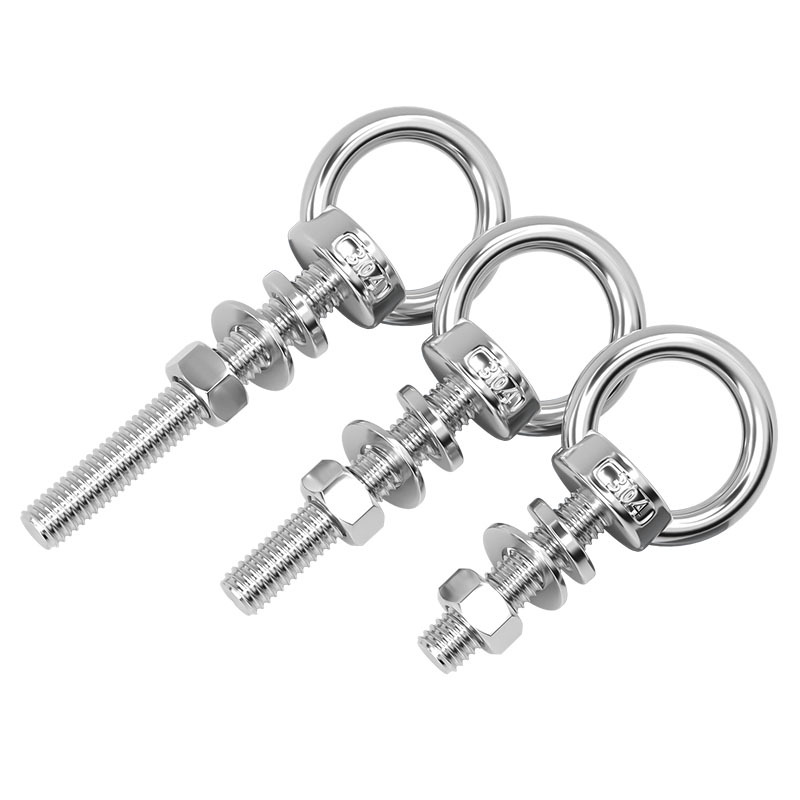
For those deeply involved in the fastener industry, names such as "hex socket head cap screw," "hex nut," and "expansion rivet" are certainly familiar, and one can even distinguish the appearance differences of different products at a glance. However, during actual procurement, production coordination, or quality inspection, simply stating the name is often far from sufficient. A request like "I need a hex socket head cap screw" may fail to specify dimensions, strength, and other information, resulting in delivered products that do not fit the working conditions or even causing production delays. In fact, to describe a fastener precisely, only five core elements are needed: product name (standard), dimensions, material, strength grade, and surface treatment. For example, "DIN912 (hex socket head cap screw), M4-0.7x8, SCM435, grade 12.9, black oxide" — such a description achieves clarity and zero error.
Product name (standard) is the "identity identifier" of a fastener and the foundation of precise description. Many practitioners are accustomed to using common names for products, such as "hex socket screw," but the standard practice within the industry requires combining the product name with the corresponding standard number. Products with the same appearance may have completely different dimensional and performance requirements under different standards. Taking the common hex socket head cap screw as an example: the German standard is DIN912, the Chinese national standard is GB/T 70.1, and the international standard is ISO 4762. Although the core structures of these three standards are similar, differences exist in details such as head height and thread tolerance. If a purchaser only says "hex socket head cap screw," the supplier may default to the GB/T 70.1 standard product, but if the actual working conditions require the high-precision version conforming to the DIN912 standard, a fit problem arises. Therefore, the standard product name description must combine "standard number + product type," such as "GB/T 196-2003 ordinary thread nut" or "ISO 1580 countersunk head rivet," ensuring that both supply and demand sides have a consistent understanding of the product's "identity."
Dimension parameters are the "dimensional coordinates" of a fastener, directly determining whether the product can fit the installation requirements. The core includes thread specification, length, head size, and other key data. Thread specification is the core of dimension description, typically expressed as "nominal diameter - pitch," such as M4-0.7, where "M" represents ordinary thread, "4" is the nominal diameter (major diameter), and "0.7" is the pitch (axial distance between adjacent thread crests). For coarse threads, the pitch may be omitted; for example, M6 defaults to coarse thread (pitch 1.0). Length parameters must specify the measurement reference. For bolts, length typically refers to the distance from the bearing surface of the head to the end of the thread. For example, the "8" in M4-0.7x8 indicates a bolt length of 8 mm. Additionally, head dimensions (such as the head diameter of a hex socket head cap screw or the width across flats of a hex nut) must be specified according to the standard. For example, in GB/T 70.1, the head diameter of an M4 hex socket head cap screw is 7 mm. If the actual installation space allows only a head diameter of 6 mm, a special size product is needed. A precise dimension description must fully present "thread specification + length + key external dimensions" to avoid missing the mark by a small margin.
Material is the "foundation" of fastener performance, directly affecting core indicators such as strength, corrosion resistance, and high-temperature resistance. The choice must be precise based on working conditions. Common fastener materials fall into three main categories: carbon steel, stainless steel, and alloy steel. Carbon steel offers high cost-effectiveness, suitable for ordinary working conditions, with common grades such as Q235 and 45 steel. Stainless steel has strong corrosion resistance, suitable for humid and outdoor scenarios. 304 stainless steel (0Cr18Ni9) is the most widely used due to its combination of corrosion resistance and economy, while 316 stainless steel is suitable for highly corrosive environments such as marine applications. Alloy steel improves performance through alloying elements. For example, SCM435 (chromium-molybdenum steel) can achieve high strength grades after heat treatment, commonly used in heavy-load scenarios such as construction machinery and automobiles. Material descriptions must specify the grade, avoiding vague expressions such as "stainless steel bolt," which could cover materials like 201, 304, and 316, with vastly different corrosion resistance. 201 stainless steel rusts easily in humid environments; if used for outdoor curtain wall connections, it could create safety hazards. Therefore, a standard material description must specify the exact grade, such as "304 stainless steel hex nut" or "45 steel anchor bolt."
Strength grade is the "measuring stick" for fastener load-bearing capacity, directly related to safety of use. Different scenarios have vastly different strength requirements. The strength grade is typically expressed as "number + decimal point + number." The number before the decimal point represents 1/100 of the minimum tensile strength (in MPa), and the number after the decimal point represents 10 times the ratio of yield strength to tensile strength (yield ratio). Taking a grade 12.9 bolt as an example: its tensile strength is ≥1200 MPa, yield strength is ≥1080 MPa (1200 × 0.9). This is a high-strength bolt, suitable for heavy-load conditions such as engines and wind power equipment. A grade 4.8 bolt has tensile strength ≥400 MPa and yield strength ≥320 MPa, commonly used in light-load scenarios such as furniture and light steel structures. The strength grade must match the material. For example, grade 12.9 bolts typically use alloy steels such as SCM435 or 42CrMo; ordinary carbon steel cannot achieve this strength. Also, note that higher strength grade is not always better. Higher-strength products cost more and may have increased brittleness. Selection must be based on actual load conditions. The description must clearly specify the grade, such as "grade 8.8 hex socket head cap screw" or "grade 10 hex nut."
Surface treatment is the "protective outer layer" of a fastener, providing corrosion protection, improving appearance, and enhancing assembly performance. Selection depends on the use environment. Common surface treatment methods include black oxide, hot-dip galvanizing, electroplating, chrome plating, and Dacromet. Black oxide (oxidation treatment) has low cost, forming a black oxide film, suitable for indoor dry environments such as internal connections of mechanical equipment. Hot-dip galvanizing produces a thick coating (typically 50-100 μm) with strong corrosion resistance, suitable for outdoor steel structures and power equipment. Electroplating produces a thin coating (5-20 μm) with a bright appearance, suitable for home appliances and electronic equipment where appearance is important. Dacromet treatment offers excellent salt spray resistance, suitable for highly corrosive environments such as marine and chemical applications. The description of surface treatment must specify the exact method, avoiding vague terms such as "rust prevention treatment." The protective effect and cost differ significantly between methods. For example, if an outdoor bolt is mistakenly specified with black oxide treatment, rust may appear within 3-6 months, whereas hot-dip galvanizing can maintain corrosion resistance for 5-10 years.
In practical industry scenarios, the coordinated description of all five elements is essential. Taking the procurement of an automotive engine connecting rod bolt as an example, the precise description should be: "DIN912 hex socket head cap screw, M10-1.5x35, 42CrMo, grade 12.9, phosphating." DIN912 specifies the product standard. M10-1.5x35 defines the dimensions for connecting rod installation. 42CrMo material and grade 12.9 strength meet the high load requirements of the engine. Phosphating treatment improves wear resistance and rust prevention. If any element is missing — for example, if the strength grade is not specified — the supplier might provide a grade 8.8 product, which could lead to bolt fracture due to insufficient strength after installation, causing engine failure. Conversely, precise description enables efficient coordination of procurement, production, and inspection, greatly reducing communication costs and quality risks.
As the fastener industry develops toward standardization and internationalization, the importance of precise description becomes even more prominent. For practitioners, mastering the five-element description method of "product name (standard) + dimensions + material + strength grade + surface treatment" is not only a reflection of professional competence but also key to ensuring product quality and improving work efficiency. Whether dealing with domestic suppliers or participating in international procurement, precise product description serves as the "universal language" for building trust and avoiding risks, helping the fastener industry achieve more efficient coordinated development.



 粤ICP备2025493240号-1