



























 Login
Login






As the "heart" of an automobile, the reliability of the engine directly determines the vehicle's performance and safety, and the foundation of all this relies on seemingly small but critically important fasteners. A passenger car engine contains hundreds of fasteners, from cylinder head bolts to connecting rod screws, from crankshaft main bearing cap bolts to valve cover nuts — each one undertakes the core mission of "connection and fastening." As the automotive industry upgrades toward higher power, higher rotational speeds, and lightweight design, engine operating conditions become increasingly severe. During operation, temperatures inside the cylinder block can exceed 1000°C, crankshaft speeds exceed 6,000 revolutions per minute, and the engine must withstand the impact of frequent start-stop cycles and vibrations from road bumps. Against this backdrop, relying solely on tightening tools for initial fastening is far from sufficient. Precise tightening methods and reliable anti-loosening measures have become the key to ensuring safe operation throughout the engine's life cycle.
To master scientific tightening and anti-loosening techniques, one must first understand the core principle of fastener tightening: the formation and function of axial clamping force. The tightening process of threaded fasteners is essentially an energy transfer process in which torque applied by a tightening tool is converted into axial clamping force. When a wrench or tightening gun rotates the bolt, the helix angle of the thread engagement surfaces converts circumferential force into axial force, causing the bolt to undergo slight elastic elongation while the workpieces being joined are compressed, forming a tightly clamped state. This axial clamping force generates sufficient friction to resist the lateral shear forces and vibration loads generated during engine operation, preventing relative sliding of the connected parts.
The magnitude of axial clamping force directly determines fastening reliability. Too much or too little can lead to failure. If clamping force is insufficient, the friction between thread pairs is inadequate to resist vibration, leading to a "loosening spiral" phenomenon and torque decay. Taking cylinder head bolts as an example: if clamping force is insufficient, the cylinder head gasket cannot seal tightly, resulting in "three leaks" — air, water, and oil leakage — which in severe cases leads to reduced engine power and piston damage. If clamping force is excessive, exceeding the bolt material's yield limit, the bolt will undergo plastic deformation or even fracture, also causing severe failure. Therefore, precise control of axial clamping force is the core objective of engine fastener tightening processes.
Achieving precise control of axial clamping force requires scientific tightening methods. The mainstream tightening methods used in engine manufacturing today can be divided into three categories, each suited to different critical areas. The first is the torque control method, which sets a target torque value on the tightening tool and automatically stops when the preset torque is reached. This method is simple to operate and low in cost, suitable for non-critical load-bearing areas such as valve covers and oil pans. However, this method is significantly affected by thread friction coefficient and bolt surface condition, with axial clamping force fluctuation errors up to ±15%, making it unsuitable for critical areas.
The second is the torque-angle control method. This method first tightens the bolt to a preset torque (snug torque), then, from that position, controls the bolt to rotate a fixed angle, precisely controlling the bolt elongation through angle conversion, thereby ensuring axial clamping force accuracy. This method controls clamping force fluctuation error within ±5% and is widely used in critical areas such as cylinder head bolts and connecting rod bolts. Taking the cylinder head bolt tightening of a 2.0T engine as an example, the process is set as "pre-tighten to 50 N·m, then rotate an additional 90°," precisely controlling bolt elongation to 0.35 mm through angle control, ensuring sealing reliability between the cylinder head and block.
The third is the yield point control method. This method monitors the torque-angle curve of the bolt during tightening in real time. When the slope of the curve suddenly changes (the bolt reaches its yield point), it immediately stops, allowing the bolt to work at the critical point between elastic and plastic deformation, maximizing clamping force while avoiding bolt fracture. This method has the highest accuracy, with clamping force fluctuation error less than ±3%. It is primarily used for critical areas subjected to extreme loads, such as crankshaft main bearing cap bolts, and is a core tightening technology for high-end engine manufacturing.
If tightening methods are the "foundation," then anti-loosening measures are the "double insurance," effectively preventing loosening risks under extreme engine operating conditions. Based on different anti-loosening principles, mainstream anti-loosening measures fall into three categories: mechanical anti-loosening, friction anti-loosening, and chemical anti-loosening. These are applied complementarily in engines.
Mechanical anti-loosening limits relative rotation of thread pairs through mechanical structures, offering the highest reliability and suitable for critical load-bearing areas such as crankshafts and connecting rods. Common forms include cotter pin and slotted nut combinations, tab washers, and lock wiring. Taking a crankshaft connecting rod screw as an example: during assembly, the nut is first tightened to the specified torque, then a cotter pin is inserted through the nut slot and bolt hole, preventing the nut from rotating. This anti-loosening method withstands severe vibration and impact and remains effective throughout the engine's life cycle. However, mechanical anti-loosening is complex to assemble and disassemble, making it unsuitable for areas requiring frequent maintenance.
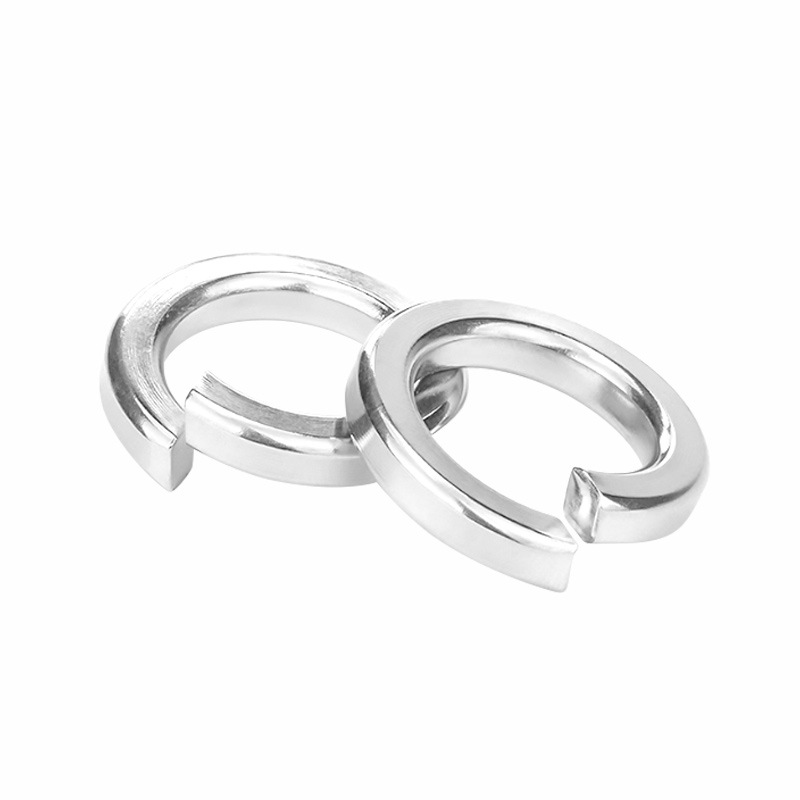
Friction anti-loosening achieves anti-loosening by increasing friction between thread pairs. It is easy to assemble and disassemble, suitable for areas such as valve covers and water pumps. Mainstream forms include lock nuts, spring washers, and double nuts. Lock nuts have an asymmetrical thread profile at the thread end; after tightening, the thread surfaces form an interference fit, increasing resistance to loosening. One engine valve cover uses a nylon insert lock nut; the nylon ring, under pressure, fills the thread gap, providing both anti-loosening and sealing. Spring washers generate sustained elastic pressure after tightening, maintaining normal pressure between thread pairs and counteracting torque decay caused by vibration. They are low-cost and highly versatile.
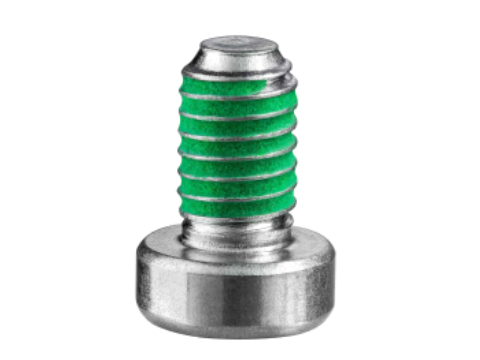
Chemical anti-loosening uses chemical adhesives to fill thread gaps and cure, forming a non-removable anti-loosening structure suitable for small fasteners and confined spaces. The threadlockers commonly used in engines are of two types: anaerobic and acrylic. After application, they cure rapidly in an oxygen-free environment, achieving shear strength of 10-20 MPa and effectively resisting vibration and temperature changes. For example, small parts such as ignition coil fixing screws and sensor fixing bolts, when medium-strength threadlocker is applied, achieve reliable anti-loosening while still allowing disassembly with tools, balancing reliability and convenience.
In actual production, tightening and anti-loosening techniques need to form a "combined strategy." Taking the assembly of a high-end engine connecting rod as an example: a "yield point tightening method + cotter pin anti-loosening" combination is used. First, the connecting rod screw is precisely tightened using the yield point control method to ensure clamping force meets design requirements. Then, a cotter pin is installed to achieve mechanical anti-loosening, forming double protection of "precise control + physical locking." For oil pan bolts, the combination of "torque control method + spring washer anti-loosening" is used, meeting sealing requirements while reducing cost.
With the advancement of smart manufacturing, tightening and anti-loosening technologies for engine fasteners are moving toward digitalization. Mainstream automakers have adopted intelligent tightening systems that collect real-time data on torque, angle, and rotational speed, creating a "digital identity card" for each bolt and enabling quality traceability. Some companies have also introduced online monitoring technology, using vibration sensors to monitor fastener status in real time and provide early warning of loosening risks. These technological upgrades shift tightening and anti-loosening from "post-inspection" to "pre-control," further enhancing engine reliability.
For fastener industry practitioners, deeply understanding engine tightening and anti-loosening technologies is key to driving product upgrading. From selecting bolt materials suitable for different tightening methods to designing anti-loosening structures for extreme working conditions, precise development based on engine operating conditions is required. Only by deeply integrating technical principles with practical needs can fasteners truly become the "rice of industry" for reliable engine operation, laying a solid foundation for the high-quality development of the automotive industry.



 粤ICP备2025493240号-1