














 Login
Login



Products
Solutions
Applications





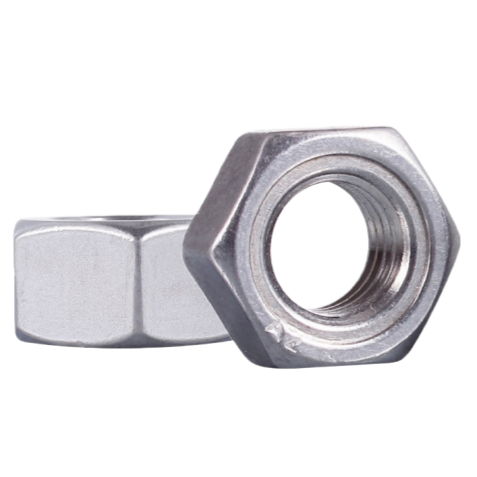
In the fastener industry, surface treatment directly determines product corrosion resistance, appearance, and assembly performance. Electroplating, as the most widely used surface treatment technology, runs through the entire production and application process. For mainstream fasteners such as clinching and bolting types, product identification often includes a string of electroplating codes — for example, "Zn·C2C" or "Ni·P." These seemingly simple symbols are actually the industry's "universal language" specifying the electroplating type and performance indicators. Deeply understanding the meaning of electroplating codes and mastering the core points of electroplating processes are key capabilities for fastener practitioners to ensure product quality and precisely match working conditions. This article starts with code analysis and comprehensively breaks down the core knowledge of fastener electroplating technology.
Electroplating codes are not arbitrarily labeled but follow strict national standards and industry specifications, with the most fundamental basis being GB/T 13911-2008 "Metallic and other inorganic coatings - Method for designating coating treatments." This standard clearly stipulates that the electroplating code consists of "substrate material code + plating method code + coating name code + coating characteristic code + post-treatment code." In some simple scenarios, the substrate material code may be omitted (defaulting to steel substrate). Taking the common code "Zn·C2C" for clinching screws as an example, "Zn" represents a zinc coating, and "C2C" represents color chromate passivation (post-treatment). "Ni·P" represents electroless nickel plating (where "P" stands for the electroless plating method), fully displaying the core information of the electroplating.
For different types of fasteners, the labeling scenarios for electroplating codes have their own emphases. For clinching fasteners, which are often used in precision scenarios such as electronic equipment and sheet metal parts, code labeling must be especially precise. For example, "Fe/Zn·C2A" clearly indicates a steel substrate, zinc plated followed by colorless chromate passivation. For high-strength bolts, key parameters such as coating thickness must be indicated, for example, "Zn·10·C2C" represents a zinc coating thickness of 10 μm with color passivation. Although these codes appear simple, they allow purchasers and assemblers to quickly identify product performance, avoiding application failures caused by confusion of electroplating types — for example, mistakenly substituting "Zn·C2C" (color zinc) for outdoor use with "Zn·C2A" (colorless zinc) for indoor use would result in insufficient corrosion resistance and rusting in a short time.
To truly understand the value of electroplating codes, one must first master the core principles of electroplating processes. Electroplating is essentially the process of forming a uniform, dense metal coating on the fastener surface using electrolysis. The fastener to be plated serves as the cathode, and the coating metal (such as zinc or nickel) serves as the anode, both placed in a plating solution containing metal ions of the coating material. When direct current is applied, the anode metal dissolves into ions that enter the solution, and metal ions in the solution deposit on the cathode (fastener surface) to form the coating. This process requires precise control of parameters such as current density, plating solution temperature, and pH value. For example, when plating zinc, excessive current density leads to a rough coating, while too low a temperature causes uneven coating thickness, directly affecting product quality.
Based on fastener application requirements, mainstream electroplating types currently in the industry fall into four major categories, each corresponding to different codes, performance characteristics, and application scenarios.
Zinc plating is the most common type, with the core code "Zn." Depending on the post-treatment method, it is divided into several subtypes. Color chromate passivation (Zn·C2C) has moderate corrosion resistance and low cost, suitable for outdoor non-highly corrosive scenarios such as construction and general machinery. Black chromate passivation (Zn·C2B) has a black appearance with some decorative properties, commonly used for automotive chassis fasteners. Olive drab passivation (Zn·C2D) has the best corrosion resistance, with salt spray tests reaching 72 hours or more, suitable for harsh environments such as military and marine equipment. Zinc plating, due to its low cost and mature process, accounts for more than 60% of the fastener electroplating market.
Nickel plating has the core code "Ni" and is divided into two types: electroplated nickel (Ni) and electroless nickel (Ni·P). Electroplated nickel coatings are uniformly bright and harder than zinc. The code "Ni·20" represents a nickel coating thickness of 20 μm, suitable for electronic equipment, medical devices, and other scenarios with high requirements for appearance and corrosion resistance. Electroless nickel plating requires no external power source, offers better coating thickness uniformity, and also provides wear resistance. The code "Ni·P·50" represents an electroless nickel coating thickness of 50 μm, commonly used for wear-resistant conditions such as hydraulic valve bolts and mold fasteners. Although the cost of nickel plating is higher than zinc, its corrosion resistance and decorative properties are superior, making it the mainstream choice for mid-to-high-end fasteners.
Chromium plating has the code "Cr" and is divided into decorative chromium (Cr·D) and functional chromium (Cr·F). Decorative chromium is often used as a top layer over nickel, forming a "nickel + chromium" composite coating with a mirror-bright appearance, suitable for fasteners used in furniture and automotive decorative parts. Functional chromium coatings are thicker (typically over 50 μm), extremely hard (over HV800), and have excellent wear resistance. The code "Cr·F·100" represents a functional chromium coating thickness of 100 μm, used for high-strength wear-resistant scenarios such as construction machinery pins and mold guide posts. Due to high environmental requirements (high cost of treating chromium-containing wastewater), the application range of chromium plating is relatively concentrated.
Copper plating has the code "Cu" and is mostly used as an intermediate coating. For example, in a "Cu·Ni·Cr" composite coating, the copper layer enhances the adhesion between the coating and the substrate while filling minor defects in the substrate, improving the uniformity of subsequent nickel and chromium plating. Pure copper coatings (Cu) have poor corrosion resistance and are rarely used alone. They are mainly used for fasteners requiring electrical conductivity in electrical equipment. The code "Cu·10" represents a copper coating thickness of 10 μm, ensuring electrical conductivity.
Quality control of electroplating is key to ensuring fastener performance. Core indicators include coating thickness, adhesion, and corrosion resistance. Coating thickness must be measured using a micro-thickness gauge. For example, ordinary zinc-plated bolts require thickness ≥8 μm, while high-strength bolts require thickness controlled at 10-15 μm (excessive thickness affects thread fit). Adhesion is verified by cross-cut testing or thermal shock testing; no coating detachment after cross-cut testing indicates a pass. Corrosion resistance is evaluated by neutral salt spray testing, with clear standards for different electroplating types. For example, color zinc passivation requires ≥48 hours without red rust, while electroless nickel plating requires ≥100 hours without corrosion. These testing standards correspond to electroplating codes. For example, the code "Zn·12·C2C" requires a zinc coating of 12 μm and salt spray testing ≥48 hours.
With increasingly stringent environmental regulations, fastener electroplating processes are moving toward greener directions. Traditional hexavalent chromium passivation, due to its high toxicity, has been gradually replaced by trivalent chromium passivation (where "C2C" in the code becomes "C2Z"). Although the cost increases by 15%-20%, environmental friendliness is greatly improved. New processes such as cyanide-free copper plating and ammonia-free zinc plating are also being gradually promoted, reducing harmful gas and wastewater emissions. At the same time, the level of electroplating automation continues to increase. Fully automatic barrel plating lines can monitor plating solution parameters in real time, ensuring uniform and stable coating quality for each batch of fasteners and providing a solid guarantee for the accuracy of code labeling.
For fastener practitioners, precisely mastering the correspondence between electroplating codes and processes is the core of achieving "selection on demand." In practical applications, comprehensive judgment is required based on the working environment, cost budget, and performance requirements. For outdoor steel structures, "Zn·C2D" (olive drab zinc) is preferred. For electronic equipment, "Ni·15" (15 μm nickel) is preferred. For wear-resistant conditions, "Cr·F·50" (50 μm functional chromium) is preferred. Only by deeply combining the meaning of codes with process characteristics can electroplating technology truly play its role as a "protective outer layer," improving fastener service life and application reliability, and promoting high-quality industry development.
Professional consultant team online, ready to provide solutions for you
Contact NowProducts
Solutions
Applications
Contact
 Contact
 WeChat
Contact: Manager Fan - Tel/WeChat: 135-6073-0094 Email: Flora.Fan@toprecision.com | Manager Ao - Tel/WeChat: 13560729614 Email: Olia.Ao@toprecision.com
Sales Director: Mr. Zhang - Tel: 13510369429 Email: xiaowei.zhang@zcjtech.com
© Copyright 2011 - 2026 Shenzhen Toprecision Precision Technology Co., Ltd. All Rights Reserved.
 粤ICP备2025493240号-1

Cutter Screws
Thread Inserts
Sealing Products
Riveting Products
Locking Products
Direct Assembly
SMT Components
Precision Screws
Screwdriver Bits