

















 Login
Login



Products
Solutions
Applications





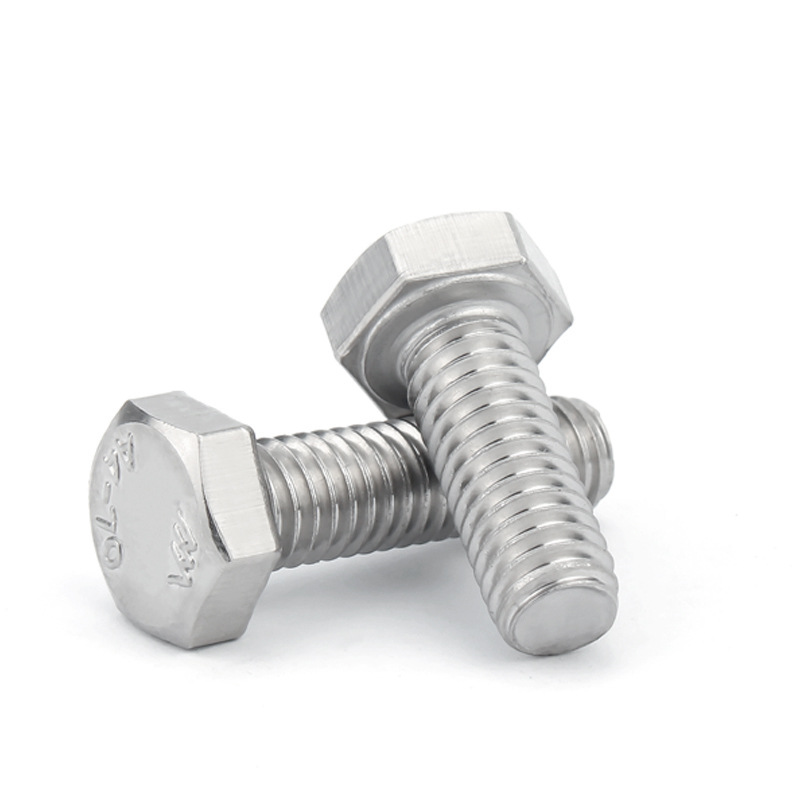
Threaded connections, due to their convenient assembly/disassembly and strong adaptability, have become the most widely used connection form in industry — from panel fixing in household appliances to cylinder head assembly in automotive engines, from flange connections in wind power equipment to precision component fastening in aerospace, all rely on the support of threaded fasteners. However, behind this seemingly reliable connection lies the hidden risk of "loosening failure." Under variable loads such as vibration, impact, and temperature cycling, approximately 70% of threaded connection failures originate from loosening. This can lead to equipment noise and reduced precision in mild cases, or shutdowns, structural collapse, and even safety accidents in severe cases. Mastering anti-loosening technology for threaded fasteners is key to ensuring reliable equipment operation. This article will comprehensively explain the principles and methods, making anti-loosening knowledge easy to understand.
To effectively prevent loosening, one must first understand "why loosening occurs." The essence of a threaded connection is to generate friction between thread pairs through preload, resisting relative rotation. When subjected to variable loads, this balance is disrupted. Vibration causes the fastener to endure alternating stress, periodically reducing the normal pressure between thread pairs and diminishing friction. Impact loads may instantaneously exceed the friction threshold, causing micro-slippage of the threads. Temperature changes cause stress relaxation due to different thermal expansion coefficients between the bolt and the workpieces, further weakening preload. Taking an automotive transmission as an example: high-frequency vibration from gear meshing continuously impacts bearing cover bolts. Without effective anti-loosening measures, bolts may loosen after 3,000-5,000 kilometers of driving, leading to transmission oil leakage and even gear damage.
Addressing the loosening mechanism, the industry has developed three major categories of anti-loosening technologies: mechanical anti-loosening, friction anti-loosening, and chemical anti-loosening. Each method suits different working conditions and requires precise selection.
Mechanical anti-loosening uses physical structures to limit relative rotation between thread pairs. It offers the highest reliability and can be considered the "ultimate anti-loosening solution." Its core advantage is that it is not affected by environmental factors, making it suitable for critical scenarios with severe vibration and complex loads.
There are four main forms of mechanical anti-loosening. First, the cotter pin and slotted nut combination: after tightening the nut, a cotter pin is inserted through the nut slot and the bolt hole, and the pin ends are bent to lock it. This structure is widely used in heavy-load scenarios such as crankshaft connecting rod bolts and wheel hub bolts. The disadvantage is that disassembly requires destroying the cotter pin, making it a one-time anti-loosening solution. Second, tab washers: including single-ear, double-ear, and external-tab washers. The washer's tab is bent to contact the nut or the side of the workpiece to achieve locking. Suitable for static heavy-load scenarios such as motor end covers. Easy to assemble/disassemble but with slightly lower anti-loosening strength than cotter pins. Third, lock wiring: wire is threaded through holes in multiple bolt heads to connect them, allowing the bolts to rotate only in the same direction. A single bolt's loosening tendency is restrained by the others. Indispensable in applications with many bolts in close proximity, such as aircraft engine blocks, but requiring very high assembly precision. Fourth, locking pins: after the bolt and nut are engaged, a pin is inserted through the thread hole to directly lock the thread pair. Suitable for large-size flange bolts, offering long-lasting anti-loosening effect but with higher processing costs.
Friction anti-loosening achieves anti-loosening by increasing friction between thread pairs or adding supplementary friction. It is easy to assemble/disassemble and low in cost, making it the preferred solution for general scenarios. Its core logic is to maintain stable normal pressure between thread pairs through structural design or additional components, counteracting friction decay caused by vibration.
Common forms include lock nuts, divided into two types: nylon insert lock nuts and all-metal lock nuts. Nylon insert nuts have a nylon ring embedded at the nut end; when tightened, the nylon ring is compressed and fills the thread gap, generating sustained friction. Suitable for light-load scenarios such as automotive interiors and electronic equipment. All-metal lock nuts use thread deformation to create an interference fit, achieving anti-loosening strength equivalent to grade 8.8 and above, suitable for vibration-prone areas in construction machinery. Spring washers are also common friction anti-loosening components. A spring washer generates sustained preload through elastic deformation after tightening. Flat washers increase the load-bearing area to prevent crushing of the workpiece surface. Using them together can more than double the anti-loosening effect, and they are very common in furniture and light steel structures. Additionally, double nut anti-loosening (thin nut + thick nut) creates opposing friction through preload between the two nuts. Although cost is slightly higher, it is highly effective in emergency situations where specialized anti-loosening components are not available.
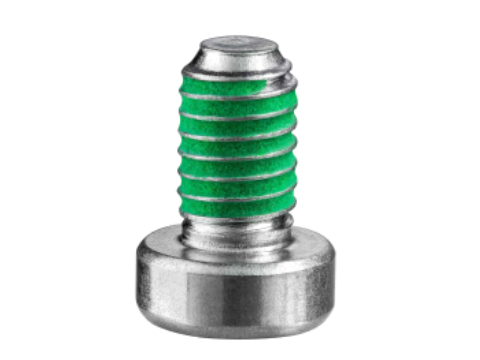
Chemical anti-loosening uses the bonding force of adhesives to lock thread pairs, suitable for small fasteners, confined spaces, or applications requiring sealing. The core product is threadlocker, divided into anaerobic and acrylic types. After application, it cures rapidly in the oxygen-free environment between thread pairs, forming a cured layer that provides both bonding strength and sealing, with shear strength reaching 10-30 MPa, effectively resisting vibration and impact. Based on strength, threadlockers are classified into three grades. Low-strength threadlockers (e.g., Loctite 222) are removable, suitable for sensor and instrument fixing screws. Medium-strength threadlockers (e.g., Loctite 243) require specialized tools for removal, suitable for motor end cover bolts. High-strength threadlockers (e.g., Loctite 271) are not removable after curing, used for permanent connections such as permanent magnet motor rotors. Chemical anti-loosening requires attention to the amount applied: too much may overflow and contaminate components, too little reduces effectiveness. It is typically recommended to apply 1-2 turns evenly along the thread profile.
In practical applications, a single anti-loosening method is often insufficient to meet the demands of complex working conditions. Combined anti-loosening has become the mainstream industry strategy. Taking a wind power flange bolt as an example: a combination of "torque-angle tightening process + wedge-locking washer + threadlocker" is used. First, precise tightening ensures preload. Then, the tooth surface engagement of the wedge-locking washer increases friction. Finally, threadlocker is applied to achieve sealing and anti-loosening. This allows the bolt to operate stably for more than 20 years in extreme environments ranging from -40°C to 120°C. Automotive engine cylinder head bolts use a combination of "lock nut + cotter pin," meeting the need for periodic maintenance while ensuring reliability under heavy-load vibration through mechanical locking.
Ensuring anti-loosening effectiveness also requires proper practical procedures. First, precise preload control: insufficient preload fails to generate adequate friction, while excessive preload can cause plastic deformation of the bolt. It is recommended to use a torque wrench or intelligent tightening system, operating according to the design torque value. Second, cleanliness control: oil or rust on thread surfaces reduces friction. Before assembly, threads should be cleaned with solvent and allowed to dry. Third, working condition adaptation: for outdoor corrosive environments, choose a combination of anti-loosening components and anti-corrosion coating; for high-temperature environments, avoid aging-prone materials such as nylon.
Although there are many anti-loosening technologies for threaded fasteners, the core logic is always to "prevent relative rotation between thread pairs." For fastener practitioners, selection should be based on load type, disassembly requirements, and environmental conditions. For severe vibration, choose mechanical anti-loosening. For general scenarios, choose friction anti-loosening. For small fasteners or sealing requirements, choose chemical anti-loosening. Mastering these anti-loosening principles and methods will allow every threaded fastener to truly fulfill its "rice of industry" fastening value, building a strong defense for safe equipment operation.
Professional consultant team online, ready to provide solutions for you
Contact NowProducts
Solutions
Applications
Contact
 Contact
 WeChat
Contact: Manager Fan - Tel/WeChat: 135-6073-0094 Email: Flora.Fan@toprecision.com | Manager Ao - Tel/WeChat: 13560729614 Email: Olia.Ao@toprecision.com
Sales Director: Mr. Zhang - Tel: 13510369429 Email: xiaowei.zhang@zcjtech.com
© Copyright 2011 - 2026 Shenzhen Toprecision Precision Technology Co., Ltd. All Rights Reserved.
 粤ICP备2025493240号-1

Cutter Screws
Thread Inserts
Sealing Products
Riveting Products
Locking Products
Direct Assembly
SMT Components
Precision Screws
Screwdriver Bits