
















 Login
Login



Products
Solutions
Applications





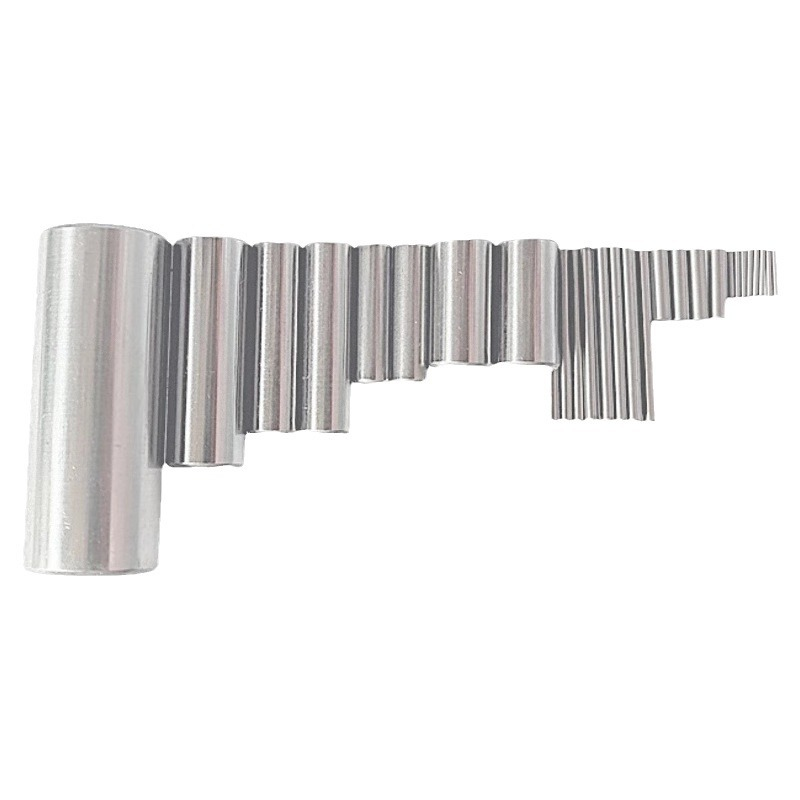
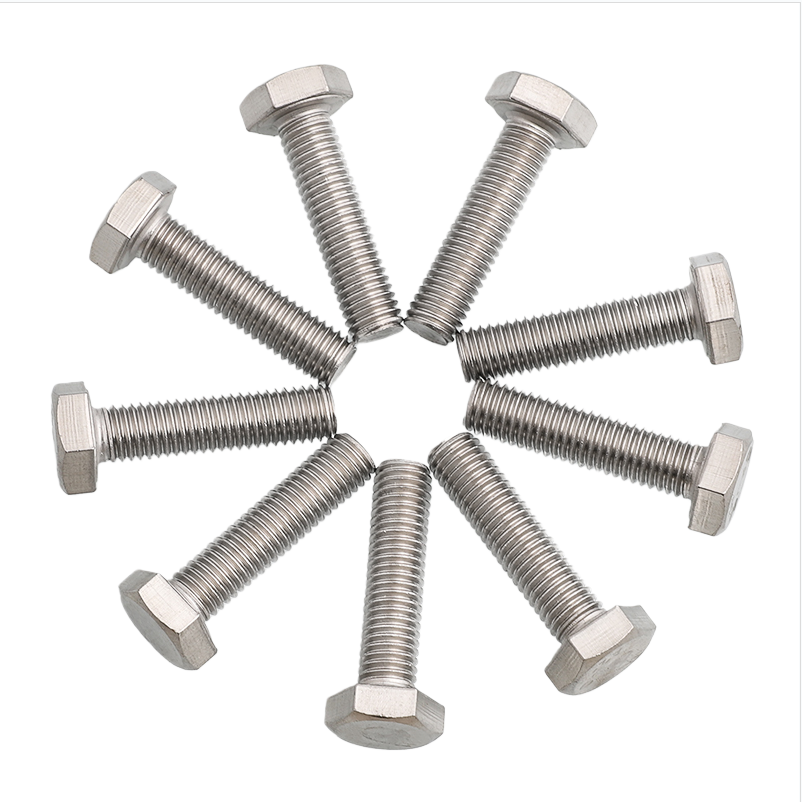
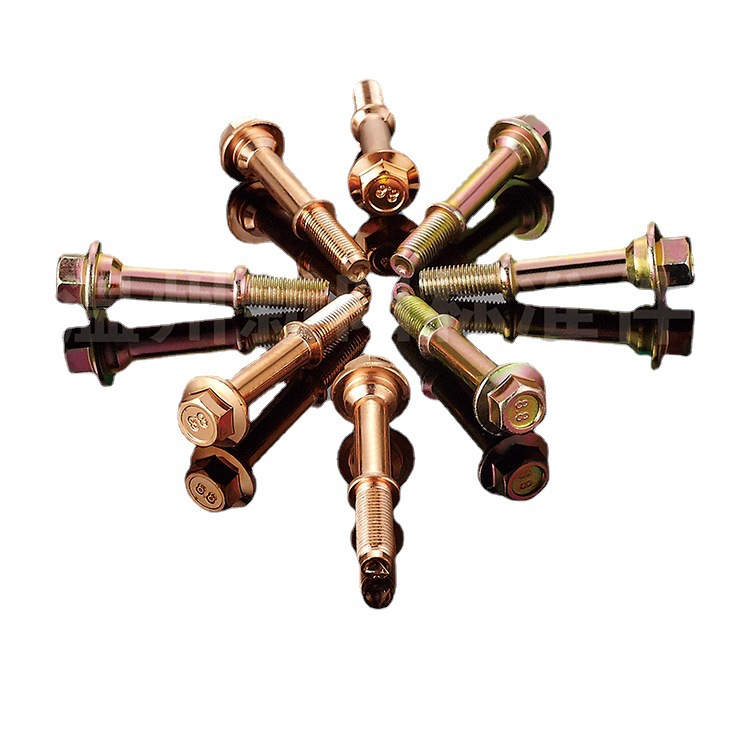
In modern mechanical manufacturing systems, fasteners are truly the "rice of industry," accounting for about 60% of the total number of machine parts. Threaded connections, with their advantages of convenient assembly/disassembly and high load-bearing capacity, have become the mainstream form of mechanical connections, accounting for over 70% of applications. Threaded connections have inherent self-locking properties, which originate from the interaction between the thread helix angle and the friction coefficient. However, under conditions of variable impact, high-frequency vibration, or severe temperature differences, the self-locking balance can be broken, leading to preload decay or even connection failure, causing equipment malfunctions. In this process, the friction coefficient, as a core design parameter, directly determines the utilization rate of bolt material strength and the anti-loosening reliability of the connection. The two exhibit a significant contradictory relationship. A high friction coefficient improves anti-loosening effectiveness but reduces preload under the same torque, potentially forcing designers to increase bolt size, leading to waste. A low friction coefficient allows for higher preload but carries the risk of loosening. Therefore, clarifying the factors influencing the friction coefficient is crucial for optimizing threaded connection design.
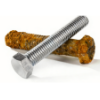
Surface treatment processes are the most direct key factor affecting the friction coefficient. Different treatment methods create differentiated friction performance by changing the physical morphology and chemical characteristics of the fastener surface. Hot-dip galvanizing forms a zinc layer on the bolt surface. The zinc coating has relatively large crystal grains and a slightly rough surface, with a friction coefficient typically maintained between 0.15 and 0.25. It also provides some corrosion resistance, suitable for general industrial scenarios. Dacromet treatment forms a dense zinc-chromium composite coating with a smooth, uniform surface, allowing the friction coefficient to be precisely controlled in the low range of 0.12-0.18. Its salt spray resistance far exceeds that of hot-dip galvanizing, making it suitable for harsh environments such as automotive chassis. Phosphating forms a phosphate conversion coating with a microporous structure. If combined with lubricating grease, the friction coefficient can be reduced to 0.08-0.12, commonly used in high-precision equipment requiring precise preload. Untreated bare steel surfaces are prone to oxidation and rust, with a highly variable friction coefficient ranging from 0.25 to 0.40, and poor stability, rarely used for critical connections.
The material properties of fasteners and workpieces have a synergistic effect on the friction coefficient. From a hardness perspective, when the bolt hardness is higher than that of the workpiece, micro-protrusions on the bolt surface tend to embed into the workpiece surface, creating a "plowing effect" that increases the friction coefficient. Conversely, if the workpiece is harder, the bolt surface is more prone to wear, causing the friction coefficient to gradually increase over time. Material composition is also critical. When stainless steel bolts are used with aluminum alloy workpieces, the difference in surface energy between the two materials is significant, resulting in a friction coefficient typically between 0.18 and 0.22. When carbon steel bolts are used with cast iron workpieces, the surface energies are similar, and an oxide film easily forms and adheres, increasing the friction coefficient to 0.25-0.30. Additionally, the elastic modulus of the material indirectly affects friction performance. Materials with a low elastic modulus tend to deform under pressure, increasing the actual contact area and slightly raising the friction coefficient.
Thread structural parameters systematically affect the friction coefficient by changing the contact area and pressure distribution. Thread profile is a core variable. Triangular threads have a flank angle of 60°, leading to concentrated contact stress and a relatively high friction coefficient. Trapezoidal threads have a flank angle of only 30°, providing a larger contact area and more uniform stress distribution, with a friction coefficient 15%-20% lower than triangular threads of the same specification. Pitch size is also key. Fine threads have more thread engagements and a longer thread contact length, resulting in a friction coefficient 10%-15% higher than coarse threads. This is also an important reason why fine threads offer better anti-loosening performance. Furthermore, thread accuracy grade affects surface roughness. Threads with 6H/6g accuracy have a surface roughness Ra ≤ 1.6 μm, providing more than 20% higher friction coefficient stability compared to lower-accuracy threads with Ra = 3.2 μm.
Service environment is an important external factor causing dynamic changes in the friction coefficient. Fluctuations in temperature, humidity, and load conditions can disrupt friction balance. Temperature increase causes thermal expansion of fastener materials, changing thread contact pressure. When the temperature exceeds 150°C, the surface oxide film on steel bolts accelerates, increasing the friction coefficient by 10%-30%. At low temperatures of -40°C, material brittleness increases and surface hardness rises, causing the friction coefficient to decrease slightly but with reduced stability. Humidity alters the surface state through corrosion. In humid environments with relative humidity >85%, untreated bolts develop surface rust within 24 hours, causing the friction coefficient to fluctuate by more than 0.1. The influence of load characteristics is also significant. Under static loads, the friction coefficient remains stable. Under dynamic alternating loads, micro-slippage occurs on thread surfaces, causing the friction coefficient to gradually decay. The magnitude of decay is positively correlated with the frequency of load alternation.
To quantitatively analyze the influence of key factors on the friction coefficient, a transverse vibration experiment was designed using M16×2.0 high-strength flange bolts. The experiment selected 30 bolts each with three surface treatments: hot-dip galvanizing, Dacromet, and phosphating. All were paired with 45 steel nuts. A torque wrench applied a preload of 200 N·m. An MTS transverse vibration test bench applied a vibration load with a frequency of 10 Hz and amplitude of 1 mm, continuously monitoring preload decay. The experimental results showed that bolts with Dacromet treatment had the most stable friction coefficient, with a preload retention rate of 85% after 1000 vibrations. Bolts with hot-dip galvanizing had a preload retention rate of 70%, with a friction coefficient fluctuation range of 0.05. Although bolts with phosphating had the lowest initial friction coefficient, after 500 vibrations the surface lubricating film wore away, resulting in a preload retention rate of only 65% and a friction coefficient that increased to 0.18. These results confirm the dominant role of surface treatment in friction coefficient stability and provide data support for high-strength bolt selection.
Based on the above analysis, the selection of fastener friction coefficients requires establishing a three-dimensional evaluation system of "process-material-condition." For severe vibration environments such as automotive engine compartments, prioritize Dacromet-treated fine-thread bolts, leveraging their low and stable friction coefficient to balance preload and anti-loosening performance. For fixed connections in high-precision machine tools, use phosphated bolts with lubricating grease to improve assembly accuracy through precise friction coefficient control. For ordinary construction machinery, hot-dip galvanized coarse-thread bolts can meet requirements with good cost-effectiveness. Additionally, benchmark friction coefficient values for specific conditions should be determined through pre-treatment experiments to avoid connection failure caused by experience-based selection.
As the machinery industry moves toward higher precision and reliability, precise control of the friction coefficient has become a core direction for fastener technology upgrading. In the future, composite surface treatment technologies combining corrosion resistance with low friction characteristics, and smart friction-adjustable fasteners with condition-adaptive capabilities, will become R&D hotspots. For industry practitioners, only by fully understanding the influencing patterns of the friction coefficient can they achieve precise fastener selection and optimized design, building a solid foundation for the reliable operation of mechanical equipment.
Professional consultant team online, ready to provide solutions for you
Contact NowProducts
Solutions
Applications
Contact
 Contact
 WeChat
Contact: Manager Fan - Tel/WeChat: 135-6073-0094 Email: Flora.Fan@toprecision.com | Manager Ao - Tel/WeChat: 13560729614 Email: Olia.Ao@toprecision.com
Sales Director: Mr. Zhang - Tel: 13510369429 Email: xiaowei.zhang@zcjtech.com
© Copyright 2011 - 2026 Shenzhen Toprecision Precision Technology Co., Ltd. All Rights Reserved.
 粤ICP备2025493240号-1

Cutter Screws
Thread Inserts
Sealing Products
Riveting Products
Locking Products
Direct Assembly
SMT Components
Precision Screws
Screwdriver Bits