
































 Login
Login






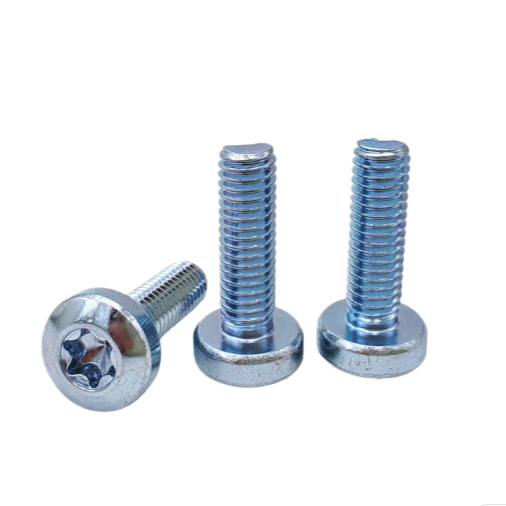
More than 80% of the core mechanical properties of fasteners — strength, hardness, toughness — are determined by the heat treatment process. Whether for high-strength automotive bolts, wind power flange bolts, or precision aerospace fasteners, improper heat treatment control can lead to substandard performance at best or fracture failure and safety accidents at worst. Heat treatment, as the "soul process" of fastener production, involves the interaction of multiple parameters such as temperature, time, and media, requiring precise control of key points. This article breaks down the core control aspects of the heat treatment process from an overall process perspective, providing a systematic reference for fastener industry practitioners.
Material pretreatment is the foundation of heat treatment, directly affecting subsequent process stability and final performance. The primary control point is raw material composition inspection. Spectrometry and similar methods must verify the content of key elements such as carbon, chromium, and molybdenum. For example, 40Cr steel for grade 10.9 bolts requires carbon content between 0.37%-0.44% and chromium content between 0.80%-1.10%. Excessive element deviation can lead to insufficient quenched hardness or unbalanced toughness. The second control point is surface cleaning. Scale, oil, or rust on the raw material surface can hinder heating uniformity, leading to localized soft spots after quenching. Shot blasting, pickling, or sandblasting should be used to ensure surface roughness Ra ≤ 12.5 μm. For fasteners formed by cold heading, stress relief annealing pretreatment is also required, with temperature controlled at 550°C-600°C for 1-2 hours, to eliminate cold working stress and avoid cracking during quenching.
Heating control is the core of heat treatment, requiring precise control of temperature, time, and atmosphere. The key to temperature control is furnace temperature uniformity. Industrial furnaces require regular calibration with thermocouples to ensure temperature variation in the effective heating zone ≤ ±5°C. For example, the quenching heating temperature for 45 steel is 840°C ± 10°C. Too low a temperature leads to incomplete austenitization and low hardness; too high a temperature causes coarse grains and reduced toughness. Holding time must be adjusted according to fastener specifications, following the principle of "longer for thick parts, shorter for thin parts." For a φ16 mm bolt, the holding time at 840°C for quenching is about 30 minutes to ensure complete austenitization of the core. Heating atmosphere control is often overlooked. An oxidizing atmosphere causes surface decarburization, reducing bolt fatigue strength by more than 30%. Therefore, a controlled atmosphere furnace should be used, with protective gases such as nitrogen and methanol, maintaining oxygen content below 0.1%.
The quenching cooling step determines the quality of martensitic structure transformation in fasteners. The core control points are the cooling medium and cooling rate. The choice of cooling medium must match the material and performance requirements. Water has the fastest cooling rate (about 200°C/s at 600°C), suitable for medium-carbon steel fasteners such as 45 steel. Oil has a slower cooling rate (about 30°C/s at 600°C), reducing the risk of quenching cracks in high-strength steels such as 35CrMo. For precision fasteners, water-soluble quenchants should be used, with cooling rate precisely controlled by adjusting concentration. During cooling, stacking of fasteners must be avoided to ensure uniform cooling of each part. The quenching medium temperature must also be controlled — oil temperature typically maintained at 20°C-60°C, water temperature ≤40°C. Excessively high temperature reduces cooling capacity, leading to insufficient hardness.
Tempering is key to balancing strength and toughness in fasteners, requiring strict control of tempering temperature, holding time, and cooling method. Tempering temperature directly determines final hardness. Low-temperature tempering (150°C-250°C) increases hardness and wear resistance, suitable for bearing fasteners. Medium-temperature tempering (350°C-500°C) provides good elasticity, suitable for spring washers. High-temperature tempering (500°C-650°C) optimizes toughness, used for high-strength bolts. Holding time must ensure complete transformation of the structure, typically 1.5-3 hours, extended appropriately for larger furnace loads. Cooling method is selected based on performance requirements: air cooling is sufficient after high-temperature tempering; for low-temperature tempering, to reduce internal stress, furnace cooling to 200°C followed by air cooling is recommended. Notably, hardness uniformity must be checked after tempering, with hardness variation within the same batch of fasteners ≤ 2 HRC.
Surface quality and performance testing is the "last line of defense" for heat treatment quality, covering three dimensions: appearance, mechanical properties, and microstructure. Appearance inspection must identify defects such as cracks, decarburization, and deformation. Magnetic particle inspection (for ferromagnetic materials) can detect small surface cracks. Decarburization depth must be measured by microhardness testing; for grade 10.9 bolts, the total decarburization depth shall not exceed 1.5% of the nominal thread diameter. Mechanical property testing includes tensile testing (tensile strength and yield strength), impact testing (toughness), and fatigue testing. For example, grade 10.9 bolts require tensile strength ≥ 1040 MPa and elongation after fracture ≥ 9%. Microstructure inspection must ensure uniform quenched martensitic structure, forming fine granular sorbite after tempering, avoiding undesirable structures such as coarse martensite or untempered martensite.
Additionally, process stability control cannot be ignored. A heat treatment process parameter traceability system should be established, recording heating temperature, holding time, cooling medium, and other data for each batch. Process validation testing should be conducted regularly, with full-parameter process trial production at least once per quarter. Operators must be certified and familiar with heat treatment characteristics of different materials. For mass-produced fasteners, statistical process control (SPC) should also be used, monitoring fluctuations in key indicators such as hardness and strength to adjust process parameters in a timely manner.
The essence of heat treatment control is "precise control of structure transformation." Each control point is interconnected, and a single mistake can lead to rejection of an entire batch. As fasteners move toward higher strength and greater precision, heat treatment technology is also advancing. For example, vacuum heat treatment can further reduce decarburization, and intelligent furnace temperature control systems enable real-time parameter adjustment. For practitioners, converting key control points into standardized operating procedures, combined with inspection methods and data traceability, is the only way to consistently produce high-quality fasteners and remain competitive in the market.



 粤ICP备2025493240号-1