






















 Login
Login



Products
Solutions
Applications





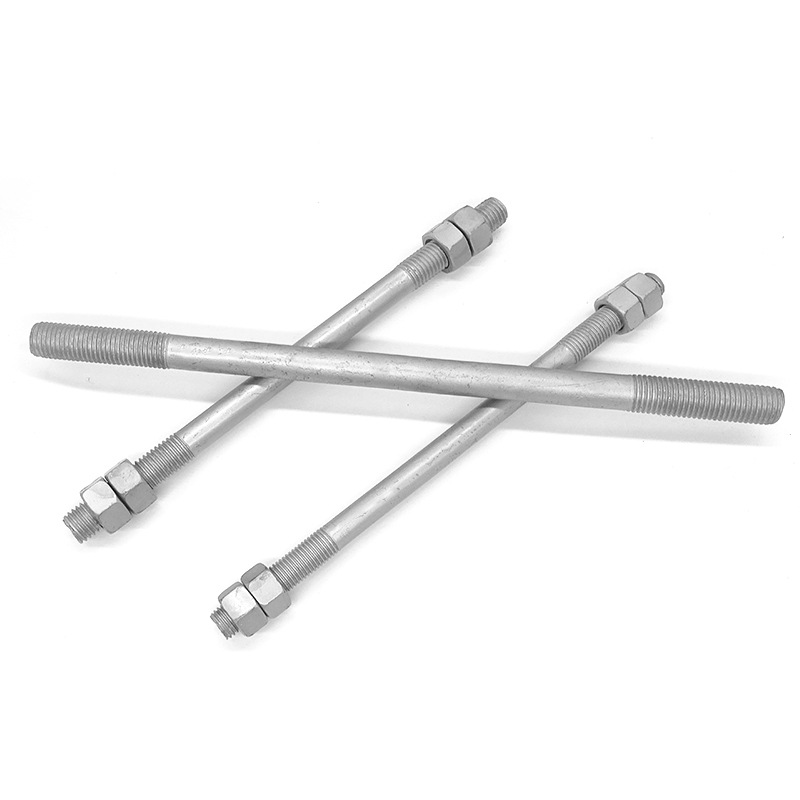
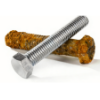
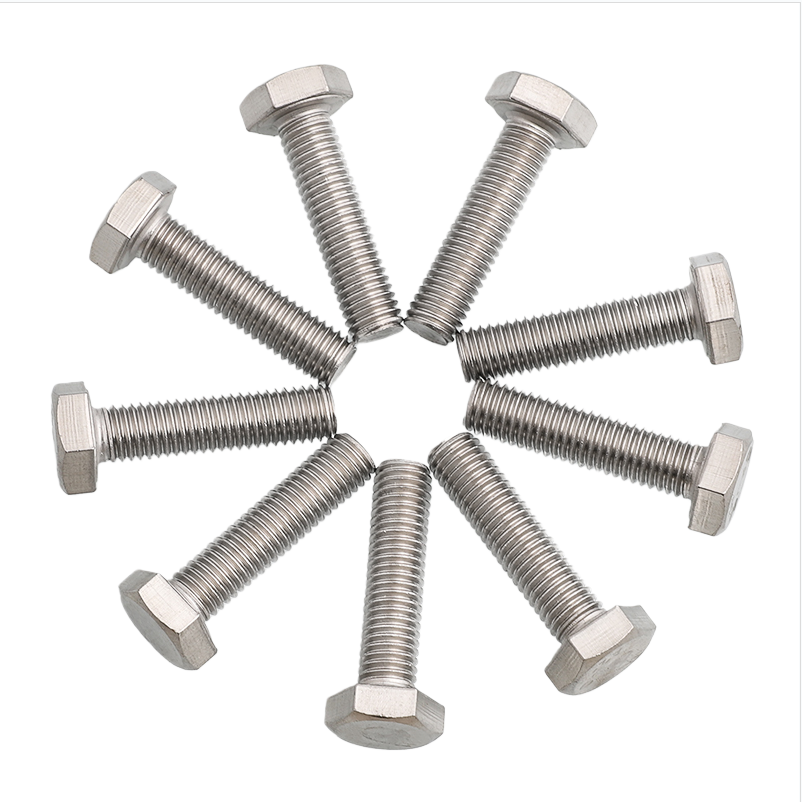
In the fastener family, the stud bolt (also known as double-end bolt or double-end stud), with its unique structure of threads on both ends and a plain or reduced shank in the middle, occupies an irreplaceable position. From heavy components in mining machinery to steel structure connections in bridges, from cylinder block fixation in automotive engines to load-bearing frames in large buildings, it can be seen everywhere. In contrast, the ordinary bolt (such as the common hexagon head bolt), despite its simple structure and convenient installation, is often relegated to a secondary role in many critical scenarios. This raises the question: Why are stud bolts so widely used? Are ordinary bolts really "not good"? The answer is not absolute. The difference in applicability between the two stems from how well their structural characteristics match working conditions. In-depth analysis reveals the key factors.
To understand the difference, one must first clarify the core structural advantages of the stud bolt. The core design logic of the stud bolt is "threads on both ends adapting to different connection requirements." The threads at each end can be designed to equal or unequal lengths depending on the scenario. The diameter of the plain middle section can be the same as the thread diameter (equal diameter type) or slightly smaller (reduced diameter type). This structure gives it the ability for "bidirectional connection" — one end can be screwed into a threaded hole in the workpiece for a embedded connection, while the other end secures another component using a nut, allowing for disassembly. In contrast, an ordinary bolt has threads only on one end, with a head (such as a hex head or round head) on the other end, requiring the head to bear pressure during tightening. The connection form is more limited, and the presence of the head takes up additional space.
Adaptability to thick-walled or deep-hole connection scenarios is one of the most prominent advantages of stud bolts. In connections for thick-walled components such as drums in mining machinery or steel structure furnace walls in boilers, ordinary bolts face two major problems. First, to achieve deep fixation, the threaded section would need to be lengthened, reducing the overall strength of the bolt, and the head is prone to bending due to excessive lever arm length when under force. Second, it is difficult to create through-holes inside thick-walled components, so ordinary bolts cannot penetrate for fixation. The stud bolt, however, can be installed by screwing one end into the threaded hole of the thick-walled substrate without needing a through-hole. The plain middle section matches the thick-wall thickness, and the other end protrudes to be secured with a nut. This ensures connection depth while avoiding the lever arm problem of ordinary bolts. Data from a boiler manufacturer shows that after switching to stud bolts for furnace wall connections, the bolt fracture failure rate dropped from 8.3% with ordinary bolts to 1.1%.
In scenarios requiring frequent disassembly, the protective effect of stud bolts on the substrate is unmatched by ordinary bolts. Take the connection between an automotive engine cylinder head and cylinder block as an example. Maintenance requires periodic removal of the cylinder head. If ordinary bolts are used, each disassembly requires rotating the entire bolt, and repeated tightening can easily wear out or strip the threaded holes in the cylinder block. Once the substrate threads are damaged, repair costs are very high. When using stud bolts, only the nut on one end needs to be removed; the end screwed into the cylinder block remains fixed, effectively protecting the substrate threads. According to automotive maintenance industry statistics, the thread failure rate for engine cylinder blocks using stud bolts is only one-fifth that of ordinary bolts, and each disassembly time is shortened by 40%.
The balanced load-bearing performance is also a core strength of stud bolts. The transition area between the head and shank of an ordinary bolt is prone to stress concentration, which under vibration and impact conditions (such as in tower cranes and large-span steel structures) is susceptible to fatigue fracture. The stud bolt, lacking a head structure, has a smoother transition between the threads and the plain shank, resulting in more uniform stress distribution. Particularly for reduced-diameter stud bolts, where the plain shank diameter is slightly smaller than the thread root diameter, stress concentration can be transferred to the plain shank, avoiding excessive stress damage to the threaded section. Tests in the wind power industry show that under equivalent loads, the fatigue life of reduced-diameter stud bolts is more than 60% higher than that of ordinary bolts of the same specification, making them more suitable for long-term vibration conditions in wind turbine towers.
Of course, ordinary bolts are not "not good." They have advantages in simple connections and shallow-hole fixation scenarios — simple structure, no pre-tightening required for installation, and 10-20% lower cost than stud bolts. They are suitable for non-critical load scenarios such as home appliance housings and lightweight shelving. The essential difference between the two is scenario adaptability, not an absolute superiority or inferiority. For example, in light steel keel fixation for home renovations, self-tapping ordinary bolts are quick to install and far more efficient than stud bolts. However, in box girder splicing for bridges, the high strength and reliability of stud bolts are the necessary choice.
The widespread application of stud bolts also benefits from their flexible combination adaptability. They can be paired with different types of nuts and washers to suit different workpiece materials. When connecting stainless steel and carbon steel components, a stud bolt with a stainless steel threaded section on the stainless steel side can be selected to avoid galvanic corrosion. In high-temperature scenarios, stud bolts paired with superalloy nuts can withstand temperatures above 600°C, whereas ordinary bolts, limited by head material, have poorer high-temperature adaptability. Additionally, for connections involving irregularly shaped components or confined spaces, stud bolts can be customized with different thread lengths and plain shank diameters to meet special installation requirements, something standardized ordinary bolts cannot easily achieve.
When selecting, the principle of "working conditions first" should be followed. For thick-walled, deep-hole, frequent disassembly, or vibration and impact conditions, stud bolts are preferred, with reduced-diameter types for high-strength requirements and equal-diameter types for ordinary loads. For thin-walled, shallow-hole, one-time fixation, or light-load scenarios, ordinary bolts offer cost advantages. Also, pay attention to installation points for stud bolts: the end screwed into the substrate must have sufficient thread engagement length (typically 1.5 to 2 times the thread diameter) to avoid loosening. Apply anti-loosening adhesive during installation to enhance reliability under vibration.
The popularity of stud bolts essentially reflects the industrial pursuit of balancing reliability, adaptability, and economy. It does not negate the value of ordinary bolts, but rather solves the pain points of ordinary bolts in more complex and critical scenarios through structural advantages. As equipment manufacturing moves toward heavier and more precise designs, the demand for customized stud bolts continues to grow, such as titanium alloy stud bolts in aerospace and radiation-resistant stud bolts in nuclear power, which are becoming new industry hotspots. For fastener professionals, understanding the adaptability logic between the two enables precise matching in selection, allowing every fastener to deliver maximum value.
Professional consultant team online, ready to provide solutions for you
Contact NowProducts
Solutions
Applications
Contact
 Contact
 WeChat
Contact: Manager Fan - Tel/WeChat: 135-6073-0094 Email: Flora.Fan@toprecision.com | Manager Ao - Tel/WeChat: 13560729614 Email: Olia.Ao@toprecision.com
Sales Director: Mr. Zhang - Tel: 13510369429 Email: xiaowei.zhang@zcjtech.com
© Copyright 2011 - 2026 Shenzhen Toprecision Precision Technology Co., Ltd. All Rights Reserved.
 粤ICP备2025493240号-1


Cutter Screws
Thread Inserts
Sealing Products
Riveting Products
Locking Products
Direct Assembly
SMT Components
Precision Screws
Screwdriver Bits