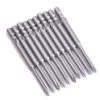
As core connecting components of mechanical equipment and engineering structures, fasteners determine the overall operational safety and service life of mechanical systems. In practical service, fastener failures frequently occur due to various causes, leading to equipment breakdown in mild cases and severe safety accidents in severe cases. Therefore, in-depth understanding of fastener failure modes, root cause exploration and targeted prevention strategies are essential for engineering design and daily maintenance. Based on rich industrial experience, Shenzhen Yongjing Precision Technology Co., Ltd. systematically analyzes mainstream fastener failure modes to provide comprehensive technical guidance for engineering applications.
I. Fatigue Fracture: Invisible Hazard Under Cyclic Loads
Fatigue fracture is one of the most common fastener failure modes under alternating stress. It occurs suddenly without obvious premonition and poses great hidden dangers to structural safety.
1. Failure Mechanism and Characteristics
Fatigue failure originates from stress concentration areas, including thread root fillets and the transition radius between bolt head and shank. Under continuous cyclic loads, microcracks initiate at stress concentration points and expand gradually, until the residual cross-section cannot bear external load and causes sudden fracture. Typical fracture morphology consists of three distinct zones: a smooth fatigue source zone, a fatigue propagation zone with typical beach-like striations, and a rough final fracture zone.
2. Main Inducements
Uncontrolled preload: Insufficient preload causes relative sliding of connected components and generates additional alternating stress; excessive preload increases average stress and reduces the fatigue strength of bolts.
Severe stress concentration: Improper structural design with small transition fillets, machining defects such as tool marks and scratches, and surface damage will aggravate stress concentration and become crack initiation sources.
Material and process defects: Internal non-metallic inclusions, micro-pores and uneven microstructure caused by improper heat treatment significantly shorten the fatigue life of fasteners.
3. Prevention Strategies
Optimize structural design by increasing transition fillet radius and adopting flexible bolt structures to reduce stress amplitude. Improve processing technology through thread rolling to form beneficial surface compressive stress and conduct shot peening strengthening on key positions. Control preload accurately and uniformly to avoid connection separation and bolt overload. Adopt high-purity materials with excellent fatigue resistance.
II. Hydrogen Embrittlement Fracture: Delayed Failure Trap for High-Strength Fasteners
Hydrogen embrittlement is a typical delayed brittle failure closely related to service environments, which mostly occurs in high-strength fasteners. Fractures happen suddenly after a certain incubation period under static load.
1. Failure Mechanism and Characteristics
Hydrogen atoms penetrate into the metal interior, accumulate at high-stress areas under stress gradient, and weaken atomic bonding force. This causes brittle fracture at stress levels lower than the material yield strength. Macroscopically, the fracture shows typical brittle characteristics; microscopically, it presents intergranular fracture with typical feather-like patterns.
2. Hydrogen Sources
Manufacturing process: Hydrogen permeates into steel during pickling and electroplating, especially galvanizing and cadmium plating processes.
Service environment: Hydrogen intrusion also occurs in hydrogen-containing atmospheres such as hydrogen sulfide environments and under cathodic protection conditions.
3. Prevention Strategies
Implement strict process control: high-strength fasteners of Grade 10.9 and above must undergo standardized baking dehydrogenation treatment at 190–230°C for several hours within the specified time after electroplating. Adopt hydrogen-free coating processes such as Dacromet coating and powder zinc impregnation. Select hydrogen embrittlement-insensitive materials for ultra-high-strength scenarios and optimize structural design to reduce stress concentration.
III. Stress Corrosion Cracking (SCC): Coupling Failure of Stress and Corrosive Environment
Stress corrosion cracking is a hidden brittle failure caused by the coupling effect of sustained tensile stress and specific corrosive media, with strong concealment and high risk.
1. Failure Mechanism and Characteristics
Under continuous tensile stress (working stress or residual stress), microcracks generate and expand rapidly along intergranular or transgranular paths on the surface of sensitive materials in specific corrosive environments, eventually leading to fracture. SCC cracks are generally dendritic and filled with corrosion products.
2. Typical SCC Occurrence Combinations
Austenitic stainless steel (304, 316) in chloride-containing environments; high-strength steel in hydrogen sulfide acidic environments (sulfide stress cracking for oil pipes); brass in ammonia-containing environments (season cracking).
3. Prevention Strategies
Isolate corrosive media through surface coating and sealing protection. Eliminate residual stress via stress-relief annealing. Upgrade material selection: replace ordinary 304 stainless steel with duplex stainless steel or high-molybdenum 316L stainless steel with superior pitting and stress corrosion resistance in chloride environments. Reduce medium temperature and corrosive ion concentration to improve service conditions.
IV. Overload Fracture and Thread Failure: Direct Mechanical Strength Failure
1. Overload Fracture
Overload fracture occurs when external load exceeds the ultimate tensile or shear strength of fasteners, characterized by obvious plastic necking or shear fracture traces. It is mainly caused by incorrect load calculation, improper model selection, accidental impact load and severely excessive installation preload.
2. Thread Shear Stripping
Thread meshing failure is induced by insufficient meshing length, unbalanced strength matching between bolts and internal threads, and poor thread machining accuracy leading to extremely uneven load distribution.
3. Prevention Strategies
Conduct accurate mechanical calculation and scientific model selection, ensure strength matching between bolts and nuts, design sufficient thread meshing length, and strictly control installation torque to avoid over-tightening damage.
V. Loosening Failure: Common Functional Failure Mode
Loosening failure does not cause direct fracture but leads to complete loss of connection function and further secondary equipment accidents. It is mainly triggered by preload attenuation under vibration, impact and temperature fluctuation, as well as embedding relaxation of fitting surfaces.
Prevention Strategies
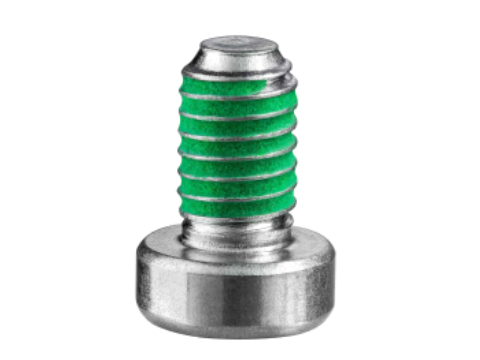
Adopt reliable anti-loosening measures including mechanical locking such as lock nuts and lock wires, friction locking such as spring washers and double nuts, and permanent locking such as spot welding and thread gluing, to maintain stable preload and connection reliability.
Conclusion
Fastener failure is a complex coupling process of multiple factors. Shenzhen Yongjing Precision Technology Co., Ltd. proposes that failure prevention requires systematic full-lifecycle management covering design, material selection, manufacturing, installation and maintenance. In-depth mastery of failure mechanisms, accurate identification of inducements and strict implementation of standardized prevention measures can effectively improve the reliability and safety of threaded connections and ensure stable and long-term operation of mechanical equipment.
























 Login
Login








 Contact
 WeChat
 粤ICP备2025493240号-1