



























 Login
Login



Products
Solutions
Applications





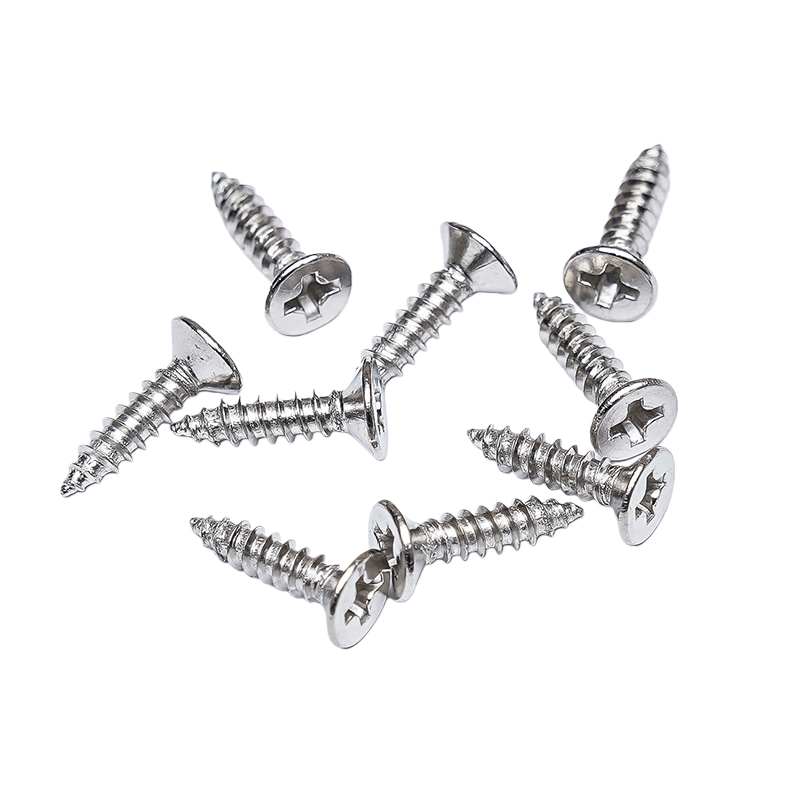
In the selection and design of fasteners, the choice of material is the core factor determining performance, service life, and suitability for the application environment. Different materials show significant differences in strength, toughness, corrosion resistance, temperature resistance, electrical conductivity, magnetism, and cost. Shenzhen Yongjing Precision Technology Co., Ltd. aims to provide a scientific and clear basis for material selection when users face diverse engineering needs, through a systematic comparison of the characteristics of commonly used fastener materials.
1. Carbon Steel and Alloy Steel Fasteners: The Backbone of Strength
Carbon steel is the most widely used and lowest-cost fastener material. Different performance grades are obtained by adjusting carbon content and heat treatment processes.
Low Carbon Steel (e.g., Q235): Low strength (performance grades typically 4.6, 4.8), good plasticity, suitable for general connections and low-load applications.
Medium Carbon Steel and Quenched/Tempered Alloy Steel (e.g., 35, 45, 40Cr, 35CrMo): Can achieve relatively high strength (grades 8.8, 10.9, 12.9) through quenching and tempering. Alloy steels, with added elements like chromium and molybdenum, offer better hardenability, high-temperature strength, and some corrosion resistance, often used for critical connections and high-strength bolts.
Characteristics and Limitations:
Advantages: Wide strength range, mature processes, good economy.
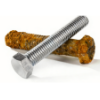
Disadvantages: Poor corrosion resistance, prone to rusting, must rely on surface treatments (e.g., electroplating, hot-dip galvanizing, Dacromet) for protection. Caution is needed in humid, acidic, or alkaline environments.
2. Stainless Steel Fasteners: The Guard Against Corrosion
Stainless steel is the first choice for special environments due to its excellent corrosion resistance. It is mainly divided into austenitic, martensitic, and ferritic types.
Austenitic Stainless Steel (e.g., 304, 316): Most commonly used. Non-magnetic, good corrosion resistance. Type 316, with added molybdenum (Mo), offers better pitting resistance and seawater resistance. However, strength is relatively low (typically equivalent to grade 6.8 or 8.8), and stress corrosion cracking can occur in high-chloride environments.
Martensitic Stainless Steel (e.g., 410, 420): Can be hardened by heat treatment to achieve high strength (up to grade 12.9). Offers some corrosion resistance but has lower toughness and poorer corrosion resistance than austenitic stainless steel. Often used where both strength and some corrosion resistance are needed, such as valve stems.
Characteristics and Limitations:
Advantages: Aesthetic appearance, corrosion resistance, no coating needed, simple maintenance.
Disadvantages: Higher cost; strength is typically lower than alloy steel of the same size; some grades are magnetic; galvanic corrosion may occur when in contact with carbon steel; austenitic stainless steel is prone to galling (thread seizure).
3. Non-Ferrous Metal Fasteners: Meeting Special Performance Requirements
Copper and Copper Alloys (e.g., Brass, Bronze):
Advantages: Excellent electrical and thermal conductivity; good resistance to seawater and atmospheric corrosion; non-magnetic; aesthetic.
Disadvantages: Low strength (generally below grade 6.8), expensive.
Applications: Electrical connections, marine components, decorative parts, corrosion-resistant non-critical structures.
Aluminum and Aluminum Alloys:
Advantages: Low density, very light weight; good electrical and thermal conductivity; forms an oxide film in the atmosphere providing some corrosion resistance; non-magnetic.
Disadvantages: Low strength (high-strength aluminum alloys can reach grade 8.8 levels, but well below steel); low hardness, prone to wear; high risk of galvanic corrosion when in contact with dissimilar metals (especially steel and copper).
Applications: Aerospace, lightweight transportation, electronic equipment, and other weight-sensitive fields.
4. Special Alloy Fasteners: For Extreme Environments
Titanium and Titanium Alloys:
Advantages: Very high specific strength (strength-to-density ratio); excellent corrosion resistance, especially to seawater and chlorides; non-magnetic; good biocompatibility.
Disadvantages: Very high cost; high hardness, difficult to machine; high friction coefficient, prone to galling.
Applications: Aerospace, high-end chemical processing, marine engineering, medical devices.
Nickel-Based Superalloys (e.g., Inconel 718, Hastelloy):
Advantages: Maintain excellent strength and corrosion resistance even at high temperatures (above 600°C) and in extremely corrosive environments (e.g., strong acids, strong alkalis).
Disadvantages: Extremely expensive, difficult to machine.
Applications: Aircraft engines, gas turbines, petrochemical reactors, and other extreme conditions.
5. Comprehensive Selection Decision Matrix
Material selection is never an isolated consideration; it requires balancing multiple dimensions:
Mechanical Properties: Strength and toughness requirements are primary. For high strength, alloy steel or martensitic stainless steel are preferred; for general connections, carbon steel suffices.
Environmental Corrosion Resistance: For humid, acidic/alkaline, or marine environments, choose stainless steel (304 or 316 depending on the specific medium) or carbon steel with a heavy-duty anti-corrosion coating. For food and pharmaceutical industries, 304/316 stainless steel is common.
Operating Temperature: From room temperature to 300°C, many materials are usable; 300-600°C, consider heat-resistant steel (e.g., A286 stainless steel); above 600°C, superalloys are required.
Physical Properties: For electrical/thermal conductivity, choose copper or aluminum; for non-magnetic requirements, choose austenitic stainless steel, copper, aluminum, or titanium.
Weight Constraints: For lightweight applications, aluminum alloys are preferred, followed by titanium alloys.
Cost Budget: Under the premise of meeting performance, carbon steel is most economical, followed by stainless steel, with special alloys being the most expensive.
Conclusion
There is no "universal" fastener material. Shenzhen Yongjing Precision Technology Co., Ltd. recommends that engineers fully investigate the service conditions of the joint, clarify core requirements (priority: strength, corrosion resistance, or weight reduction), and comprehensively consider cost and maintainability. Using the comparison framework provided in this article, the most suitable material can be systematically evaluated and selected, achieving an optimal balance of safety, reliability, and economy in fastening connections.
Professional consultant team online, ready to provide solutions for you
Contact NowProducts
Solutions
Applications
Contact
 Contact
 WeChat
Contact: Manager Fan - Tel/WeChat: 135-6073-0094 Email: Flora.Fan@toprecision.com | Manager Ao - Tel/WeChat: 13560729614 Email: Olia.Ao@toprecision.com
Sales Director: Mr. Zhang - Tel: 13510369429 Email: xiaowei.zhang@zcjtech.com
© Copyright 2011 - 2026 Shenzhen Toprecision Precision Technology Co., Ltd. All Rights Reserved.
 粤ICP备2025493240号-1

Cutter Screws
Thread Inserts
Sealing Products
Riveting Products
Locking Products
Direct Assembly
SMT Components
Precision Screws
Screwdriver Bits