-
Anti-Loosening Failure Mechanisms and Solution Classification
The primary cause of loosening is the microscopic relative sliding (rotation) between thread pairs induced by transverse vibration. Effective anti-loosening solutions must either: 1) increase the resistance required for loosening, or 2) completely restrict relative motion. Based on this, anti-loosening solutions are classified into three major categories:
-
Friction Anti-Loosening: Increasing or maintaining the friction between thread pairs.
-
Mechanical Anti-Loosening: Using additional components to directly restrict the relative motion between the nut and bolt or connected parts.
-
Permanent/Semi-Permanent Anti-Loosening: Rendering the connection nearly non-disassemblable by destroying its removability or using high-strength adhesives.
-
Detailed Friction Anti-Loosening Solutions
These solutions prevent loosening by increasing the friction between thread pairs or bearing surfaces, and most are disassemblable.
-
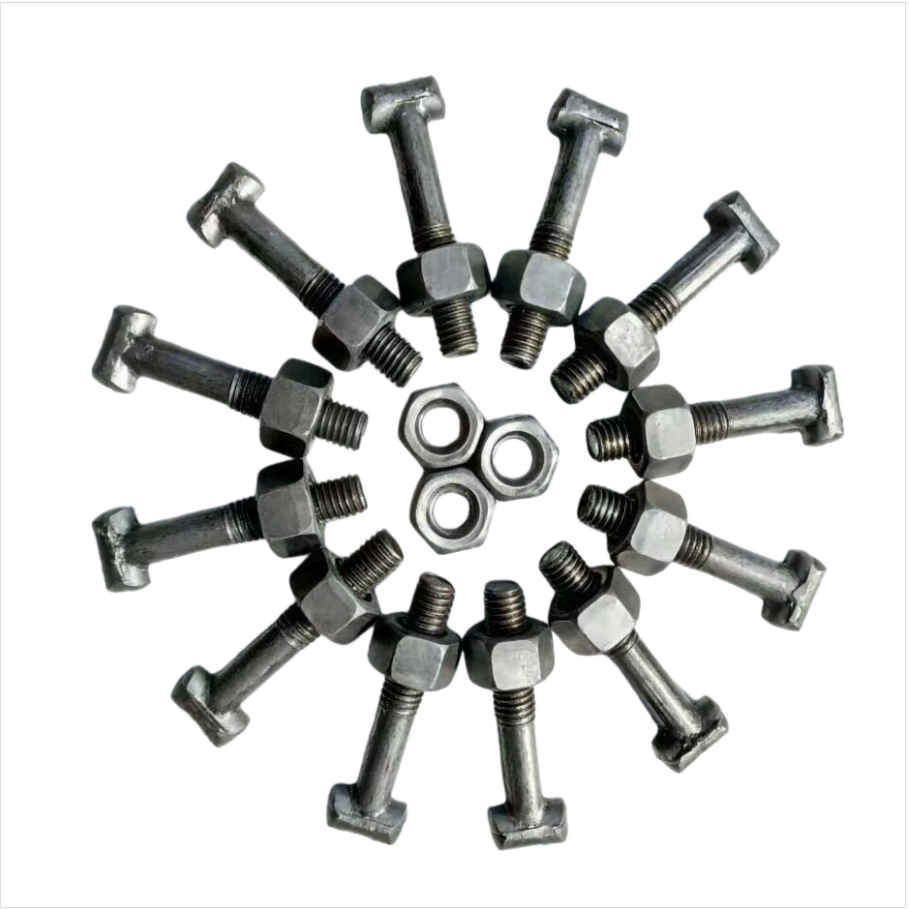
Double Nuts (Jam Nuts):
Principle: The lower nut (main nut) is tightened first, followed by the upper nut (jam nut). The two nuts press against each other, generating additional tensile force on the bolt shank, which increases the normal pressure and friction torque between the threads. The tightening torque of the jam nut is typically 50%-80% of the main nut.
Pros: Simple and low-cost.
Cons: Increases weight and axial dimensions; effectiveness relies on correct tightening sequence and torque; may still loosen under severe impact.
Applications: Low-speed environments with mild vibration.
-
Elastic Washers:
Spring Washers: Utilize the sharp edges of the opening to embed into the bearing surface and nut, providing continuous friction through elastic tension. However, their anti-loosening effect is limited, as they tend to flatten and fail under alternating loads; not recommended for critical connections.
Wave/Saddle Washers: Provide better elasticity and pressure distribution, offering superior anti-loosening performance compared to standard spring washers.
-
Lock Nuts: As previously mentioned, including nylon insert lock nuts and all-metal lock nuts, these are highly efficient friction anti-loosening methods.
-
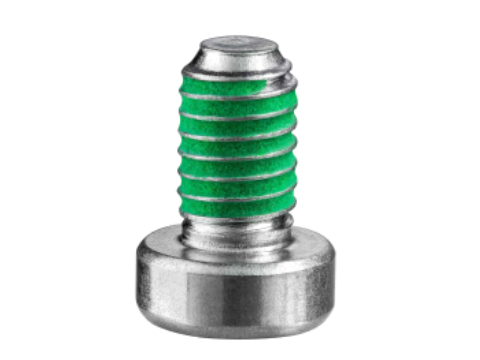
Pre-Applied Adhesive Nuts: Engineering microcapsule adhesives are pre-applied to the nut threads. During installation, the capsules rupture, filling the thread gaps with adhesive that cures to form a friction lock. They are disassemblable, but the anti-loosening force will decrease upon reuse.
-
Detailed Mechanical Anti-Loosening (Direct Locking) Solutions
These solutions prevent rotation through physical interference, offering high reliability.
-
Slotted Nuts and Split Pins:
Principle: The nut is slotted, and the bolt end is drilled. After tightening and aligning the nut, a split pin is inserted through the hole and its ends are bent open.
Pros: Absolutely reliable anti-loosening.
Cons: Requires matched drilling and tedious installation; disassembly destroys the pin; weakens bolt strength.
Applications: Critical safety components such as aircraft, racing suspensions, and large bearings.
-
Safety Wiring:
Principle: A wire is threaded through dedicated holes in a group of screw or nut heads and tied in a direction that prevents loosening. If one fastener loosens, the wire pulls tight against adjacent ones, mutually restricting movement.
Pros: Ideal for multi-screw assemblies in compact spaces; resistant to high temperatures and vibration.
Cons: Time-consuming to install, requiring specialized skills; inconvenient to disassemble.
Applications: Engine cylinder heads, aero-engines, and critical equipment covers.
-
Tab Washers:
Internal/External Tab Washers: Feature internal tabs that fit into bolt shaft grooves and external tabs bent into nut slots or workpiece edges.
Single/Double Tab Washers: Tabs are bent to fit snugly against the nut side and the workpiece.
Applications: Suitable for bolts with shaft grooves or bendable edges.
-
Lock Plates: Metal plates of various shapes bent to secure the nut.
-
Permanent/Semi-Permanent Anti-Loosening Solutions
-
Threadlocking Adhesives (Anaerobic Adhesives):
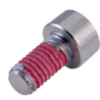
Principle: Applied to threads, they cure in an oxygen-free environment (after assembly) to form a tough plastic layer, securely bonding and sealing the thread pair to completely eliminate relative motion. Available in low, medium, high, and removable strength grades.
Pros: Integrates anti-loosening, sealing, and corrosion prevention; distributes stress evenly; suitable for any thread shape.
Cons: Requires surface cleaning; curing takes time; disassembly requires heat or significant torque.
Applications: Extremely wide-ranging, from tiny electronic screws to heavy equipment bolts.
-
Spot Welding, Punching, and Riveting:
Principle: Spot welding, punching, or riveting is performed at the contact point between the nut and bolt or workpiece, rendering the connection non-disassemblable.
Applications: Permanent connections that do not require disassembly.
-
Structural Anti-Loosening Solutions
Tang's Thread: A special thread design featuring both left-hand and right-hand thread segments, requiring matching dual-thread bolts. While theoretically offering excellent anti-loosening performance, it is not widely used.
-
Comprehensive Guide to Anti-Loosening Solution Selection
-
Evaluate Vibration Level: For mild vibration, elastic washers or double nuts can be selected; for moderate vibration, choose lock nuts (nylon/metal); for severe impact and vibration, mechanical locking (safety wiring, split pins) or high-strength threadlocking adhesives are mandatory.
-
Consider Disassemblability: For frequent maintenance and disassembly, choose friction anti-loosening or removable-grade adhesives; for semi-permanent applications, select medium-strength adhesives; for permanent applications, choose welding or high-strength adhesives.
-
Environmental Factors: Exclude nylon components and standard adhesives in high-temperature environments; ensure material compatibility in corrosive environments.
-
Cost and Efficiency: Balance anti-loosening performance with installation and time costs. Threadlocking adhesives and lock nuts offer efficiency advantages in batch applications.
-
Combined Use: For extreme conditions, solutions can be combined, such as "lock nut + washer" or "threadlocking adhesive + mechanical locking."























 Login
Login








 Contact
 WeChat
 粤ICP备2025493240号-1