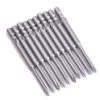
In high-speed industrial sectors, vibrating equipment is ubiquitous, ranging from automotive engines and rail transit to wind turbines and aerospace equipment. Vibrating environments pose one of the most severe tests for fastened joints. Even minor loosening can lead to performance degradation, increased noise, or even catastrophic failures. Shenzhen Yingjing Precision Technology Co., Ltd. understands that in vibrating equipment, fasteners are not merely connecting components but critical "safety parts" that ensure the overall reliability and safety of the equipment. This article systematically elaborates on the failure mechanisms, core solutions, and key selection and application points for fasteners in vibrating environments.
-
Failure Mechanisms of Fasteners Caused by Vibration
In vibrating environments, the primary failure modes of fasteners are "spontaneous loosening" and "fatigue fracture."
-
Spontaneous Loosening: This is the most common failure mode. Under alternating vibrational loads, microscopic relative slippage occurs between the thread flanks and between the bearing surfaces of the bolt head/nut and the connected parts. This slippage gradually offsets the initially applied preload, causing it to attenuate until it completely disappears, resulting in joint failure. The process typically follows the path of "initial settlement → periodic slippage → rotational loosening."
-
Fatigue Fracture: Even without complete loosening, alternating stresses induced by vibration act on the bolt. If the stress amplitude exceeds the fatigue limit of the bolt material, micro-cracks will initiate at stress concentration points such as the thread roots and the fillet under the bolt head. These cracks gradually propagate, ultimately leading to brittle fracture. Fatigue fractures often occur without obvious warning signs, making them extremely hazardous.
-
Core Technologies and Applications of Anti-Loosening Fasteners
To address vibrating conditions, measures must be taken across three aspects: anti-loosening design, material strengthening, and process control.
-
Friction Anti-Loosening Technology:
-
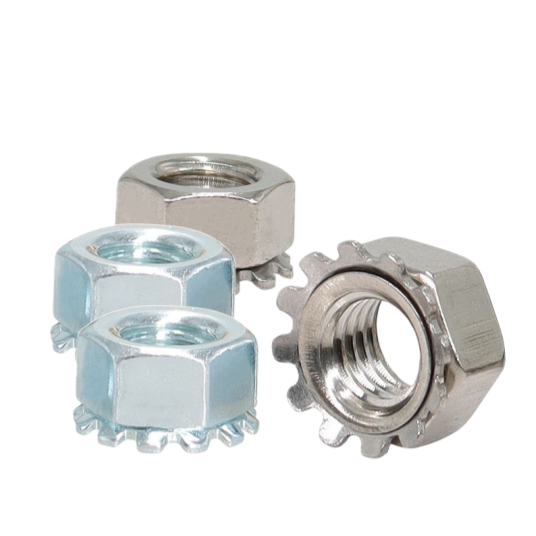
Prevailing Torque Nuts: Such as nylon insert lock nuts and all-metal lock nuts (e.g., flange deformed nuts, non-metallic insert nuts). They generate additional friction torque during engagement, forming a stable resistance moment to prevent rotation.
-
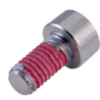
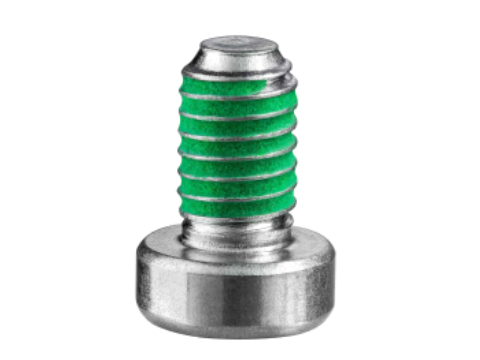
Adhesive Coating: Applying microcapsule pre-applied adhesives (e.g., anaerobic adhesives) to the thread surface. During assembly, the capsules rupture, and the adhesive fills the thread gaps, curing into a solid polymer that provides both anti-loosening and sealing. Yingjing Precision can provide pre-applied adhesive products of various strength grades based on customer operating conditions.
-
Mechanical Locking Technology:
-
Safety Wiring: Suitable for bolt groups, where a wire is threaded through the heads of multiple bolts to constrain them to rotate only in the tightening direction. It offers extremely high reliability and is commonly used in critical aerospace applications.
-
Split Pins and Slotted Nuts: After tightening the nut, a split pin is inserted through a hole at the end of the bolt shank and the slot in the nut to achieve mechanical interlocking.
-
Washers: Such as disc spring washers, which provide continuous and stable elastic compensation to offset preload loss caused by vibration and temperature variations, outperforming standard flat and spring washers.
-
Structural Design Optimization:
-
Increasing Engagement Length: Ensuring sufficient thread engagement length (generally recommended to be over 1.0-1.5 times the bolt diameter) increases the number of turns required for loosening.
-
Using Fine-Pitch Threads: Fine-pitch threads have a smaller pitch and helix angle, offering superior self-locking performance compared to coarse-pitch threads.
-
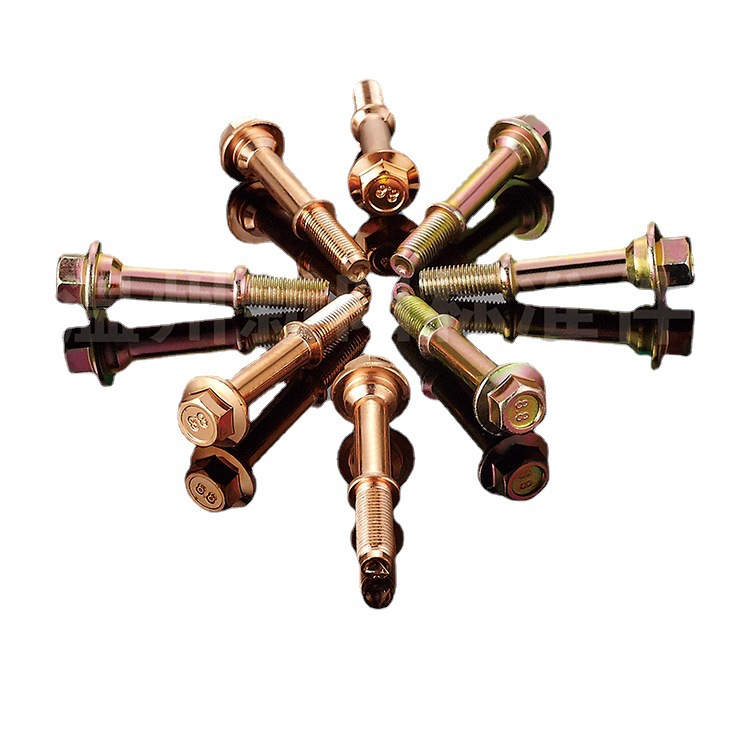
Optimizing Bearing Surface Design: Utilizing flange bolts/nuts increases the bearing area, reduces surface pressure, and minimizes local plastic deformation. The serrated flange surface also provides a certain degree of anti-slip effect.
-
Systematic Solutions: From Selection to Assembly
Yingjing Precision believes that a reliable anti-vibration connection solution is a unified entity of product design, manufacturing, and assembly.
-
Scientific Selection: The most suitable anti-loosening method must be selected based on vibration frequency, amplitude, load characteristics, and the environment (e.g., temperature, corrosion). For instance, high-temperature environments require all-metal anti-loosening solutions rather than nylon inserts.
-
Precise Preload Control: The prerequisite for anti-loosening is establishing an accurate and sufficient initial preload. Advanced control methods such as the torque-angle method or ultrasonic measurement must be employed to avoid premature failure caused by insufficient or excessive preload.
-
Material and Manufacturing Quality: Selecting high-strength, high-fatigue-resistance materials (e.g., alloy steels SCM435, 30CrMnTi) and subjecting them to precision cold heading, heat treatment, and surface treatment (e.g., Dacromet, phosphating) ensures uniform internal structure and minimized stress concentration.
-
Standardized Assembly Processes: Developing strict assembly work instructions, including thread cleaning, using the correct lubricants, and specifying tightening speeds and sequences (for bolt groups).
Conclusion
Applying fasteners in vibrating equipment is a multidisciplinary comprehensive technology. Simply using an "anti-loosening nut" is not a universal solution. Leveraging profound materials science knowledge, precision manufacturing processes, and an extensive application database, Shenzhen Yingjing Precision Technology Co., Ltd. provides end-to-end services for customers, ranging from anti-loosening solution design consulting and customized product manufacturing to assembly technical support. We are dedicated to working with our customers to build permanently secure connections, laying a solid foundation for the quiet, reliable, and long-term operation of equipment.














 Login
Login








 Contact
 WeChat
 粤ICP备2025493240号-1