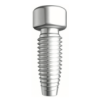
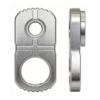
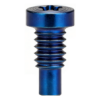
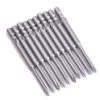
Although often considered standard parts, fasteners feature intricate precision grade classifications. These grades directly determine interchangeability, joint stiffness, load distribution uniformity, and assembly efficiency. Shenzhen Yingjing Precision Technology Co., Ltd. believes that a deep understanding of fastener precision grades is the prerequisite for scientific selection, achieving highly reliable connections, and facilitating automated production. This article provides a systematic analysis of fastener dimensional precision grades and mechanical property grades.
-
Dimensional Tolerance Grades: The Cornerstone of Interchangeability
Dimensional tolerance grades primarily apply to critical dimensions such as threads and wrench flats.
-
Thread Tolerance Grades (ISO/GB Standards):
-
External Thread (Bolt) Tolerance Zones: Commonly designated as 6g, 6h, and 4h. The letter indicates the tolerance zone position (g for slight clearance, h for the basic position), while the number indicates the tolerance magnitude (a smaller number denotes tighter tolerances).
-
4h/6h Grades: High-precision grades. Grade 4h offers extreme precision for demanding precision machinery and aerospace applications. Grade 6h is the standard commercial bolt grade, offering excellent interchangeability.
-
6g Grade: Medium precision with slight clearance to facilitate assembly, commonly used for bolts with platings or coatings.
-
Internal Thread (Nut) Tolerance Zones: Commonly designated as 6H and 7H.
-
6H Grade: The most widely used nut tolerance grade. When paired with 6g/6h bolts, it ensures excellent thread engagement.
-
Higher Grades (e.g., 4H, 5H): Applied in scenarios requiring high-precision positioning and minimal preload dispersion.
-
Product Grades (A, B, C):
-
Grade A: The highest precision, suitable for critical joints requiring high accuracy, consistent assembly, and resistance to alternating loads. It typically corresponds to 4h/6h thread tolerances and strict geometric requirements for heads and shanks.
-
Grade B: Medium precision and the most widely used, applicable to the vast majority of general machinery and steel structure connections.
-
Grade C: Lower precision, suitable for rough structures such as civil construction and agricultural equipment.
-
Mechanical Property Grades: The Benchmark for Load-Bearing Capacity
This is the core grading system for bolts, screws, and studs, typically indicated by numbers or symbols marked on the head.
-
Metric Bolt Property Grades (e.g., ISO 898-1, GB/T 3098.1):
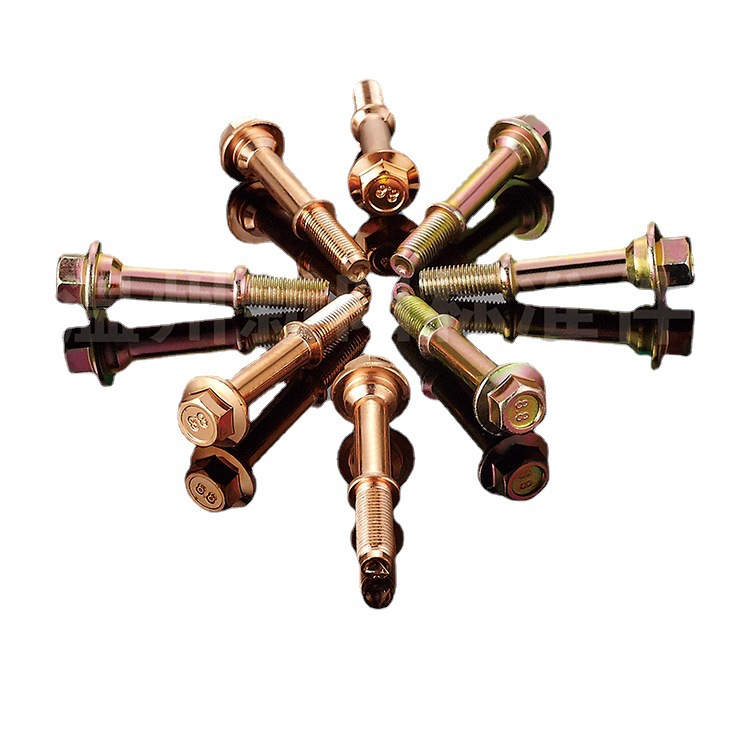
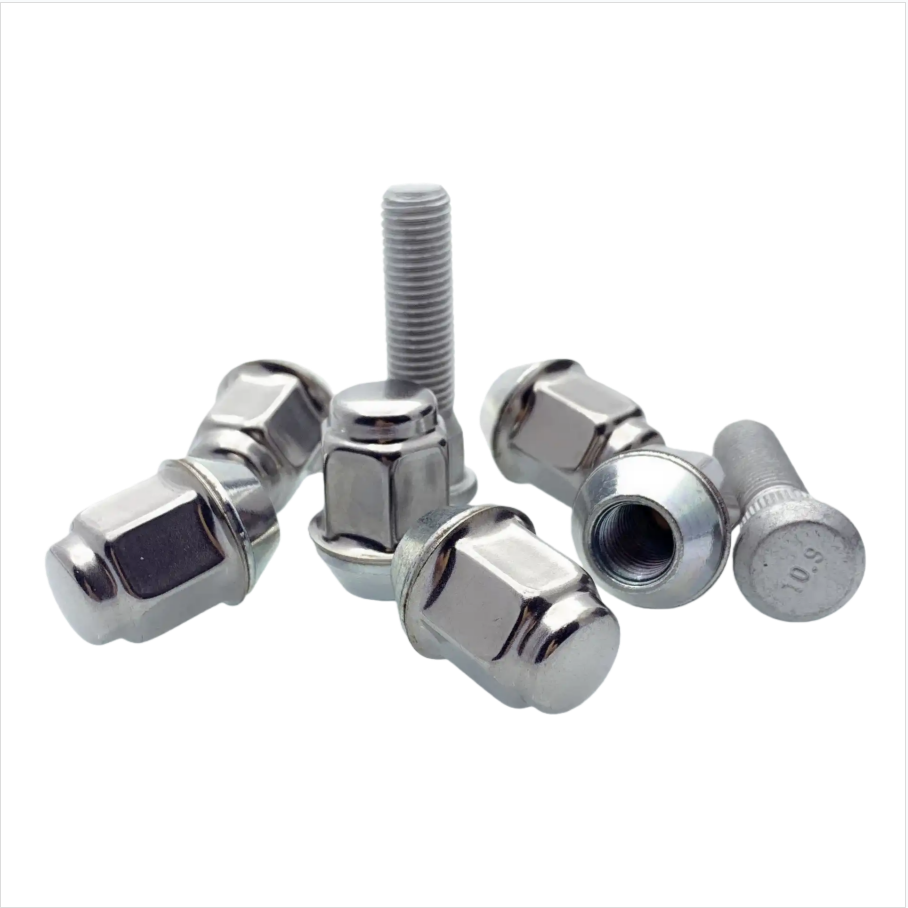
Designations consist of two numbers, such as 8.8, 10.9, and 12.9.
-
The first number (×100) represents 1/100 of the nominal tensile strength (MPa). For example, Grade 8.8 indicates 800 MPa.
-
The second number (×10) represents 10 times the ratio of the nominal yield strength (or specified non-proportional elongation strength) to the tensile strength. For instance, Grade 8.8 has a yield ratio of 0.8, equating to a yield strength of 640 MPa.
Common Grade Analysis:
-
Grade 4.8: General strength, used for low-load, static connections.
-
Grade 8.8: High strength and the most widely applied, suitable for critical connections in automotive and general machinery.
-
Grades 10.9 & 12.9: Ultra-high strength, used for critical structures, heavy loads, and high-preload scenarios. However, higher strength increases sensitivity to hydrogen embrittlement, demanding stricter manufacturing and assembly requirements.
-
Nut Property Grades (e.g., ISO 898-2, GB/T 3098.2):
Designated by numbers such as 8, 10, and 12. This number represents 1/100 of the minimum tensile strength (in MPa) of the matching bolt. For example, a Grade 8 nut should be paired with a Grade 8.8 or higher bolt to ensure the thread stripping strength exceeds the bolt's fracture strength, achieving the safe failure mode of "bolt fracture first."
-
Impact of Precision Grades on Connection Performance and Production
-
Impact on Connection Reliability:
High-precision threads ensure uniform load distribution across the thread flanks, reduce stress concentration, and significantly enhance fatigue life. Precise dimensional control guarantees a stable friction coefficient, enabling accurate torque-to-preload control and reducing preload scatter.
-
Impact on Assembly Automation and Efficiency:
Automated assembly lines demand extreme dimensional consistency and head-forming quality. Grade A or high-precision Grade B products significantly reduce the risks of feeding jams, gripping failures, and tightening anomalies. Consistent mechanical properties are fundamental to ensuring each connection point achieves the design preload, preventing individual overloading or under-tightening.
Conclusion
Selecting fasteners requires looking beyond mere "specifications" and "strength." Precision grades are the digital embodiment of intrinsic quality. Shenzhen Yingjing Precision Technology Co., Ltd. manufactures in strict accordance with, and often exceeding, international and national standards. We conduct precise testing and Statistical Process Control (SPC) on the dimensional tolerances and mechanical properties of every production batch. We provide not just a product, but a predictable, controllable, and highly consistent connection solution, empowering our customers to elevate overall product quality and production efficiency.























 Login
Login








 Contact
 WeChat
 粤ICP备2025493240号-1