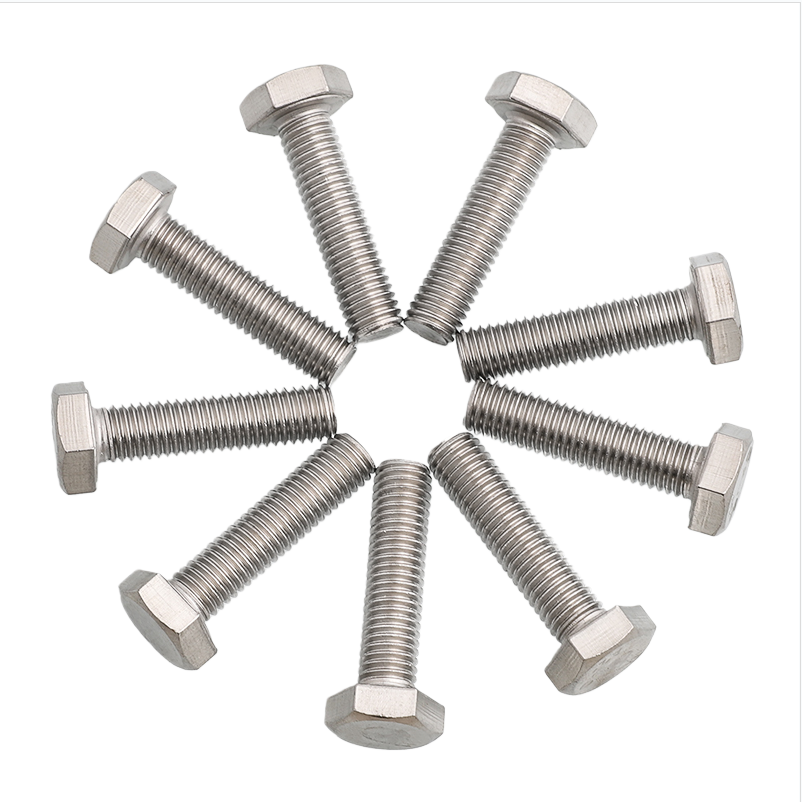
As modern manufacturing pursues fasteners with higher strength, precision and overall performance, cleanliness — a frequently overlooked yet critical invisible quality indicator — has become a decisive factor determining the reliability of mechanical connections. At Shenzhen Yongjing Precision Technology Co., Ltd., we regard fastener cleanliness as equivalent to microcirculation health in the human body, directly affecting functional accuracy and long-term service reliability. This article thoroughly analyzes the sources and hazards of contaminants, and systematically elaborates standardized engineering methods for cleanliness assurance and verification.
I. Definition of Cleanliness and Sources of Contaminants
Fastener cleanliness refers to the residual impurity level on component surfaces and within thread crevices. Contaminants are generally categorized into particle residues and non-particle film residues.
1. Particulate Contaminants These include metal chips generated during turning and grinding, abrasive particles, molding sand, environmental dust, fiber debris and other solid micro-particles.
2. Non-Particulate Contaminants (Film Residues) These cover residual quenching oil and anti-rust oil after heat treatment, machining coolant, fingerprint oil, acid-base residues from pre-treatment, and residual salts formed after phosphating or oxidation processes.
Such contaminants mainly originate from the full manufacturing process, including cold heading, turning, heat treatment and surface finishing, as well as subsequent packaging, storage and on-site assembly environments.
II. Critical Hazards of Contaminants to Fastener Performance
Micro-level contaminants can trigger cascading failure risks and severely compromise connection stability.
1. Unstable Friction Coefficient and Uncontrolled Preload In torque-based tightening processes, the preload formula is defined as $$T = K \times D \times F$$, where the torque coefficient (K) depends primarily on the friction conditions of threads and bearing surfaces. Oil stains and impurities cause unpredictable fluctuations in friction coefficients and excessive dispersion of K values. Under identical tightening torque, inconsistent friction leads to either over-tightening that causes bolt elongation or fracture, or under-tightening that results in connection loosening and sealing failure.
2. Accelerated Wear and Thread Galling Hard particulate contaminants act as abrasives during tightening, scratching thread surfaces and damaging protective coatings, which accelerates wear deterioration. Under high temperature and high pressure, contaminated interfacial layers induce direct metal-to-metal contact and micro-welding, causing thread galling and permanent disassembly failure.
3. Accelerated Corrosion Initiation Hygroscopic salt residues and residual acid-base substances absorb ambient moisture, forming localized electrolytic environments that trigger pitting corrosion and crevice corrosion. This localized electrochemical erosion drastically shortens the service life of fasteners.
4. System-Level Contamination Failure In hydraulic systems, fuel delivery systems and precision instruments, detached particulate residues may block oil circuits, scratch precision mating components and lead to systemic functional failure.
5. Degraded Coating and Post-Processing Quality Incomplete pre-cleaning with residual oil and oxide scales weakens coating adhesion during electroplating and surface finishing, causing common defects such as blistering and peeling.
III. Systematic Process Control for Cleanliness Assurance
Effective cleanliness management must cover the entire product lifecycle from manufacturing to assembly.
1. In-Process Clean Manufacturing Multi-stage spraying and ultrasonic cleaning plus complete drying are implemented before and after key processes such as heat treatment and surface finishing. Products requiring ultra-high cleanliness (e.g., engine fasteners) are manufactured in independent clean workshops with controlled ambient particle levels. Oil-free or low-oil alternative processes, such as vacuum heat treatment replacing salt bath treatment, are adopted to reduce contamination sources at the root.
2. Advanced Cleaning and Drying Technology Cleaning media including alkaline, acidic and neutral water-based or solvent-based cleaners are selected according to contaminant characteristics. Combined cleaning methods such as high-pressure spraying, ultrasonic cavitation and vortex cleaning ensure thorough removal of residues from thread gaps and blind holes. Thermal drying, vacuum drying or centrifugal drying is applied to eliminate residual moisture and prevent post-cleaning oxidation and rust.
3. Clean Packaging and Warehouse Management Finished fasteners are packaged immediately after cleaning using clean vacuum bags or dust-free plastic bags with VCI (Volatile Corrosion Inhibitor) protection. Warehousing environments are kept dry, tidy and isolated from pollution-prone materials to avoid secondary contamination.
4. On-Site Assembly Cleanliness Control Fasteners are unpacked immediately before use to minimize open-air exposure time. Critical assembly stations adopt final pre-installation cleanliness inspection, including thread wiping and visual confirmation. Tightening tools and operator gloves are consistently maintained in a clean state.
IV. Cleanliness Testing and Industry Standards
Cleanliness performance is guaranteed through quantitative and standardized testing methods.
Gravimetric Method: Contaminants are eluted with standard solvent and collected for weighing, realizing quantitative detection of particulate residues.
Particle Counting Method: A liquid particle counter is used to analyze the quantity and size distribution of micro-particles in eluent. This high-precision method complies with mainstream automotive and aerospace standards including ISO 16232 and VDA 19.
Microscopy and Fluorescence Testing: Applied for qualitative and semi-quantitative analysis of specific residual contaminants.
Conclusion
At Yongjing Precision, cleanliness is regarded as a core quality characteristic rather than a superficial appearance requirement. We have established a full-process cleanliness control system covering raw material incoming inspection, production monitoring and finished product delivery, supported by advanced cleaning and precision testing equipment. Our fasteners deliver highly stable and predictable mechanical performance with reliable consistency. Adopting high-cleanliness fasteners improves assembly pass rate, stabilizes connection performance, extends service life and reduces system failure risks, serving as a high-value investment for modern precision manufacturing.

























 Login
Login








 Contact
 WeChat
 粤ICP备2025493240号-1