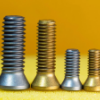
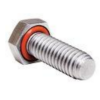
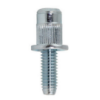
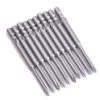
Thread stripping is a common and troublesome issue in mechanical assembly, equipment maintenance and furniture installation. Essentially, it refers to worn, deformed or damaged thread profiles that prevent proper meshing between screws and nuts or threaded holes, resulting in lost fastening performance. Minor stripping delays assembly progress, while severe cases cause component damage, equipment failure and potential safety hazards. Improper handling during on-site repairs often exacerbates thread damage, such as forced tightening that completely collapses threaded holes. Most thread stripping issues can be resolved efficiently by identifying root causes and adopting targeted solutions based on damage severity and working conditions. This article provides a comprehensive practical guide covering failure causes, classified solutions and preventive measures.
Accurate cause analysis is essential for fundamental prevention. Industry practice attributes thread stripping to four major factors. First, mismatched material and specification pairing. Fastening carbon steel screws into low-hardness aluminum alloy threaded holes easily damages softer threads. Mismatched thread sizes, such as forcing M8 screws into M7 holes, directly destroy thread profiles. Second, non-standard operation, the primary cause of stripping. Using ill-fitting tools (e.g., flat screwdrivers for cross recess screws) slips and damages screw heads and threads. Excessive tightening torque exceeds thread load limits and causes plastic deformation. Tilted installation leads to uneven stress and localized thread wear. Third, harsh working environments. Screws exposed to high temperature, humidity and corrosion suffer material aging and reduced thread strength, resulting in stripping under slight loads. Continuous vibration also accelerates thread abrasion and failure. Fourth, inferior screw quality. Screws made of substandard materials or processed with low precision feature irregular thread profiles and insufficient strength, prone to premature stripping in service.
Differentiated solutions based on stripping severity minimize component damage while ensuring efficient repair.
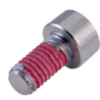
Minor Thread Stripping: Threads remain partially meshed with slight wear. Simple temporary fixation and reinforcement methods apply. If the screw head groove is intact, place rubber sheets, sandpaper or non-woven fabric between the tool and screw head to increase friction and prevent slipping during slow tightening or loosening. Low-strength thread locker can be applied to threads to enhance meshing stability after curing, ideal for temporary fastening. For slightly worn threaded holes, upgrade to slightly larger self-tapping screws (e.g., M6 to M6.3) to re-cut and restore threads. Select screws with identical or similar hardness to avoid secondary damage.
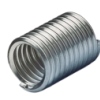
Severe Thread Stripping: Extensive thread damage leads to complete meshing failure, requiring professional permanent repair. For detachable screw and nut sets, direct replacement with identical specifications and materials is the most efficient solution. Clean internal rust and debris from threaded holes before installation to ensure proper fitting. For damaged threaded holes on aluminum alloy housings, cast iron bases and other components, the mainstream industrial solution is reaming + thread insert repair. The standard procedure is as follows: ream the damaged hole with a matched drill bit to fit the thread insert; tap new standard threads for the reamed hole and thoroughly remove iron scraps; install and press-fit the thread insert with dedicated tools to achieve tight wall contact; reinstall original standard screws. Thread inserts restore structural strength and deliver reliable performance for diverse working conditions. For non-detachable metal components, welding fixation is applicable for permanent non-removable assembly, with strictly controlled welding temperature to avoid component deformation.
Special-Scenario Stripping: Adopt scenario-specific repair methods. For miniature screws on precision equipment such as electronic instruments and medical devices, use micro taps and mini thread inserts under magnified observation to prevent damage to surrounding precision structures in confined spaces. For deep-hole thread stripping, apply long-shank tapping tools and extension rods, and remove debris via high-pressure air guns or chip extractors for thorough cleaning. For high-temperature and corrosive environments, repair with high-temperature and corrosion-resistant fasteners such as stainless steel and titanium alloy screws and inserts, and apply anti-corrosion coatings to extend service life.
Preventive measures effectively reduce maintenance costs and ensure stable equipment operation, covering three key links: selection, operation and daily maintenance. In terms of selection, ensure full matching of screw specifications and thread profiles, as well as compatible material hardness. Use stainless steel or carbon steel screws for soft aluminum alloy and plastic components, and high-grade fasteners (Grade 8.8/10.9) for high-strength structures. Select specialized screws for extreme conditions: high-temperature alloy screws for thermal environments, and zinc-plated or Dacromet-coated screws for humid and corrosive scenarios.
In terms of operational standardization, use perfectly matched tools and torque wrenches to control fastening force. Follow the pre-tightening and staged-tightening principle to avoid over-torque damage. Ensure vertical screw installation with auxiliary positioning tools to guarantee coaxiality. In terms of daily maintenance, regularly inspect fasteners, clean surface rust and impurities, and apply lubricating grease to screws under vibration and high temperature to reduce abrasion. Replace severely aged and corroded screws in advance to prevent stripping failure.
Thread stripping, though common, can be efficiently resolved through accurate damage judgment and standardized operation. Minor wear can be fixed with simple temporary measures, severe damage requires permanent repair solutions such as thread inserts, and special scenarios demand customized tools and materials. Fundamental prevention relies on standardized model selection, standardized operation and routine maintenance to minimize stripping risks. For industry practitioners, mastering these troubleshooting and preventive skills enables professional technical support for customers, improves work efficiency and avoids unnecessary operational losses.
















 Login
Login








 Contact
 WeChat
 粤ICP备2025493240号-1