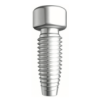
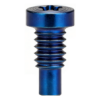
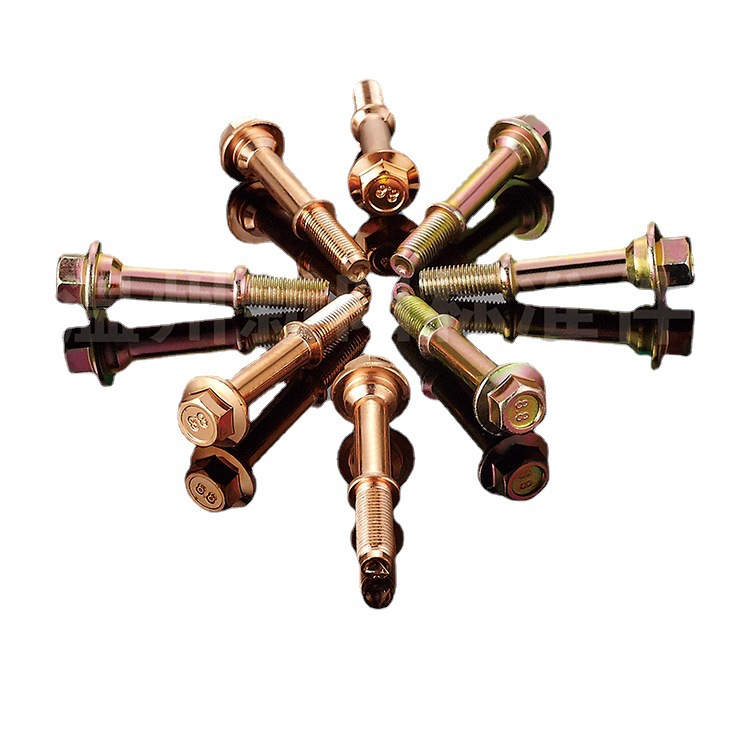
In high-end manufacturing fields such as wind turbine towers, automotive chassis, construction machinery and aerospace, the tightening quality of high-strength bolts directly determines assembly accuracy and operational safety. Adopting the dual control logic of pre-torque and fixed rotation angle, the torque-angle tightening method accurately controls bolt preload and eliminates preload deviation caused by friction coefficient fluctuation in the traditional pure torque method. It has become the mainstream process for high-strength bolt fastening. However, this method requires extremely strict operational precision, and negligence in any link will compromise tightening performance. This article systematically summarizes the core practical skills, scenario adaptation rules and common pitfalls of the torque-angle method, providing implementable operational guidelines for industry practitioners.
The core principle of the torque-angle method is to first tighten bolts to a preset threshold torque to eliminate thread clearances and achieve full fitting between bolts and connected components. The bolts are then further tightened by a specified rotation angle around the axis. Accurate preload is realized by controlling the plastic deformation of bolts. Its key advantage lies in insensitivity to thread friction and contact surface conditions, with preload discreteness controlled within ±10%, far superior to the ±25% tolerance of the pure torque method. Proficiency in this technique relies on precise control of three critical links: threshold torque setting, rotation angle accuracy and standardized tightening rhythm.
Accurate threshold torque setting serves as the fundamental guarantee. The threshold torque is designed for fitting and positioning. It must be scientifically matched according to bolt specifications, materials and connected component characteristics to avoid premature plastic deformation caused by excessive torque or incomplete clearance elimination caused by insufficient torque. General practical standards are as follows: For Grade 8.8 carbon steel bolts ranging from M8 to M16, the threshold torque is typically set at 20%-30% of the final preload torque; for Grade 10.9 and 12.9 high-strength bolts, the ratio rises to 30%-40%; for soft materials such as aluminum alloys, the threshold torque should be reduced by 5%-10% to prevent surface crushing due to easy contact deformation. In addition, trial tightening of 3-5 bolt groups is recommended before batch operation to verify full fitting without looseness. Adjust the torque upward if clearances remain, or downward if slight deformation occurs.
Precise angle control ensures consistent preload. The rotation angle is calculated based on bolt length-diameter ratio, material elastic modulus and preload requirements, with significant differences across application scenarios. The key practical technique is segmented rotation with real-time monitoring. For high-strength bolts such as Grade 10.9 42CrMo bolts, divide the total angle into 2-3 stages with a 0.5-1 second pause after each stage to avoid torque impact from continuous tightening and facilitate condition inspection. For long bolts with a length-diameter ratio greater than 5, increase the total angle by 10%-15% to compensate for tensile deformation. For short bolts with a length-diameter ratio less than 3, reduce the angle by 5%-10% to prevent over-tightening and fracture. Professional precision equipment such as numerical torque-angle wrenches and servo tightening machines is required, with a permissible angle error of ≤±1° to ensure batch consistency.
Standardized tightening rhythm and sequence are essential for compliant operation. The tightening process must maintain a steady and uniform speed. In the threshold torque stage, keep the speed at 10-30 r/min to avoid thread damage and sudden friction changes caused by high-speed operation. In the angle tightening stage, reduce the speed to 5-15 r/min to ensure uniform bolt deformation and steady preload growth. The tightening sequence follows symmetric, uniform and progressive principles. For annularly distributed bolts on flanges and cylinder heads, adopt diagonal cross tightening. For linearly distributed bolts, tighten progressively from the center to both ends. Batch fastening requires 2-3 rounds: complete threshold torque in the first round and implement specified angle tightening in subsequent rounds to avoid uneven stress and component warpage. For example, automotive engine cylinder head bolts are first diagonally tightened to a 20N·m threshold torque, followed by two staged angle tightenings (90°+90°) to ensure uniform stress and reliable sealing.
Scenario-specific adaptation techniques further improve fastening reliability. For heavy-load and vibrating environments such as wind power and bridge structures, adopt a combined process of torque-angle tightening and anti-loosening verification. After angle tightening, perform loosen-retight verification: loosen the bolt by 30°-45°, then re-tighten to the standard threshold torque and specified angle to stabilize preload through secondary deformation and eliminate potential plastic deformation risks. For high-temperature working conditions such as engine exhaust systems, use high-temperature resistant bolts and increase the rotation angle by 8%-12% to compensate for thermal expansion deformation. For low-temperature environments below -40℃ such as wind power equipment, preheat bolts to 20-50℃ to prevent brittle fracture; maintain standard rotation angles and extend the post-tightening pause to 1-2 seconds for stable preload. For soft connected components such as aluminum alloy and plastic parts, install flat washers and reduce the threshold torque by 10%-15% to avoid surface crushing, while adopting standard rotation angle parameters.
Four common operational pitfalls must be avoided to prevent fastening failure. First, neglecting thread cleaning and lubrication: rust, oil stains and impurities on threads cause friction coefficient fluctuations and compromise torque and angle matching accuracy. Clean threaded holes and bolt threads with brushes before operation, and apply uniform specialized thread lubricant such as molybdenum grease to avoid local excessive lubrication. Second, using uncalibrated equipment: torque-angle wrenches and tightening machines require quarterly calibration, with torque error controlled within ±3% and angle error within ±1°. Uncalibrated equipment is prohibited from use. Third, improper bolt reuse: high-strength bolts undergo plastic deformation after torque-angle tightening and are strictly disposable; repeated use leads to severe preload attenuation. Fourth, ignoring component surface conditions: warpage and residual impurities on fitting surfaces cause uneven bolt stress. Check flatness and clean surfaces before fastening, and install gaskets if necessary for leveling and sealing.
Proper equipment selection and maintenance guarantee accurate torque-angle implementation. For on-site manual maintenance, use digital torque-angle wrenches with real-time data display and peak value locking functions for convenient operation and recordkeeping. For automated mass production such as automotive assembly lines, deploy servo tightening machines that support multi-stage angle setting, real-time torque-angle curve monitoring and automatic abnormal alarm. For confined spaces and deep-hole installation, use elbow or extension-type torque-angle tools to ensure operational accessibility. Standard equipment maintenance includes regular cleaning of tool heads, periodic accuracy inspection of torque sensors and angle encoders, and proper storage away from collision and humidity. Power-on calibration is required for long-term idle equipment to maintain stable performance.
The core value of the torque-angle method lies in stable preload achieved through precise process control. Its practical essence relies on accurate parameter matching, standardized operation and flexible scenario adaptation. Every link including scientific threshold torque setting, high-precision angle control, reasonable tightening sequence and standardized equipment maintenance requires rigorous management. Mastering these practical skills enables industry practitioners to improve bolt fastening reliability, reduce equipment operational risks, enhance working efficiency and professional competence, and provide solid quality assurance for high-end equipment assembly.





























 Login
Login








 Contact
 WeChat
 粤ICP备2025493240号-1