Threads are the core structural elements that enable fastening and transmission functions of fasteners. Widely applied from daily self-tapping screws and aerospace high-strength bolts to machine tool drive lead screws, thread design and standard application directly determine product performance and operational safety. For practitioners in the fastener industry, systematic mastery of thread knowledge is essential for accurate selection, fault avoidance and product competitiveness improvement. However, thread systems cover extensive standards regarding classification, parameters, materials and processing, and fragmented cognition often leads to improper application. This article integrates core thread knowledge into a complete system of basic cognition, advanced principles and practical operation to support standardized engineering application.
I. Core Definition and Functional Value of Threads
Mechanically, a thread refers to continuous spiral grooves with alternating crests and roots processed on cylindrical or conical surfaces. Its essential function is converting rotary motion into linear motion and realizing force transmission and structural fastening through thread pair meshing. Threads deliver two core values in mechanical applications.
1. Structural Fastening: Friction and preload generated by thread meshing tightly fix mechanical components, serving as the most common fastening solution for fastener assembly.
2. Motion Transmission: Spiral thread drive enables precise linear movement and power transmission, widely used in machine tool lead screws, jack screws and other transmission mechanisms.
Compared with other connection and transmission structures, threads feature prominent advantages: detachable and reusable for convenient maintenance and replacement; high load-bearing capacity to withstand axial tension, radial pressure and torque through optimized design; and strong scenario adaptability, covering miniature electronic equipment and heavy-duty engineering machinery through customized thread parameter matching.
II. Core Classification and Application Scenarios of Threads
Threads are classified by tooth profile, functional purpose, rotation direction and base shape, with each category corresponding to unique structural characteristics and applicable working conditions.
1. Classification by Tooth Profile (Determines Core Performance)
Tooth profile directly governs thread self-locking performance, transmission efficiency and load capacity, divided into four mainstream types:
(1) V Thread (Triangular Thread)
Featuring an isosceles triangular profile with a 60° tooth angle for standard metric threads and a 55° angle for pipe threads. V threads provide high meshing friction and excellent self-locking capability, making them the primary choice for fastening connections. 60° M-series standard threads are universally adopted for general fastening scenarios, while 55° G/R-series pipe threads integrate fastening and sealing performance for pipeline connection systems.
(2) Rectangular Thread
With a 0° straight-sided profile, rectangular threads achieve ultra-high transmission efficiency up to 94%. Due to poor self-locking performance, difficult machining and low precision consistency, they have been mostly replaced by trapezoidal threads and only exist in legacy transmission equipment.
(3) Trapezoidal Thread
Adopting a 30° isosceles trapezoidal profile, this thread balances transmission efficiency (75%–85%) and self-locking performance with stable machinability. It is the mainstream solution for heavy-load transmission, widely used in jack screws, machine tool lead screws and elevator transmission structures.
(4) Buttress Thread
Designed with an asymmetric serrated profile (3°–5° working surface angle and 30° non-working surface angle), buttress threads support high-efficiency unidirectional transmission and withstand large single-direction axial loads. They are mainly applied in press screws, crane hook screws and other unidirectional heavy-load scenarios.
2. Classification by Functional Purpose
(1) Fastening Threads
Optimized for structural fixation with priority on self-locking and connection reliability, including standard coarse threads, fine threads and pipe threads. Coarse threads feature large pitch and high processing efficiency for conventional load conditions. Fine threads with smaller pitch and shallower tooth depth provide better tightness and vibration resistance, suitable for precision instruments, thin-walled parts and micro-adjustment scenarios.
(2) Transmission Threads
Designed for motion and power transmission with priority on efficiency and positioning accuracy, including trapezoidal, buttress and ball threads. Ball threads minimize friction through rolling steel balls, achieving transmission efficiency above 90% and high motion accuracy, which are core transmission components for high-end machine tools and precision equipment.
3. Classification by Rotation Direction
(1) Right-Hand Threads
Tightened clockwise and loosened counterclockwise, accounting for over 90% of industrial fasteners. They conform to conventional operating habits and require no special marking.
(2) Left-Hand Threads
Tightened counterclockwise and loosened clockwise, mainly used for anti-loosening and special transmission scenarios such as automotive wheel hubs, gas pipelines and reverse transmission equipment. Left-hand threads are uniformly marked with "LH" for identification.
4. Classification by Base Shape
(1) Cylindrical Threads
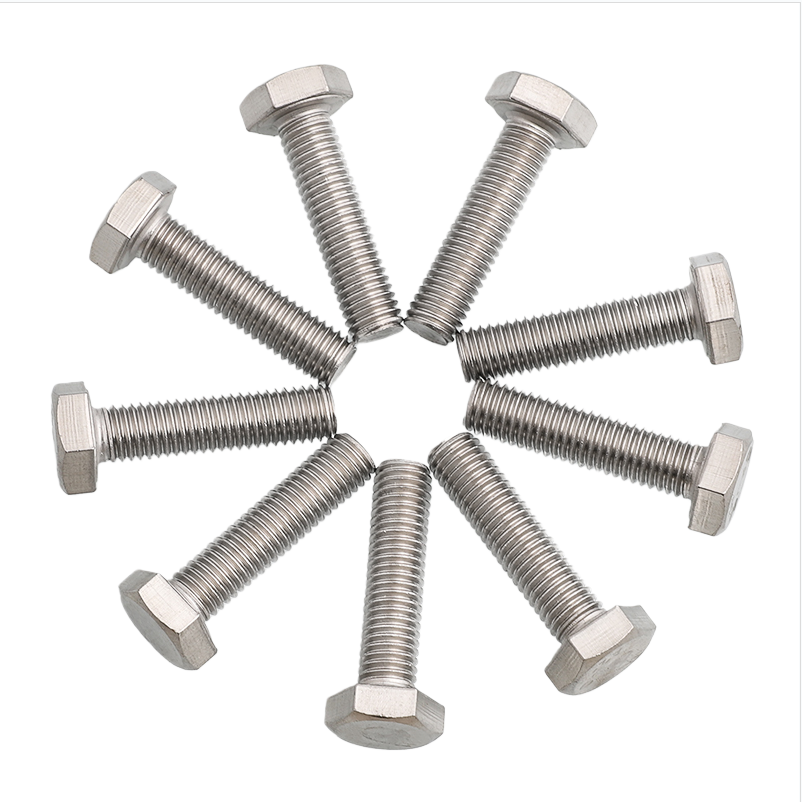
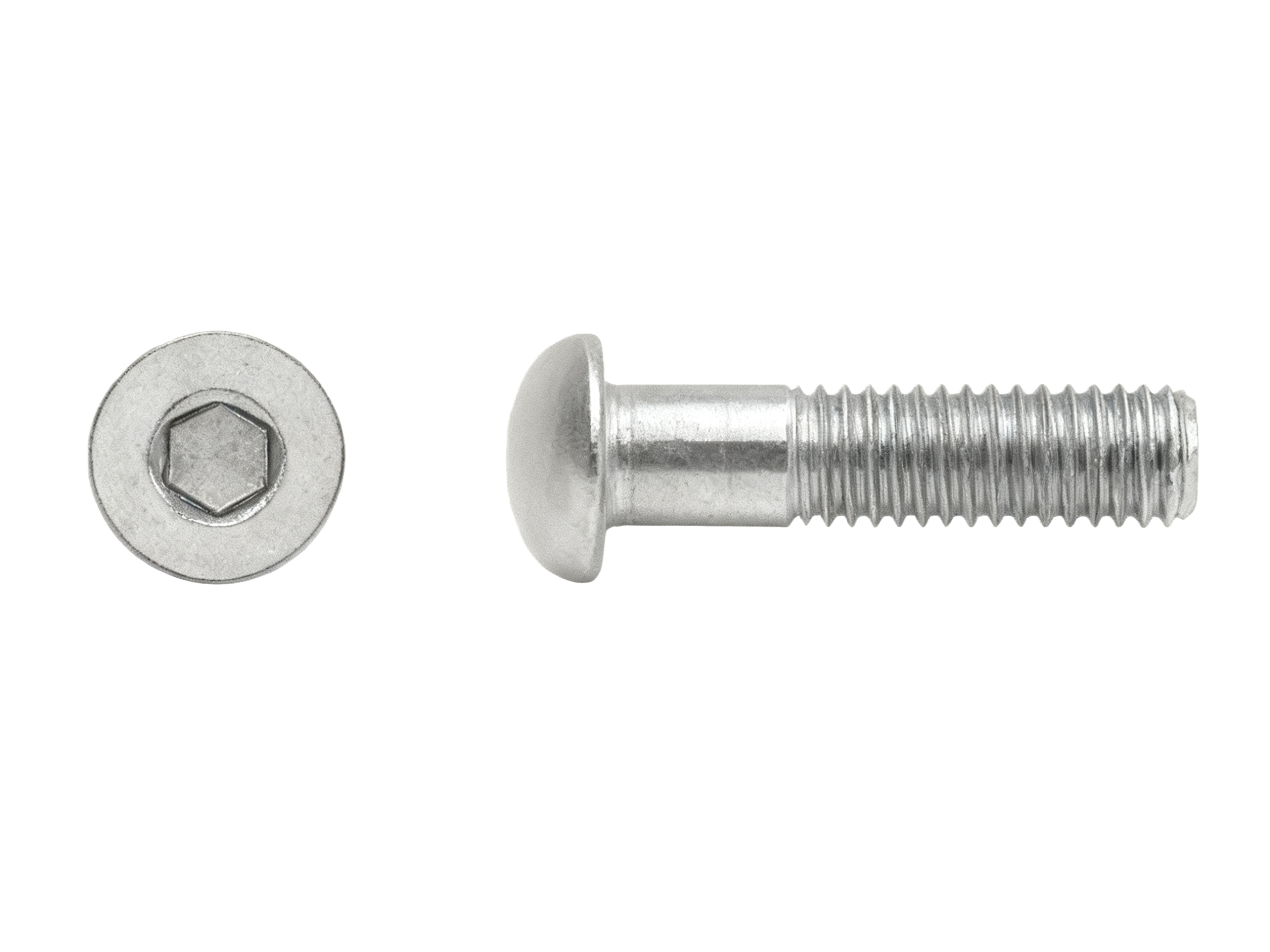
Processed on cylindrical surfaces with consistent major diameter, pitch diameter and minor diameter. Featuring strong compatibility, they are the most common thread type for standard bolts and nuts.
(2) Tapered Threads
Processed on conical surfaces with gradually changing diameters along the axis. They form interference fit during meshing to realize integrated fastening and sealing without additional sealing parts, widely used in pipeline interfaces and gas cylinder connections such as NPT and R-series tapered pipe threads.


















 Login
Login








 Contact
 WeChat
 粤ICP备2025493240号-1