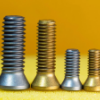
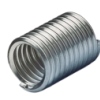
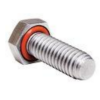
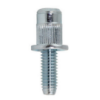
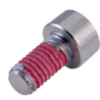
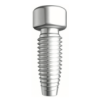
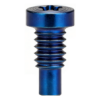
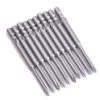
In the field of precision manufacturing, Swiss watches are renowned for extreme accuracy, which largely relies on micro screws with a tiny diameter of 0.5mm or even smaller. The machining tolerance of watch screws is controlled within ±0.005mm, representing far stricter processing standards than ordinary industrial fasteners. The manufacturing process of such micro fasteners reveals the core principles of precision fastener production and demonstrates the upgrading direction for high-end precision fasteners. This article takes Swiss watch screw manufacturing as a typical case to elaborate key process points and summarize the universal rules and development trends of precision fastener processing.
I. Characteristics of Swiss Watch Screws: Benchmark of Precision Machining
Swiss watch screws differ fundamentally from conventional fasteners due to micro size, ultra-high fitting accuracy and superior long-term reliability. Most watch screws adopt miniature specifications of M0.5–M1.2 with a length of 2–5mm, and some head diameters are less than 1mm. Their dimensional tolerance is limited to ±0.005mm, thread accuracy reaches Grade 4 or above, and surface roughness is controlled at Ra ≤ 0.2μm, which is significantly superior to ordinary fastener standards of Grade 6–8 and Ra ≤ 1.6μm.
In terms of service performance, watch screws must maintain stable fastening under long-term vibration and fluctuating temperatures of -5℃ to 40℃. The materials require excellent corrosion resistance and wear resistance to avoid rusting and deformation that affect watch timing accuracy. Such extreme standards make the production of watch screws a typical micro-scale precision machining process, providing valuable references for the upgrading of aerospace, electronic and other high-end precision fasteners.
II. Full-Process Machining Technology of Swiss Watch Screws
The manufacturing of Swiss watch screws follows a strict logic of precise source control, step-by-step precision machining and full-process inspection. The complete workflow includes raw material selection, cold heading forming, thread machining, heat treatment, surface treatment and precision testing.
1. Raw Material Selection: Source Precision and Reliability Control
Watch screws require ultra-high material purity and uniformity. mainstream materials include 316L stainless steel, titanium alloy and 18K gold, with platinum adopted for high-end products. 316L stainless steel containing molybdenum element delivers superior sweat corrosion resistance; titanium alloy features lightweight and high strength for lightweight watch design; precious metal materials balance decorative performance and durability.
All raw materials undergo strict purity inspection with impurity content of sulfur and phosphorus controlled below 0.005% to avoid stress concentration and fracture risks. Multiple annealing treatments are implemented to stabilize material hardness at HV150–180, ensuring sufficient plasticity for cold heading and preventing forming cracks.
2. Cold Heading Forming: Precision Shaping of Micro Structures
Cold heading is the core procedure for forming screw heads and shanks. Different from conventional fastener processing, micro watch screws adopt multi-station precision cold heading machines for one-time integral forming to avoid accumulated machining errors. High-precision wire rods with a tolerance of ±0.002mm are processed through continuous die stamping to complete cutting, head forming and shank straightening.
The groove depth error of cross recesses and hexagon recesses is controlled within ≤0.003mm to prevent tool slipping during assembly. The stamping speed is stabilized below 50 times per second with constant pressure to ensure uniform metal flow and avoid burrs and shank bending. The forming die accuracy reaches ±0.001mm, with regular calibration every 1,000 pieces to guarantee consistent product accuracy.
3. Thread Machining: High-Precision Meshing Assurance for Micro Threads
Watch screws mostly adopt fine threads such as M0.8×0.2mm with small pitch and shallow tooth profiles, which cannot be processed by conventional tapping. Precision thread rolling is applied to form threads through cold plastic deformation. This process maintains continuous metal fiber structure, improves thread strength by 20%–30% compared with cutting processing, and eliminates burrs and dimensional deviations.
High-grade thread rolling wheels above Grade 4 are adopted with pitch error controlled within 0.001mm. The rolling speed is limited below 10r/s to ensure complete and smooth thread profiles with pitch diameter error within ±0.002mm. For ultra-micro screws below M0.5, electrochemical machining is applied to remove excess metal accurately and avoid structural damage caused by mechanical processing.
4. Heat Treatment: Balancing Strength and Toughness
Despite miniature size, watch screws require balanced strength and toughness to prevent assembly fracture and service deformation. Heat treatment parameters are customized for different materials. 316L stainless steel screws adopt solution treatment at 1050–1100℃ with 5–10 minutes heat preservation and water cooling, achieving hardness of HV220–250 and improved corrosion resistance. Titanium alloy screws adopt aging treatment at 450–500℃ with 1–2 hours heat preservation and air cooling to refine grains and stabilize hardness at HV300–350.
Different from ordinary fastener processing, vacuum heat treatment furnaces are used to prevent surface oxidation and decarburization. Precision straightening is conducted after heat treatment to control shank straightness error within ≤0.002mm.
5. Surface Treatment: Integration of Aesthetics and Corrosion Resistance
Surface treatment of watch screws focuses on both decorative effect and durability. Stainless steel screws adopt mirror polishing and passivation, achieving surface roughness Ra ≤ 0.1μm and forming dense protective oxide films for corrosion resistance. Precious metal screws such as 18K gold adopt electroplating thickening with coating thickness controlled at 0.005–0.01mm for uniform color and wear resistance. Titanium alloy screws adopt anodization to realize customized colors while improving surface hardness and anti-corrosion performance.
All surface treatment parameters are precisely controlled, with plating thickness error limited within 0.001mm to avoid thread meshing deviation caused by uneven coating.
6. Precision Inspection: Full-Cycle Zero-Error Control
Swiss watch screws implement full-process inspection including first-piece inspection, batch sampling and 100% finished product testing. High-precision equipment such as coordinate measuring machines, thread micrometers and tool microscopes are adopted to detect more than ten core parameters including diameter, length, head size and thread accuracy.
Grade-4 precision thread gauges are used to verify thread meshing performance. A 200× magnification microscope is applied to inspect surface defects such as burrs, scratches and coating imperfections. All products exceeding the ±0.005mm tolerance range are eliminated to ensure zero defective delivery.
III. Conclusion: Precision Machining as the Core Competitiveness of the Fastener Industry
The exquisite manufacturing process of Swiss watch screws reflects the core industrial logic that machining accuracy determines product reliability and detailed control determines market competitiveness. As high-end manufacturing rapidly develops, the fastener industry is transforming from quantity expansion to quality upgrading.
The future development direction of fastener manufacturing focuses on precision, customization and high-end upgrading. Learning from micro-precision machining concepts helps optimize full-process control including raw material screening, forming processing, heat treatment and testing. Customized material and process solutions will meet diverse working condition demands, enabling fastener products to support high-end fields such as aerospace, precision electronics and advanced equipment. The ultra-precision manufacturing philosophy of Swiss watch screws provides reliable guidance for the high-quality upgrading of the entire fastener industry.


















 Login
Login








 Contact
 WeChat
 粤ICP备2025493240号-1