In threaded connections of mechanical equipment, vibration is the primary cause of fastener loosening. Continuous vibration gradually attenuates the preload of thread pairs, reduces interfacial friction, and eventually leads to nut loosening, connection failure and even equipment breakdown. As a classic mechanical anti-loosening method, double nut locking is widely applied in machine tools, construction machinery, automotive chassis and other vibrating scenarios due to its simple structure, low cost and reusability. However, its anti-loosening performance varies significantly under different vibration intensities. This article systematically analyzes its working principle, performance advantages and limitations, influencing factors and standardized application guidelines.
I. Anti-Loosening Mechanism of Double Nuts: Thread Locking by Superimposed Preload
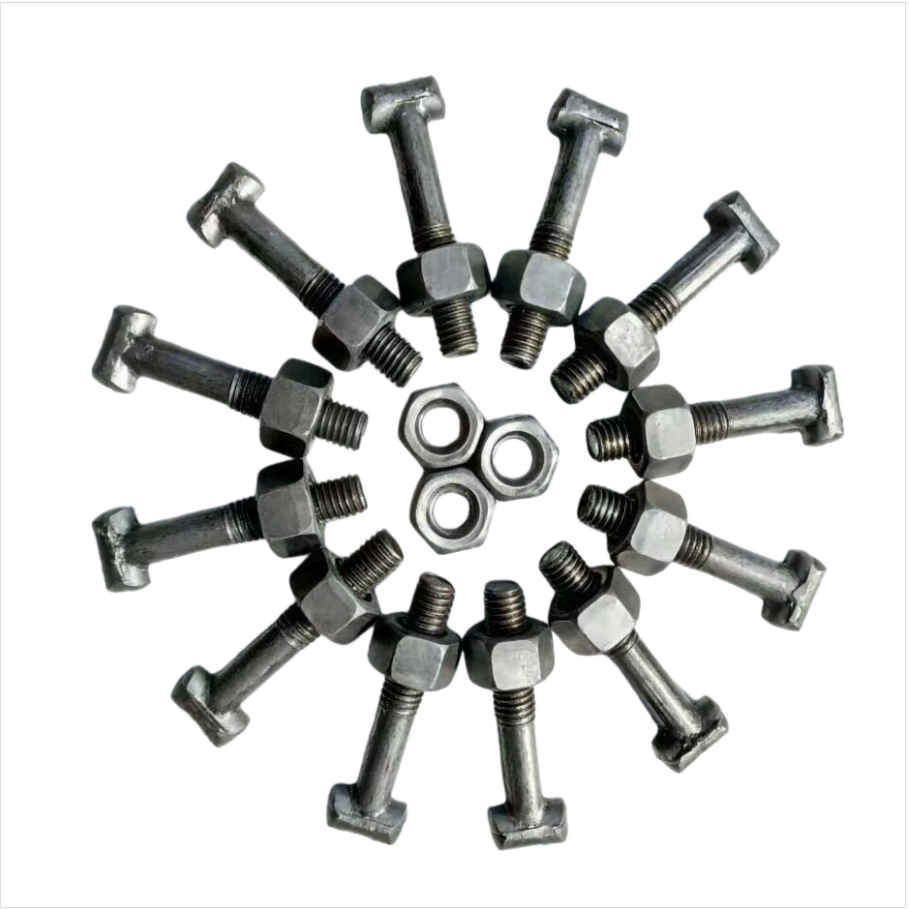
Also known as counter-locking nuts, double nuts achieve locking through two-stage tightening to form sustainable axial preload. The superimposed preload generates stable static friction on thread meshing surfaces and nut bearing surfaces, restricting relative rotation of thread pairs under vibration. The working process includes two steps:
First, tighten the lower primary nut to closely fit the connected component and establish basic preload for stable thread meshing. Second, tighten the upper lock nut until it closely presses against the primary nut, producing reverse axial compression. The mutual extrusion between the two nuts further increases the overall preload of the thread pair. Under full compression, the friction force of thread teeth and bearing surfaces is significantly improved, resisting relative sliding and achieving reliable anti-loosening effects under vibration impact.
Essentially, double nut locking relies purely on friction rather than mechanical interlocking. Its anti-loosening capability highly depends on preload stability. Sustained preload ensures stable locking performance, while preload attenuation caused by vibration or wear will directly weaken the anti-loosening effect.
II. Performance of Double Nuts Under Vibration: Advantages and Limitations
Double nuts exhibit distinct performance differences under varying vibration intensities, with both practical strengths and inherent drawbacks.
1. Medium and Low-Intensity Vibration: Reliable Locking and High Adaptability
In scenarios with low-to-medium frequency (10–50Hz) and small-amplitude vibration, such as ordinary machine tool platforms, non-core parts of small construction machinery and automotive interior fixtures, double nuts deliver stable and long-term locking performance. The superimposed preload effectively compensates minor friction attenuation caused by mild vibration and prevents loosening.
Compared with flat washers and spring washers, double nuts provide more consistent long-term performance. Spring washers easily suffer elastic fatigue and preload loss under prolonged vibration, while rigid counter-compression between double nuts slows down preload attenuation and extends service life. In addition, reusable double nuts offer prominent economic benefits for frequently maintained equipment.
2. High-Intensity Vibration: Insufficient Performance and High Failure Risk
Under high-frequency (>50Hz) and large-amplitude vibration, such as wind turbine towers, heavy engineering machinery, engine blocks and rail transit equipment, double nuts struggle to maintain reliable locking and may fail rapidly, mainly due to two reasons.
First, severe vibration accelerates preload attenuation. Continuous dynamic impact causes micro plastic deformation of metal surfaces and slight wear on thread meshing areas, gradually reducing superimposed preload. Once the preload drops below the critical value, static friction can no longer resist relative sliding, resulting in fretting wear and eventual nut loosening.
Second, double nut locking is a passive friction-based protection method without positive mechanical interlocking. When friction declines under strong vibration, loosening is inevitable. In contrast, positively locked fasteners such as all-metal lock nuts and anti-loosening washers maintain locking through mechanical interlocking even with partial preload loss, achieving higher stability.
3. Impact Vibration Scenarios: Prominent Limitations
Double nuts also perform poorly under impact vibration such as crushing and stamping equipment. Instant impact fluctuates the counter pressure between double nuts, creates temporary gaps and destroys preload stability. Repeated impact further aggravates local thread wear and shortens anti-loosening service life.
III. Key Factors Affecting Anti-Loosening Performance Under Vibration
Even in applicable medium and low-intensity vibration environments, multiple factors influence the actual locking effect, requiring strict process control.
1. Mounting Accuracy: Tightening Sequence and Torque Control
Double nuts must be tightened in the sequence of primary nut first and lock nut second with precise torque control. Reverse operation causes uneven preload distribution. Insufficient torque leads to inadequate counter pressure and insufficient friction, while excessive torque results in thread overloading, component deformation and accelerated preload loss. Normally, the primary nut is tightened to rated preload, and the lock nut adopts 80%–100% of the primary torque.
2. Material and Hardness Matching
Mismatched hardness between nuts and bolts accelerates surface wear under vibration. Nuts with lower hardness suffer faster abrasion on thread teeth and bearing surfaces, causing rapid preload decline. Nuts shall match the bolt material and hardness grade, such as Grade 4 nuts for Grade 4.6 bolts and Grade 8 nuts for Grade 8.8 bolts. Alloy steel nuts are recommended for moderately vibrating scenarios to enhance wear resistance.
3. Thread and Bearing Surface Condition
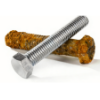
Rust, oil, contaminants and uneven bearing surfaces cause friction coefficient fluctuation and preload instability. Threads and fitting surfaces must be thoroughly cleaned before installation. Special thread lubricants such as molybdenum-based grease can be applied to ensure uniform friction. Flat bearing surfaces avoid local stress concentration and delayed loosening.
4. Nut Fitting Clearance
The two nuts must fit tightly without gaps to form effective counter compression. Excessive bolt length causing nut gaps shall be corrected by replacing standard bolts or adding rigid flat washers. Elastic washers are prohibited here to avoid interference with counter pressure stability.
IV. Standard Application Guidelines and Alternative Solutions
1. Standard Usage Specifications
To maximize anti-loosening performance, double nuts shall be applied following strict rules: first, applicable only for medium and low-intensity vibration, avoiding high-frequency, large-amplitude and impact scenarios; second, adopt torque wrenches for staged tightening in the correct sequence; third, ensure clean and flat fitting surfaces with proper lubrication; fourth, conduct regular preload inspection and retightening.
2. Alternative Solutions for High-Intensity Vibration
For severe vibration and impact conditions, double nuts shall be replaced with higher-reliability locking methods: ① All-metal lock nuts, achieving positive mechanical interlocking for strong vibration resistance; ② Anti-loosening washers such as disc washers and toothed washers, providing continuous elastic preload and meshing friction; ③ Thread locking adhesives, forming rigid bonding for non-detachable fixed connections; ④ Welding fixation for permanent non-maintenance structures to completely eliminate loosening risks at the cost of detachability.
Conclusion
Double nut locking delivers stable and cost-effective anti-loosening performance under medium and low-intensity vibration, featuring simple structure and reusability. Nevertheless, it has inherent limitations in high-vibration and impact scenarios due to pure friction-dependent passive protection. In practical engineering, users shall select locking methods according to vibration intensity, load characteristics and maintenance requirements. Standard installation, material matching and routine inspection can effectively maximize the anti-loosening reliability of double nut connections.
























 Login
Login








 Contact
 WeChat
 粤ICP备2025493240号-1