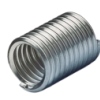
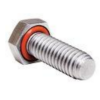
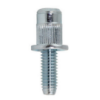
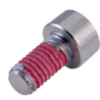
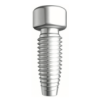
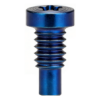
Threads are the core structure enabling the fastening function, while surface coating (such as zinc plating, Dacromet, anodizing, etc.) is a crucial process to enhance corrosion resistance. However, the coating process may alter thread dimensions and affect engagement precision. Therefore, it is essential to strictly control the base thread quality before coating and verify thread compatibility and coating compatibility afterward. Neglecting inspection at any stage may lead to poor thread engagement, insufficient preload, or coating detachment, resulting in joint failure. The following systematically outlines the standard requirements from four aspects: core significance of inspection, pre-coating inspection, post-coating inspection, and practical considerations.
I. Core Significance: A Dual Defense for Connection Reliability
Thread inspection before and after coating essentially builds a dual defense of "base quality + compatibility quality." Pre-coating inspection focuses on the dimensional accuracy, surface quality, and mechanical properties of the thread itself, ensuring the substrate threads meet design requirements and preventing original defects from entering the subsequent coating process. Post-coating inspection focuses on verifying the impact of the coating on thread functionality, ensuring both the coating thickness and adhesion meet standards, while guaranteeing that the threads can still engage smoothly to achieve a balance between "corrosion resistance" and "connection performance." Especially in high-end fields such as aerospace, wind power, and new energy vehicles, the precision of thread inspection is directly related to operational safety and is an indispensable quality control step.
II. Pre-Coating Thread Inspection: Controlling Base Core Quality
The core purpose of pre-coating thread inspection is to eliminate unqualified base threads and provide a qualified foundation for the coating process. The inspection focuses on three dimensions: dimensional accuracy, surface quality, and mechanical properties, strictly following national standards such as GB/T 197 "General Purpose Metric Screw Threads - Tolerances" and the GB/T 3098 series.
1. Core Inspection Indicators and Criteria
Dimensional accuracy is the core indicator, including nominal diameter, pitch, pitch diameter tolerance, and length of engagement. For general fastening threads, the pitch diameter tolerance grade is typically required to be 6-7, with pitch error controlled within ±0.02mm; for high-strength bolts (Grade 8.8 and above), thread precision needs to be improved to grade 4-5 to ensure load-bearing capacity. The length of engagement must meet design requirements, typically not less than 3-5 pitches for conventional scenarios, and not less than 5-8 pitches for heavy-load scenarios.
Surface quality must be free of defects such as cracks, burrs, rust, and scratches. The thread profile must be complete without missing threads or chipping; surface roughness needs to be controlled at Ra≤1.6μm, as excessive roughness can lead to uneven coating adhesion and reduced anti-corrosion effectiveness.
Mechanical properties relate to the load-bearing capacity of the thread and must be verified through sampling tests. For rolled threads, it is necessary to ensure the continuity of metal fibers is not destroyed; for cut threads, the strength of the thread root must be tested to avoid stress concentration points.
2. Inspection Methods
Dimensional accuracy inspection is based on go/no-go gauge testing. Thread plug gauges (for internal threads) and thread ring gauges (for external threads) matching the thread specifications are selected, following the principle that "the go gauge should screw in smoothly, and the no-go gauge should not screw in" to quickly determine engagement precision. For high-precision threads, a thread micrometer is used to measure the pitch diameter, and a coordinate measuring machine (CMM) is used to comprehensively measure parameters such as nominal diameter, pitch, and length of engagement to ensure dimensional deviations are within the allowable range.
Surface quality inspection combines visual observation with a toolmaker's microscope. Visual inspection is used for a preliminary check of obvious burrs and rust; the toolmaker's microscope magnifies 100-200 times to meticulously check the integrity of the thread profile and the depth of surface scratches (scratch depth must not exceed 1/5 of the thread height).
Mechanical property inspection is verified through sampling tensile tests and fatigue tests to ensure the tensile strength and fatigue life of the thread meet the requirements of the corresponding strength grade.
3. Handling of Non-Conformities
If dimensional deviations, surface defects, or substandard mechanical properties are found, unqualified products must be immediately isolated. Minor burrs can be re-inspected after polishing; those with severe defects such as dimensional deviations or cracks must be directly scrapped and are strictly prohibited from entering the coating process.
III. Post-Coating Thread Inspection: Verifying Compatibility and Corrosion Resistance
The core purpose of post-coating thread inspection is to verify that the coating has not compromised the thread function while ensuring the coating performance meets standards. The inspection needs to be adjusted according to the coating process type (such as zinc plating, Dacromet, electrophoresis, etc.), following specific standards such as GB/T 13912 "Metallic coatings - Hot dip galvanized coatings on iron or steel articles - Specifications and test methods."
1. Core Inspection Indicators and Criteria
Thread engagement compatibility is the primary indicator. Since the coating increases the actual size of the thread, it is necessary to ensure that the coated thread can still engage smoothly with the mating part. Using the original specification go/no-go gauges, the go gauge should screw in smoothly, with a tightening torque not exceeding 1.2 times the standard value; the no-go gauge must not screw in. If the no-go gauge can be screwed in, it indicates that the coating is too thick or the thread is deformed, and it is judged as unqualified.
Coating performance includes thickness, adhesion, and uniformity. Thickness requirements vary by coating process: electro-galvanizing thickness ≥8μm, hot-dip galvanizing thickness ≥55μm, Dacromet coating thickness ≥5-8μm, with thickness uniformity error controlled within ±10%. Adhesion inspection uses a cross-cut test or friction test; after the cross-cut, the coating shows no detachment or peeling; after the friction test, the coating still covers the thread surface without exposing the base material.
Surface quality must be free of defects such as coating buildup, sagging, and bubbles. There must be no obvious coating buildup at the thread root or flanks, otherwise, it will affect engagement precision; the coating must uniformly cover all parts of the thread with no missed areas, as missed coating will lead to local corrosion risks.
2. Inspection Methods
Engagement compatibility inspection still relies primarily on go/no-go gauges. For high-precision scenarios, a torque wrench is used to measure the tightening torque to ensure it meets design requirements. If the go/no-go gauge test fails, a coating thickness gauge can be used to measure the coating thickness at key thread areas to determine if poor compatibility is caused by excessive coating thickness.
Coating thickness inspection uses a portable coating thickness gauge, selecting 3 measurement points each at the thread crest, flank, and root, taking the average as the final thickness to ensure thickness and uniformity meet standards. Adhesion inspection: the cross-cut test uses a cross-cut tester to make a grid pattern on the non-load-bearing surface of the thread, and the coating detachment is observed after cleaning the area; the friction test uses a standard friction block to rub back and forth on the thread surface 50 times to check for base material exposure.
3. Handling of Non-Conformities
If poor engagement is caused by excessive coating thickness, the excess coating can be removed through fine grinding, and compatibility can be re-inspected; if it still does not meet standards after grinding, or if there are severe defects such as coating detachment or missed coating, the coating needs to be removed and reapplied. Before re-coating, the base thread quality must be re-inspected; if it cannot be repaired, it is directly scrapped.
IV. Practical Considerations: Ensuring Inspection Accuracy and Consistency
-
Tool Calibration: Tools such as go/no-go gauges, coating thickness gauges, and coordinate measuring machines need to be calibrated regularly, with a calibration cycle not exceeding 6 months, to ensure accurate and reliable measurement data.
-
Sampling Rules: Reasonable sampling based on batch size, with a sampling ratio of not less than 3‰ per batch of fasteners, and a minimum of 3 samples; for fasteners in high-end fields, 100% inspection is required to ensure no unqualified products enter the market.
-
Environmental Control: The inspection environment must be kept dry and clean, with the temperature controlled at 20±5℃, avoiding humidity and dust from affecting inspection results. Especially for post-coating inspection, it must be carried out after the coating is fully cured (e.g., left for more than 24 hours after galvanizing).
-
Record Keeping: Establish complete inspection records, including inspection batch, specifications, inspection indicators, measurement data, and judgment results, to facilitate quality traceability. If batch non-conformities occur, issues in the coating or substrate processing stages must be traced promptly.
Conclusion: Thread inspection before and after surface coating of fasteners is a critical quality control node throughout the entire production process. Strictly controlling base material quality before coating, and rigorously controlling compatibility and corrosion resistance after coating, combined with standardized inspection methods and practical requirements, can ensure that fasteners possess both excellent anti-corrosion capabilities and reliable connection functions. For practitioners in the fastener industry, strictly implementing thread inspection standards is the core prerequisite for improving product quality and ensuring equipment operational safety, and it is also an important foundation for promoting the high-quality development of the industry.



























 Login
Login








 Contact
 WeChat
 粤ICP备2025493240号-1