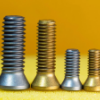
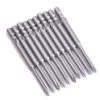
As core components of mechanical connections, screws are widely used across various operating conditions. Their corrosion resistance directly determines connection reliability and service life. In corrosive environments such as moisture, salt spray, and acidic/alkaline conditions, untreated or improperly treated screws are prone to rusting, leading to thread seizure, strength degradation, or even fracture, which can trigger equipment failure. Surface treatments achieve corrosion protection by building a protective layer on the screw surface or enhancing the substrate's inherent passivation capability. Different processes vary significantly in protection principles, corrosion resistance intensity, and applicable environments. Precisely matching the process to the operating condition is key to ensuring screw performance. This article comprehensively summarizes the core correlation between screw surface finishing processes and corrosion resistance from four aspects: classification of protection principles, characteristics of mainstream processes, selection guidelines, and influencing factors.
I. Classification of Corrosion Protection Principles
The corrosion protection logic of screw surface treatments can be divided into three major categories, where different principles determine the core differences in protection performance:
-
Physical Barrier Protection: This involves forming a dense coating or oxide film on the screw surface to isolate the substrate (steel, aluminum alloy, stainless steel, etc.) from corrosive media like air, moisture, and chloride ions, fundamentally blocking the corrosion reaction. The effectiveness relies on the integrity, density, and adhesion of the protective layer. Common processes include electroplating (nickel, chrome), coating, Dacromet, and anodizing.
-
Sacrificial Anode Protection: Utilizing the principle of electrochemical corrosion, a metal coating with a lower electrode potential than the substrate (such as zinc or cadmium) is deposited on the screw surface. When the protective layer is damaged, the coating metal corrodes preferentially (acting as the anode and being consumed), thereby protecting the substrate (acting as the cathode) from erosion. Common processes include hot-dip galvanizing, electro-galvanizing, and zinc-chromium coatings.
-
Passivation Enhancement Protection: This strengthens the substrate's own oxide passivation film through chemical treatment, improving its stability and corrosion resistance, primarily applicable to stainless steel screws. Stainless steel naturally forms a chromium oxide passivation film; passivation treatment uses specific chemical solutions to further thicken and densify this film, filling defects and enhancing resistance to corrosive media. A common example is stainless steel passivation (chromate or chromium-free passivation).
II. Detailed Corrosion Resistance Characteristics of Mainstream Processes
Based on industry applications, here are the core corrosion resistance characteristics of 8 mainstream screw surface finishing processes, including protection principles, key indicators, applicable environments, and limitations:
1. Electro-galvanizing (Zinc Plating)
-
Protection Principle: Sacrificial anode + physical barrier protection. The zinc coating corrodes preferentially while isolating corrosive media.
-
Corrosion Resistance: Conventional electro-galvanizing (without passivation) offers about 48-72 hours of salt spray resistance. With chromate passivation, this increases to 200-500 hours. Environmentally friendly chromium-free passivation offers about 150-300 hours. Coating thickness is typically 8-12μm.
-
Applicable Environment: General industrial and mildly humid environments, such as indoor equipment, appliance components, and lightly loaded architectural screws.
-
Limitations: Poor high-temperature resistance (coating oxidizes above 120°C); short lifespan in marine or strong chemical environments; risk of hydrogen embrittlement requiring strict post-plating baking.
2. Hot-dip Galvanizing
-
Protection Principle: Sacrificial anode + physical barrier protection, with a thicker zinc coating for more durable protection.
-
Corrosion Resistance: Coating thickness ≥55μm. Salt spray resistance ranges from 500-1000 hours (conventional) to 1000-2000 hours (with passivation). Excellent impact and wear resistance.
-
Applicable Environment: Outdoor humid and moderately corrosive salt spray environments, such as bridges, guardrails, outdoor power equipment, and construction machinery.
-
Limitations: High process temperature (~450°C) may cause dimensional deformation, making it unsuitable for precision screws; rougher appearance; not suitable for high-temperature or strong acid/alkali environments.
3. Dacromet (Zinc-Chromium Coating)
-
Protection Principle: Sacrificial anode (zinc flakes) + physical barrier (chromate conversion film), offering a highly stable composite protection system.
-
Corrosion Resistance: Coating thickness 5-8μm. Salt spray resistance reaches 1000-3000 hours, far exceeding conventional galvanizing. Excellent high-temperature resistance up to 300°C.
-
Applicable Environment: Extreme corrosive environments, such as marine high-salt spray, chemical acid/alkali mist, and high-temperature/high-humidity conditions (e.g., wind power towers, marine equipment, automotive chassis).
-
Advantages: No hydrogen embrittlement risk (suitable for high-strength screws); minimal impact on dimensions (suitable for precision parts); uniform coating covers complex structures like thread roots.
4. Stainless Steel Passivation
-
Protection Principle: Passivation enhancement, chemically thickening and densifying the chromium oxide film on stainless steel.
-
Corrosion Resistance: Significantly improves resistance to pitting and crevice corrosion. 304 stainless steel achieves 200-500 hours of salt spray resistance; 316L can reach 500-1000 hours after passivation.
-
Applicable Environment: Basic protection enhancement for stainless steel screws in general industrial or mildly corrosive environments, such as food machinery, medical equipment, and electronics.
-
Limitations: Only applicable to stainless steel substrates; protection relies on film integrity and requires re-passivation if scratched.
5. Nickel Plating
-
Protection Principle: Physical barrier protection. The nickel coating is dense and chemically stable.
-
Corrosion Resistance: Conventional nickel plating offers 200-500 hours of salt spray resistance. Electroless nickel plating is more uniform, offering 500-1000 hours with added wear resistance.
-
Applicable Environment: Scenarios requiring both aesthetics and corrosion resistance, such as electronics, precision instruments, and sanitary ware.
-
Limitations: Higher cost than galvanizing; cathodic protection means the substrate corrodes faster if the coating is damaged (galvanic corrosion); poor high-temperature resistance (oxidizes above 250°C).
6. Anodizing
-
Protection Principle: Physical barrier protection, exclusively for aluminum alloy screws, forming a dense aluminum oxide film via electrolysis.
-
Corrosion Resistance: Oxide film thickness 5-20μm. Conventional anodizing offers 200-500 hours of salt spray resistance; sealed and dyed treatments can reach 500-1000 hours with decorative benefits.
-
Applicable Environment: Exclusive protection for aluminum alloy screws in aerospace, automotive parts, and electronic device housings.
-
Limitations: Only for aluminum substrates; the film is hard but brittle, and impact damage significantly reduces corrosion resistance.
7. Coating Processes (Powder/Electrophoretic Coating)
-
Protection Principle: Physical barrier protection, forming a thick protective layer via cured paint.
-
Corrosion Resistance: Coating thickness 20-100μm. Epoxy powder coating offers 1000-3000 hours of salt spray resistance; polyester offers 500-1500 hours; electrophoretic coating offers 800-2000 hours.
-
Applicable Environment: Harsh corrosive environments requiring aesthetics, such as outdoor architectural hardware, construction machinery, and appliance housings.
-
Limitations: Thick coating may affect thread fit accuracy (requires tolerance allowance); coating buildup on complex threads requires precise parameter control.
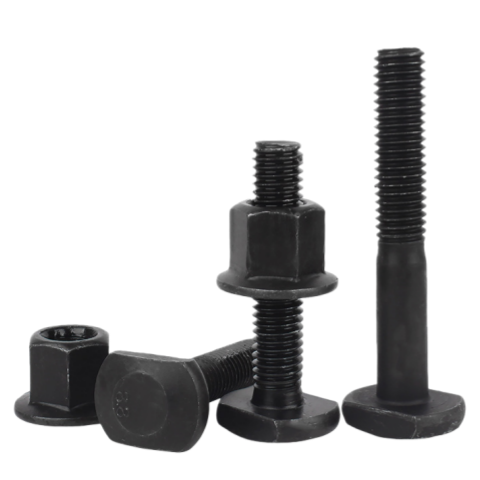
8. Black Oxide (Bluing)
-
Protection Principle: Physical barrier protection, forming a black ferrous oxide film via high-temperature oxidation. Weak protection.
-
Corrosion Resistance: Salt spray resistance is only 12-24 hours. Provides basic rust prevention and requires rust-preventative oil for better effect.
-
Applicable Environment: Dry environments with very low rust prevention requirements, such as non-load-bearing internal mechanical screws or ordinary tool screws.
-
Advantages: Extremely low cost and high processing efficiency; minimal impact on dimensions, suitable for small precision screws.
III. Selection Guide Based on Corrosion Resistance Needs
The core logic of selection is "matching the corrosive environment, substrate characteristics, and performance requirements" to avoid unnecessary costs.
1. Selection by Corrosive Environment
-
Dry/Clean (e.g., indoor office equipment): Prioritize Black Oxide or basic Passivation (for stainless steel).
-
Mildly Humid (e.g., indoor damp areas, general outdoors): Choose Electro-galvanizing (passivated) or Stainless Steel Passivation.
-
Moderately Corrosive (e.g., coastal light salt spray, general chemical areas): Choose Hot-dip Galvanizing, Nickel Plating, or Anodizing (aluminum).
-
Heavily Corrosive (e.g., marine high salt spray, chemical mist, high heat/humidity): Prioritize Dacromet, Epoxy Powder Coating, or Electroless Nickel Plating.
2. Selection by Substrate Characteristics
-
Carbon Steel Screws: Avoid using passivation alone. Prioritize Galvanizing, Dacromet, or Coating.
-
Stainless Steel Screws: Core selection is Passivation. For heavy corrosion, combine with Coating.
-
Aluminum Alloy Screws: Exclusively select Anodizing. For heavy corrosion, upgrade to thick-film Anodizing + Sealing.
3. Selection by Other Performance Needs
-
High-Strength Screws (Grade 8.8+): Prioritize Dacromet or Hydrogen-free Galvanizing to avoid hydrogen embrittlement.
-
Precision Screws (High dimensional accuracy): Choose Electro-galvanizing, Passivation, or Dacromet. Avoid thick-film processes like Coating.
-
Aesthetic Requirements: Choose Nickel Plating, Chrome Plating, Colored Anodizing, or Polyester Powder Coating.
-
High-Temperature Conditions (>120°C): Choose Dacromet, Silver Plating (for conductivity), or High-Temperature Powder Coating.
IV. Summary
The core correlation between screw surface finishing and corrosion resistance is that "protection principles determine the protection level, while matching process parameters to operating conditions determines the actual effect." From basic Black Oxide and Passivation to high-performance Dacromet and Coating, different processes form a protection system covering low, medium, and high levels. In practical applications, it is essential to first clarify the corrosion intensity of the environment and the screw substrate characteristics, then precisely select the surface finishing process by combining requirements for dimensional accuracy, strength, and cost. Strict quality control over pre-treatment, process parameters, and post-treatment is necessary to maximize corrosion resistance and ensure long-term structural stability. With stricter environmental policies and rising high-end manufacturing demands, green and efficient processes like chromium-free passivation, eco-friendly Dacromet, and high-corrosion-resistant powder coating will become the mainstream future direction.

















 Login
Login








 Contact
 WeChat
 粤ICP备2025493240号-1