
One-stop Fastener
Custom Manufacturing Expert

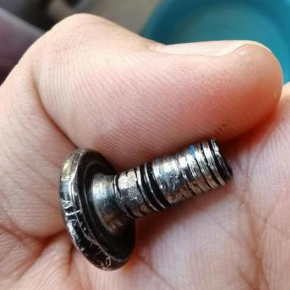
What to Do About Stripped or Crossed Threads? 3 Key Causes a

[Abstract]:Improper Torque Control: Using ordinary wrenches and relying on "feel" during installation instead of following standard torque values can lead to issues.
What to Do About Stripped or Crossed Threads? 3 Key Causes a


1. Key Causes of Stripped / Crossed Threads

  • Improper Torque Control: Using ordinary wrenches and relying on "feel" during installation instead of following standard torque values can lead to issues. Excessive torque easily crushes and deforms the thread profile, while insufficient torque leaves the fastener in a loose state, accelerating thread wear under external forces. For example, when installing cylinder head bolts on a car engine, exceeding the standard torque by just 15% will very likely cause thread stripping.
  • Unreasonable Material Matching: A significant hardness difference between the fastener and the connected component can cause failure. For instance, using high-strength steel bolts to connect aluminum alloy parts means the softer aluminum threads are prone to wear under prolonged stress, leading to stripping. Similarly, if inappropriate fasteners are chosen for a new energy vehicle's battery pack frame, thread disengagement can occur in a short period.
  • Non-standard Installation Operations: Failing to clear impurities (such as iron filings or oil) from the threaded holes before installation, or forcing the bolt in at an angle, causes uneven stress and damages the local thread profile. For example, in mechanical equipment assembly, forcibly threading a bolt into a hole with residual machining chips will directly result in stripped threads.

2. Repair Solutions

  • Minor Stripping (Thread damage ≤ 3 threads): Use a thread repair tap to re-tap the damaged threads. After tapping, clean out any residual debris and replace it with a bolt one size larger in diameter (e.g., replacing an original M8 bolt with an M9 bolt) to ensure a tight fit. This method is suitable for non-critical load-bearing areas, such as connecting mechanical equipment housings.
  • Moderate Stripping (Thread damage 3-5 threads): Adopt thread insert repair. First, enlarge and re-tap the damaged threaded hole, then install a wire thread insert or a self-tapping insert, and finally use a bolt of the original specification for installation. For instance, in critical connection points of aerospace equipment, wire thread inserts are commonly used to repair stripped threads and restore the original connection strength.
  • Severe Stripping (Thread damage > 5 threads): For castings or forgings, the method of welding to fill the hole followed by re-drilling and tapping can be used. If the connected part is a thin plate, it is better to replace the entire component. For example, in heavy machinery base connections where a threaded hole is severely stripped, it is common practice to weld-fill the hole and then re-machine the threads.

3. Preventive Measures

  • Precise Torque Control: Determine the correct torque value by consulting relevant standards based on the fastener's specifications, material, and the characteristics of the connected parts. Always use a torque wrench (such as a preset or digital torque wrench) for installation, and perform a post-installation torque re-check. For example, when an M10 grade 8.8 bolt connects steel components, the standard torque is approximately 55-65 N·m, and strict adherence to this range is required.
  • Reasonable Material Matching: Select fasteners according to the material of the connected component. If the connected part is made of soft material (such as aluminum alloy or plastic), choose fasteners with lower hardness and fine threads, or install a steel bushing in the threaded hole. For instance, when connecting plastic pipes, nylon fasteners should be used to avoid thread damage.
  • Standardized Installation Process: Before installation, thoroughly clean impurities and oil from both the threaded holes and the bolt surfaces to ensure they are completely clean. During installation, keep the centerline of the bolt perfectly coaxial with the threaded hole; using guiding tools can help prevent angled insertion.

Professional consultant team online, ready to provide solutions for you

Contact Now
WeChat

WeChat

Scan to add WeChat

Long press to scan

Service