
























One-stop Fastener
Custom Manufacturing Expert

Prevent Fastener Failure: Load Calculation & Strength Gr

[Abstract]:Determine Load Type: Apply a safety factor of 1.2 for static loads (e.g., equipment base bolts) and a safety factor of 1.5 to 2.0 for alternating/dynamic loads (e.g., motor bolts).
Prevent Fastener Failure: Load Calculation & Strength Gr
1. Load Calculation Steps
  • Determine Load Type: Apply a safety factor of 1.2 for static loads (e.g., equipment base bolts) and a safety factor of 1.5 to 2.0 for alternating/dynamic loads (e.g., motor bolts).
  • Calculate Minimum Required Tensile Strength: Use the formula: Tensile Strength = (Load × Safety Factor) / Stress Cross-sectional Area. For example, an M10 bolt has a stress area of approximately 58mm². To withstand a 5kN static load, the required tensile strength is ≥ (5000 × 1.2) / 58 ≈ 103MPa.
2. Strength Grade Selection
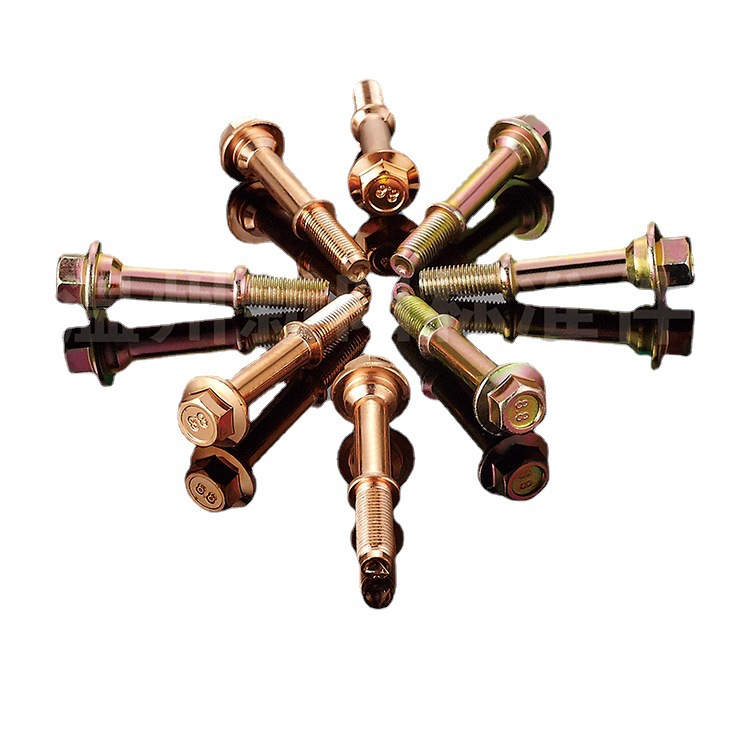
  • Static Load Scenarios: Grade 4.8 (tensile strength 400MPa) is suitable for furniture and lightweight equipment; Grade 5.6 is used for standard machinery bases.
  • Medium Load Scenarios: Grade 8.8 (tensile strength 800MPa) fits automotive chassis and machine tool components; Grade 10.9 is ideal for heavy machinery drive shafts.
  • High Load Scenarios: Grade 12.9 (tensile strength 1200MPa) is reserved for critical aerospace and wind power equipment applications.
3. Practical Considerations
  • Always verify the load parameters in the design drawings before selection—never rely solely on empirical guesswork.
  • For fasteners in critical areas, prepare and archive a formal load calculation report. After installation, always use a torque wrench to tighten according to standard specifications (e.g., a Grade 8.8 M10 bolt requires a tightening torque of 55-65 N·m).

Professional consultant team online, ready to provide solutions for you

Contact Now
WeChat

WeChat

Scan to add WeChat

Long press to scan

Service