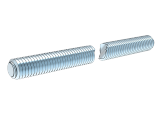
Fasteners are essential components in manufacturing, widely used in automotive, aerospace, electronics, construction, and renewable energy sectors. Principles and Methods of Fastener Thread Inspection is a common question engineers and procurement specialists encounter. This article provides a systematic answer covering technical principles, selection methods, and practical guidelines.
From a technical perspective, this topic involves materials science, tribology, and surface engineering. Understanding the underlying principles helps engineers select appropriate fastener specifications, strength grades, and surface treatments during the design phase, preventing assembly failures and safety hazards.
In practical applications, evaluate working conditions including load type, ambient temperature, corrosive media, assembly space, and maintenance requirements. For critical joints, verify mechanical performance per ISO 898-1 standards and recheck torque after assembly.
Toprecision provides comprehensive solutions from standard parts to custom-engineered fasteners, covering high-strength bolts, micro screws, wire thread inserts, and self-clinching fasteners for EV, robotics, and AI server applications. Contact our engineering team for support.
Core Principles of Thread Inspection
The core principles of thread inspection revolve around thread geometric characteristics and functional requirements. Key inspection dimensions include dimensional precision, profile integrity, surface quality, and mating performance. From a geometric perspective, major diameter, pitch diameter, minor diameter, pitch, and thread angle are vital indicators. Among them, the pitch diameter directly affects the tightness of the thread fit and is the core inspection item. Its inspection principle is based on contour fitting and dimensional comparison of the thread profile, using standard gauges or precision instruments to capture deviations between actual parameters and design values, determining whether they fall within the allowable tolerance range.
Surface quality inspection focuses on defect identification on the thread surface. Through visual, tactile, or physical detection methods, it screens for burrs, scratches, cracks, and rust—defects that can weaken thread strength and even cause jamming or stripping during connection. Mating performance inspection is based on the principle of thread engagement, simulating actual assembly scenarios to test the smoothness and tightness of internal and external thread engagement. This ensures sufficient torque and load transmission after assembly while avoiding overly loose or tight fits that could affect usage.
Manual Inspection Method
Manual inspection is a traditional and widely used basic method, suitable for sampling inspections of small-batch, multi-category fasteners. It offers the advantages of low equipment investment and flexible operation, with core tools including thread gauges, calipers, and magnifying glasses. Thread gauge inspection is the most common manual approach, divided into GO and NO-GO gauges, following the fundamental principle of "GO passes, NO-GO stops." The GO gauge checks the functional pitch diameter and major diameter and must screw in smoothly; the NO-GO gauge checks the single pitch diameter and must not screw in or may only screw in 1-2 threads. This simple and intuitive method allows for rapid determination of thread conformity.
For precise measurement of thread dimensions, personnel can use tools like calipers and micrometers to measure the major diameter, minor diameter, and pitch individually, combined with magnifying glasses to observe profile integrity and screen for tiny surface burrs and scratches. However, manual inspection has obvious limitations: it relies heavily on operator skill, is easily influenced by subjective judgment, has lower efficiency, and struggles to detect hidden defects like internal cracks, making it unsuitable for 100% inspection of large batches of high-precision fasteners.
Semi-Automated Inspection Method
Semi-automated inspection combines manual inspection with automated equipment, balancing flexibility and precision. It is suitable for inspecting small-to-medium batch, medium-precision fasteners, with core equipment including semi-automatic thread gauge testers and optical projectors. The optical projector inspection principle is based on optical imaging, projecting an enlarged thread contour onto a screen. Operators intuitively judge whether the thread angle, pitch, and profile integrity are qualified by comparing them with a standard thread contour map, while simultaneously measuring key dimensions using built-in scales. Compared to manual inspection, this offers higher precision and improves efficiency by over 30%.
Semi-automatic thread gauge testers use electric drives to screw gauges into the thread, automatically recording data such as screwing torque and travel distance. Combined with preset parameters, they assess thread mating performance and dimensional deviations, reducing human operational errors. This is particularly suitable for scenarios requiring high thread mating precision. Semi-automated inspection retains human capability to judge special defects while enhancing inspection precision and efficiency through equipment empowerment, making it the mainstream inspection method for most current fastener enterprises.
Fully Automated Inspection Method
Relying on precision instruments and digital technology, fully automated inspection achieves efficient, precise, and fully unmanned thread inspection processes. It is suitable for 100% inspection of large-batch, high-precision fasteners and serves as a core inspection means in high-end fastener production. Core equipment includes comprehensive thread measuring machines, vision inspection systems, and eddy current flaw detectors. Based on contact measurement principles, comprehensive thread measuring machines use high-precision probes to scan thread contours, automatically collecting multi-dimensional parameters such as major diameter, pitch diameter, minor diameter, pitch, and thread angle, while synchronously generating inspection reports. With micron-level accuracy and efficiency over 10 times that of manual inspection, they can rapidly complete full inspections of large product batches.
Vision inspection systems employ non-contact imaging technology, capturing thread surface images via high-speed cameras and combining them with AI algorithms to automatically identify defects like burrs, scratches, and incomplete profiles without human intervention. Capable of 24-hour continuous inspection, they are particularly suitable for precision fasteners with strict surface quality requirements. For hidden defects like internal thread cracks, eddy current flaw detectors can be used. Based on electromagnetic induction principles, they detect magnetic field changes inside the thread to determine the presence of cracks, offering high sensitivity without damaging the thread.
In practical inspection work, suitable methods must be selected based on fastener batch size, precision requirements, application scenarios, and cost budgets. Small-batch customized fasteners can adopt manual inspection supplemented by semi-automated equipment for sampling; large-batch standardized precision fasteners should utilize fully automated inspection to balance efficiency and precision; for fasteners in high-end fields like aerospace, multiple inspection methods must be combined to achieve comprehensive detection of dimensions, surface quality, and internal defects.
Furthermore, optimizing the inspection process is indispensable. A full-process mechanism of "first-article inspection - patrol inspection - final inspection" should be established. First-article inspection confirms process stability, patrol inspection promptly identifies anomalies during production, and final inspection controls finished product quality. Simultaneously, leveraging digital systems to record inspection data enables quality traceability. By optimizing processing techniques targeting high-frequency defects, a closed-loop management system of "inspection-feedback-optimization" is formed.
Thread inspection is a core link in fastener quality control, and the reasonable application of its principles and methods directly impacts product reliability and corporate market competitiveness. As the fastener industry moves towards high precision and large-scale production, automated and intelligent inspection technologies will become the mainstream trend. Enterprises need to update inspection equipment and optimize processes according to their production needs, deeply integrating inspection work with production stages. This not only builds a solid quality defense line but also enhances inspection efficiency, injecting momentum into the high-quality development of the industry.


 135-6073-0094