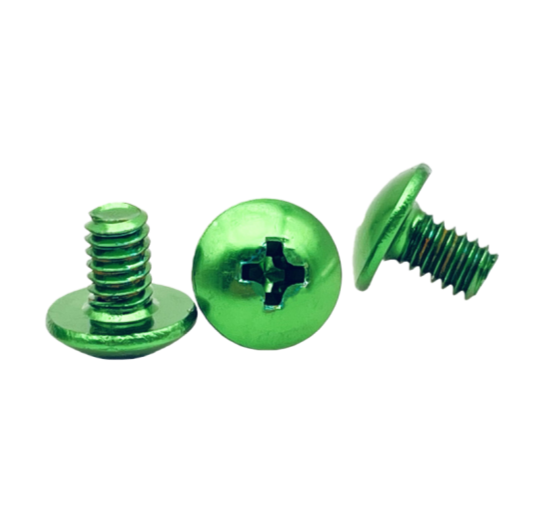
Fasteners are essential components in manufacturing, widely used in automotive, aerospace, electronics, construction, and renewable energy sectors. Special Certifications for Automotive Fasteners is a common question engineers and procurement specialists encounter. This article provides a systematic answer covering technical principles, selection methods, and practical guidelines.
From a technical perspective, this topic involves materials science, tribology, and surface engineering. Understanding the underlying principles helps engineers select appropriate fastener specifications, strength grades, and surface treatments during the design phase, preventing assembly failures and safety hazards.
In practical applications, evaluate working conditions including load type, ambient temperature, corrosive media, assembly space, and maintenance requirements. For critical joints, verify mechanical performance per ISO 898-1 standards and recheck torque after assembly.
Toprecision provides comprehensive solutions from standard parts to custom-engineered fasteners, covering high-strength bolts, micro screws, wire thread inserts, and self-clinching fasteners for EV, robotics, and AI server applications. Contact our engineering team for support.
1. Quality Management System Certification: IATF 16949
This is the mandatory threshold for entering the global automotive supply chain. Built upon ISO 9001, it is a quality management standard specifically designed for the automotive industry, emphasizing:
-
Process Approach: Focuses on the identification and control of Customer-Oriented Processes (COP), Management Processes (MP), and Support Processes (SP).
-
Risk-Based Thinking: Requires continuous risk identification and mitigation throughout operations.
-
Customer-Specific Requirements (CSR): Must integrate and satisfy specific requirements from various OEMs (e.g., VW Formel Q, Ford Q1, GM BIQS).
-
Five Core Tools: The extensive application of APQP (Advanced Product Quality Planning), PPAP (Production Part Approval Process), FMEA (Failure Mode and Effects Analysis), SPC (Statistical Process Control), and MSA (Measurement System Analysis) serves as key evidence of an effective system.
2. Process Audit Standard: VDA 6.3
Developed by the German Association of the Automotive Industry (VDA), this process audit standard is widely used by mainstream European and global automakers. It systematically evaluates control capabilities during product realization (P2-P4) and mass production (P5-P7), focusing on:
-
Project Management: Full-cycle management from quotation to Start of Production (SOP).
-
Product & Process Development: Whether design and process validation are conducted systematically.
-
Supplier Management: Control over lower-tier suppliers.
-
Production Process: Comprehensive control over Man, Machine, Material, Method, Environment, and Measurement.
-
Customer Service: Responsiveness and issue resolution.
Achieving a high score in the VDA 6.3 audit is a significant credential for earning customer trust.
3. Production Part Approval Process: PPAP
This is the critical step to demonstrate mass production capability and quality consistency to customers. A PPAP submission consists of a complete package of documentary evidence, including but not limited to:
-
Design records and authorized engineering change documents.
-
Dimensional reports, material/performance test reports.
-
Process flow diagrams, PFMEA, and Control Plans.
-
Results of MSA and SPC studies.
-
Appearance Approval Report (AAR), if applicable.
-
Sample production parts and inspection aids.
-
Records of compliance with customer-specific requirements.
As Class B or C safety parts, fasteners typically face extremely strict PPAP requirements, especially regarding data on critical characteristics like strength, fatigue resistance, and corrosion protection.
4. Material Approval and Standards Compliance
Automotive fasteners must use materials approved by OEMs or the industry.
-
Material Grade Approval: Steel must comply with grades from certified mills (e.g., Baosteel, Ansteel) or internationally recognized grades (e.g., SWRCHB, SCM440). The same applies to stainless steel and non-ferrous metals.
-
Special Performance Requirements: Proof of compliance is required for properties such as hydrogen embrittlement resistance (especially for electroplated high-strength bolts), fretting fatigue performance, and specific surface friction coefficients (for torque-preload control).
-
Hazardous Substance Control: Must comply with regulations like ELV (End-of-Life Vehicles Directive) and REACH regarding restrictions on heavy metals, polycyclic aromatic hydrocarbons (PAHs), etc.
5. Laboratory Capability and Product Testing
Customers often require or recognize supplier laboratory capabilities (e.g., CNAS accreditation). Testing for fasteners extends far beyond routine national standards and may include:
-
Simulated Assembly Tests: Torque-clamp force relationship tests, repeated tightening and loosening tests.
-
Environmental Reliability Tests: Salt spray testing (e.g., over 1000 hours NSS), cyclic corrosion testing, high temperature and humidity testing.
-
Extended Mechanical Property Tests: Wedge tensile testing, full-size tensile testing, head soundness testing, decarburization inspection under proof load.
-
Metallographic Analysis: Examination of core hardness, microstructure, and case depth (carburizing/quenching).
Conclusion: Special certifications in the automotive industry form a rigorous quality assurance ecosystem, centered on the philosophy of "prevention first, evidence-based decisions, and total process control." It tests not only the product quality of a fastener manufacturer but also its systematic quality management capabilities, technical expertise, and culture of continuous improvement. Yongjing Precision Technology Co., Ltd. has established a robust system compliant with IATF 16949 and mainstream customer CSRs. We continuously invest in material engineering, process control, and experimental validation, striving to be a trusted strategic partner for automotive OEMs and Tier-1 suppliers, securing every journey with precision craftsmanship.


 135-6073-0094