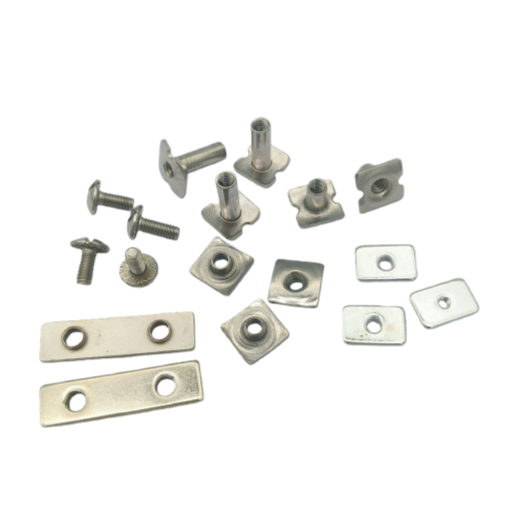
Fasteners are essential components in manufacturing, widely used in automotive, aerospace, electronics, construction, and renewable energy sectors. Thin Metal Fastener Technology Guide is a common question engineers and procurement specialists encounter. This article provides a systematic answer covering technical principles, selection methods, and practical guidelines.
From a technical perspective, this topic involves materials science, tribology, and surface engineering. Understanding the underlying principles helps engineers select appropriate fastener specifications, strength grades, and surface treatments during the design phase, preventing assembly failures and safety hazards.
In practical applications, evaluate working conditions including load type, ambient temperature, corrosive media, assembly space, and maintenance requirements. For critical joints, verify mechanical performance per ISO 898-1 standards and recheck torque after assembly.
Toprecision provides comprehensive solutions from standard parts to custom-engineered fasteners, covering high-strength bolts, micro screws, wire thread inserts, and self-clinching fasteners for EV, robotics, and AI server applications. Contact our engineering team for support.
I. Core Compatibility Requirements
The primary requirements are lightweighting and miniaturization. Fastener specifications typically range from M2 to M6, with countersunk or pan heads preferred to minimize protrusion. High strength and good adaptability are essential due to limited thread engagement depth. Fasteners must possess adequate tensile and shear strength, with thread designs suited to thin sheets to avoid stripping and galling.
Reliable locking and corrosion resistance are indispensable, as many applications endure vibration and environmental factors like humidity and dust. Finally, assembly efficiency must be considered, as thin-gauge electrical components are often mass-produced. Fasteners should be compatible with automated assembly processes.
II. Core Fastener Types and Technical Characteristics
Three fastener types are most widely used, each with specific applications.
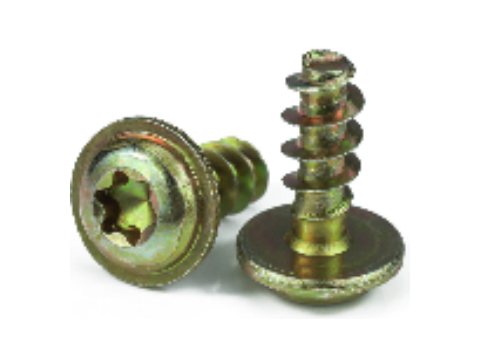
Self-tapping screws require no pre-tapping, directly forming threads in the thin metal sheet. They are ideal for appliance panels and small controllers. Technical highlights include optimized fine or tri-lobular threads that increase contact area and biting stability, along with sharp points that reduce tapping resistance and avoid sheet deformation. Common materials are 1018 carbon steel and 304 stainless steel, with zinc or nickel plating. Note: Self-tapping screws are not recommended for sheets thinner than 1mm due to tear-out risk.
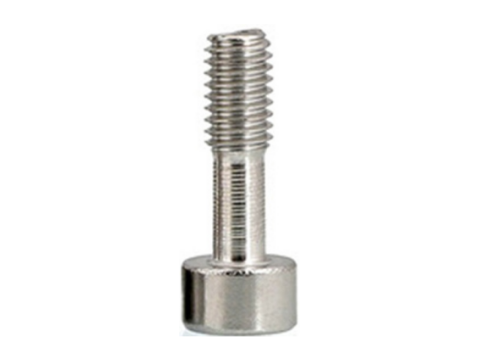
Self-clinching screws are pressed into pre-drilled holes in thin sheets (0.5–2mm). The clinching feature on the screw shank engages tightly with the sheet, creating a strong joint without welding or adhesives. They are commonly used in electrical control cabinets and charger housings where high joint strength is required. The core technology is the clinching feature design—serrated or barbed structures that form an irreversible connection with excellent locking performance. High-strength alloy steel is preferred, with Dacromet or e-coating for corrosion protection.
Rivet nuts are suitable for double-sided access or very thin sheets (≤1mm) where direct tapping is impossible. Installed using specialized tools, they enable bolted connections. They are used in new energy electrical equipment and precision electronics. The core technology lies in the riveting process—an internal thread with an expandable external structure. During installation, the external portion expands, tightly engaging the sheet. Materials include stainless steel and aluminum alloy for different corrosion and lightweighting needs.
III. Key Installation Process Technologies
Installation must follow the principles of precise positioning, uniform force application, and strict process control.
First, hole positioning must be precise. Excessive deviation in hole position on thin metal sheets will cause uneven force distribution during fastener installation, leading to sheet deformation or thread stripping. Precision drilling equipment is recommended, with hole position tolerance within ±0.1mm. Hole size must match the fastener specification—neither too large nor too small.
Second, force control must be reasonable. During automated assembly, torque must be adjusted appropriately, and force applied uniformly to avoid sheet tear-out or fastener breakage from excessive force, or insufficient clamping from too little force. For manual assembly, calibrated tools must be used. For self-tapping screws, tapping speed must be controlled with uniform advancement to avoid thread stripping. For self-clinching screws and rivet nuts, pressing/riveting pressure must be controlled to ensure tight, gap-free engagement. Additionally, sheet surfaces must be cleaned to remove oil, rust, and burrs before installation. A small amount of thread-locking compound (e.g., anaerobic adhesive) may be applied to further enhance locking performance in vibrating applications.
IV. Locking and Corrosion Protection Optimization
Locking technologies fall into three categories. Structural locking is achieved through fastener design, such as self-clinching screw barbs or fine threads on self-tapping screws, requiring no additional parts and suiting mass production. Material-based locking uses elastic materials or memory alloys to provide locking through material elasticity, suiting high-vibration applications. Auxiliary locking uses locking washers, thread-locking compounds, or other accessories for maximum reliability in applications with extremely high connection stability requirements.
Corrosion protection relies primarily on surface treatment processes. Indoor dry environments can use zinc or nickel plating, balancing cost and protection. Outdoor humid or dusty environments can use Dacromet or e-coating, providing over 5 years of protection. Highly corrosive environments (e.g., outdoor charging stations) can use 316 stainless steel with fluorocarbon coating to completely eliminate rust issues.
V. Common Problems and Solutions
Common industry problems include sheet deformation, thread stripping, and fastener loosening. Sheet deformation is often caused by oversized fasteners, excessive force, or hole misalignment. The solution is to select the correct fastener size, control force, and ensure precise hole positioning. Thread stripping is often caused by poor thread design, sheets that are too thin, or material mismatch. The solution is to use fine-thread fasteners, increase sheet thickness, or substitute self-clinching screws or rivet nuts for self-tapping screws. Fastener loosening is often caused by insufficient locking measures or high vibration. The solution is to add locking washers, apply thread-locking compound, or optimize the locking design.
Conclusion
The core principle of threaded fastener technology for thin-gauge metal electrical appliances is compatibility. Selection must be based on sheet thickness, application environment, and joint requirements, with standardized installation and optimized locking and corrosion protection. As thin-gauge electrical appliances evolve toward greater miniaturization, precision, and intelligence, threaded fastener technology will continue advancing toward lightweighting, higher strength, automation, and long-term corrosion protection, providing essential support for the high-quality development of the industry and creating opportunities for fastener manufacturers to develop specialized capabilities.


 135-6073-0094