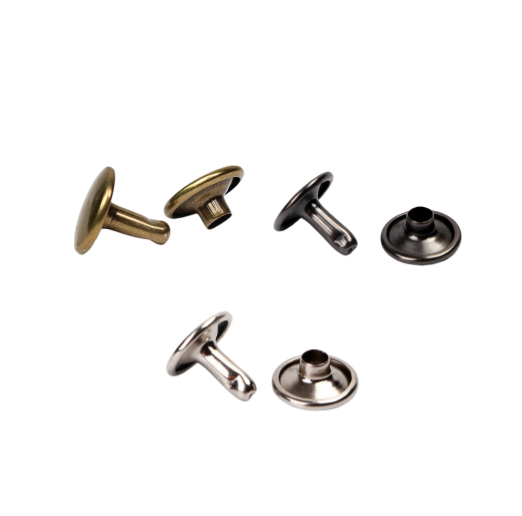
Fasteners are essential components in manufacturing, widely used in automotive, aerospace, electronics, construction, and renewable energy sectors. A Comprehensive Guide to Spring Washers: Features and Applic is a common question engineers and procurement specialists encounter. This article provides a systematic answer covering technical principles, selection methods, and practical guidelines.
From a technical perspective, this topic involves materials science, tribology, and surface engineering. Understanding the underlying principles helps engineers select appropriate fastener specifications, strength grades, and surface treatments during the design phase, preventing assembly failures and safety hazards.
In practical applications, evaluate working conditions including load type, ambient temperature, corrosive media, assembly space, and maintenance requirements. For critical joints, verify mechanical performance per ISO 898-1 standards and recheck torque after assembly.
Toprecision provides comprehensive solutions from standard parts to custom-engineered fasteners, covering high-strength bolts, micro screws, wire thread inserts, and self-clinching fasteners for EV, robotics, and AI server applications. Contact our engineering team for support.
From a structural design perspective, the core advantage of a spring washer stems from its unique open-ring structure and elastic properties. Common spring washers mostly feature a single-turn open design with a trapezoidal or rectangular cross-section. When assembled onto a bolt or screw and tightened, the washer undergoes elastic deformation under axial pressure. This generates a continuous axial preload, increasing the friction between the bolt and the connected parts, which suppresses loosening caused by vibration, impact, or thermal expansion and contraction. For specific scenarios, variants like multi-turn or wave spring washers are also used to adapt to different load requirements and installation spaces.
Material selection is key to determining the performance of a spring washer and must be matched to the operating conditions. Currently, the mainstream material is spring steel, such as 65Mn and S60C. After heat treatment, these materials possess excellent elasticity, toughness, and wear resistance, allowing them to withstand repeated deformation without failure, making them suitable for most general machinery applications. For harsh environments involving moisture or corrosion, stainless steel (such as 304 and 316) is selected for its outstanding rust and corrosion resistance, preventing connection failures caused by washer deterioration. Additionally, high-temperature alloy materials are used in certain high-heat conditions to ensure the washer maintains stable elasticity.
Spring washers have extensive applications covering heavy and light industries as well as consumer goods, primarily adapting to connection scenarios requiring anti-loosening and vibration resistance. In the automotive industry, they are used in critical areas like engines, chassis, and wheels to resist high-frequency vibrations during driving and prevent safety hazards from loose bolts. In machinery manufacturing, they are applied to the shell and base connections of machine tools and motors to offset operational vibrations, ensuring equipment precision and stability. In appliance production, internal connectors of washing machines and air conditioners are paired with spring washers to prevent loosening and noise issues after long-term use. Meanwhile, in high-end fields like aerospace and rail transit, the material and precision requirements for spring washers are even higher, needing to meet stringent reliability standards.
The rationality of selection and installation directly determines the anti-loosening effectiveness of a spring washer. Selection must consider bolt specifications, load magnitude, and working conditions: the bolt specification must match the washer's inner diameter—too large causes offset, while too small prevents effective deformation. Scenarios with heavier loads require thicker washers with stronger elasticity to avoid failure from excessive deformation; special conditions like corrosion or high temperatures require precise material matching. During installation, note that the washer must sit tightly against the surface of the connected part without trapped debris. Tightening force must be moderate; over-tightening leads to plastic deformation and loss of elasticity, while under-tightening fails to generate sufficient preload.
During use, spring washers may encounter common issues such as loss of elasticity, corrosion, and fracture, which need to be addressed specifically. Loss of elasticity is often due to mismatched materials, excessive loads, or fatigue aging from long-term use, requiring replacement with washers of appropriate material and specifications, along with regular inspections. Corrosion mainly stems from environmental factors or improper material selection and can be resolved by choosing corrosion-resistant materials or applying proper surface anti-rust treatments. Fracture is usually caused by installation deviations or material defects, necessitating standardized installation processes and the use of qualified products.
As industrial equipment demands higher reliability, the design and manufacturing processes of spring washers are continuously upgrading. New types of spring washers further enhance elasticity and fatigue life through optimized cross-sectional structures and improved heat treatment processes, adapting to more complex conditions. Customized spring washers are developed for special scenarios to meet personalized needs in high-end fields. As a basic fastener accessory, the quality and proper selection of spring washers are crucial links in ensuring the reliability of mechanical connections. Only by precisely matching them to working conditions and standardizing installation and maintenance can their anti-loosening role be fully realized, safeguarding the safe and stable operation of equipment.


 135-6073-0094