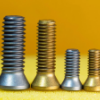
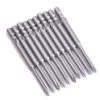
As core foundational components in industrial manufacturing, the key performance indicators of fasteners—such as mechanical properties, corrosion resistance, and service life—are directly determined by material selection and heat treatment technologies. Materials serve as the "foundation" of fasteners, while heat treatment acts as the "empowering mechanism." The two complement each other to form the core system of fastener technology. Whether for standard carbon steel fasteners or high-end alloy and stainless steel fasteners, rational material selection combined with scientific heat treatment processes is crucial for preventing product failure and enhancing operational reliability. Based on the actual production needs of the fastener industry, this article systematically analyzes the characteristics and selection logic of common materials, details the principles, operational essentials, and quality control methods of mainstream heat treatment processes, and breaks down common issues along with their solutions. It aims to provide a comprehensive and practical technical reference for industry practitioners, helping to standardize production processes and improve fastener product quality.
I. Classification and Core Characteristics of Common Fastener Materials
The selection of fastener materials must consider factors such as application scenarios, load requirements, and environmental conditions. Different types of materials vary significantly in strength, hardness, corrosion resistance, and machinability, forming the basis for subsequent heat treatment process selection and product performance assurance. Currently, common fastener materials in the industry are primarily divided into four categories, each with clear scopes of application and technical characteristics.
(A) Carbon Steel Fastener Materials
Carbon steel is the most widely used and cost-effective material in the fastener industry. Its core advantages include excellent machinability and high cost-performance ratio, making it suitable for scenarios involving normal loads with no or mild corrosion, such as construction, light machinery, and furniture. Based on carbon content, it can be classified into low-carbon, medium-carbon, and high-carbon steels, each showing distinct mechanical properties and application scenarios.
-
Low-carbon steel (Carbon content ≤ 0.25%): Common grades include Q235 and Grade 10 steel. These have relatively low strength and hardness but good toughness and ductility, making them easy to process via cold heading and turning. They are mainly used for manufacturing lightly loaded fasteners, such as standard screws and flat washers, requiring only simple annealing rather than complex heat treatments.
-
Medium-carbon steel (Carbon content 0.25%-0.60%): Common grades include Grade 45 and Grade 35 steel, serving as the "primary materials" in the industry. With moderate strength, hardness, and good toughness, their mechanical properties can be significantly enhanced through quenching and tempering (quenching + high-temperature tempering). Suitable for medium-load scenarios like mechanical connectors and standard bolts, they balance strength with machinability.
-
High-carbon steel (Carbon content > 0.60%): Common grades include Grade 65 and Grade 70 steel. These possess high hardness and strength but poor toughness and slightly higher processing difficulty. They are primarily used for fasteners requiring high strength and hardness, such as locking screws and high-strength pins, necessitating quenching and low-temperature tempering to optimize hardness and wear resistance.
(B) Alloy Steel Fastener Materials
Alloy steel is produced by adding alloying elements such as chromium, molybdenum, manganese, and vanadium to carbon steel. Its core advantages include high strength, high hardness, excellent wear resistance, and superior corrosion resistance compared to carbon steel. It is suitable for complex scenarios involving heavy loads, high temperatures, vibration, and corrosion, such as automotive engines, engineering machinery, and aerospace.
Common grades include 40Cr, 35CrMo, and 20CrMnTi. For instance, 40Cr alloy steel can achieve a tensile strength exceeding 800 MPa after quenching and tempering, making it suitable for high-strength bolts and nuts. 35CrMo alloy steel, enriched with molybdenum, offers outstanding high-temperature and fatigue resistance, ideal for fasteners in high-temperature environments. 20CrMnTi alloy steel, after carburizing, features high surface hardness and a tough core, suitable for wear-resistant and impact-resistant fasteners like gear connectors and precision screws.
The core technical aspect of alloy steel lies in the ratio of alloying elements. Different proportions directly affect the material's mechanical properties. Appropriate grades must be selected based on specific application scenarios and paired with corresponding heat treatment processes to maximize material performance.
(C) Stainless Steel Fastener Materials
The core advantage of stainless steel fasteners is strong corrosion resistance, making them suitable for harsh corrosive environments such as humidity, acids, alkalis, and marine settings—including food machinery, marine engineering, medical devices, and chemical equipment. Their performance primarily depends on the chromium and nickel content.
Common grades are divided into austenitic and martensitic stainless steels. Austenitic stainless steels (e.g., 304, 316) offer strong corrosion resistance, good toughness, and excellent machinability, suitable for medium-to-low temperature and strong corrosion scenarios. Notably, 316 stainless steel contains molybdenum, providing better marine corrosion resistance than 304. Martensitic stainless steels (e.g., 410, 420) have high hardness and good wear resistance but slightly inferior corrosion resistance, making them suitable for scenarios requiring high strength and mild corrosion resistance, such as fasteners for precision mechanical parts.
Processing and heat treatment of stainless steel fasteners require attention to avoiding intergranular corrosion. Temperatures must be controlled during processing, and process parameters optimized during heat treatment to prevent surface oxidation or scratches that could compromise corrosion resistance.
(D) Non-ferrous Metal Fastener Materials
Non-ferrous fastener materials mainly include copper, aluminum, and titanium alloys. Their core advantages are lightweight properties, good electrical conductivity, and corrosion resistance, making them suitable for lightweight applications, conductive needs, and special corrosive environments, such as electronic equipment, aerospace, and new energy sectors.
Copper fasteners (e.g., H62, H65) offer excellent electrical and thermal conductivity along with strong corrosion resistance, suitable for electronic equipment and electrical connections. Aluminum fasteners (e.g., 6061, 7075) are lightweight with moderate strength, ideal for lightweight equipment like new energy vehicles and aerospace components. Titanium alloy fasteners feature high strength, lightweight properties, and exceptional corrosion resistance, suitable for high-end fields like aerospace and advanced medical devices, though they come with higher costs and greater processing difficulties.
II. Core Principles and Considerations for Fastener Material Selection
Selecting fastener materials is not simply about "choosing the most expensive option." Instead, it requires considering multiple factors—including application scenarios, load requirements, environmental conditions, processing techniques, and cost budgets—while adhering to four core principles. This ensures scientific and rational selection that meets usage requirements while balancing economic feasibility and processing viability.
(A) Load Compatibility Principle
Select materials with corresponding strength grades based on the load-bearing requirements of the fastener. For light-load scenarios (e.g., furniture, light machinery), choose low-carbon steel or standard stainless steel. For medium-load scenarios (e.g., mechanical connectors), opt for medium-carbon steel or 304 stainless steel. For heavy-load and impact-resistant scenarios (e.g., engineering machinery, automotive engines), select alloy steel or high-strength stainless steel. For high-end heavy-load scenarios (e.g., aerospace), choose titanium alloys or high-strength alloy steels. Avoid "over-engineering," which leads to cost waste, and杜绝 "under-engineering," which causes product failure. For example, using alloy steel in light-load scenarios increases production costs, while using low-carbon steel in heavy-load scenarios can lead to bolt fracture and connection failure.
(B) Environmental Compatibility Principle
Choose materials with appropriate corrosion and high-temperature resistance based on the operating environment. For humid, acidic, or alkaline environments (e.g., marine engineering, chemical equipment), prioritize 316 stainless steel or copper alloys. For high-temperature environments (e.g., engines, boilers), select high-temperature resistant alloy steels or titanium alloys. For dry, non-corrosive environments (e.g., indoor machinery), carbon steel or standard stainless steel is suitable.
For instance, if standard carbon steel is used for outdoor architectural fasteners, it will easily rust and corrode, leading to loose connections; therefore, hot-dip galvanized carbon steel or stainless steel should be chosen. Fasteners for food machinery must use 304 stainless steel that meets food safety standards to prevent material contamination.
(C) Processing Compatibility Principle
Material selection must account for the feasibility of processing techniques. Different materials vary significantly in processing difficulty, so it is essential to choose materials that are easy to process and form based on the enterprise's equipment and technical capabilities. For example, cold heading is suitable for low-carbon steel, medium-carbon steel, and some stainless steels, while hot heading is suitable for large-sized, high-strength alloy steels. Turning is suitable for high-precision fasteners, where medium-carbon or alloy steels can be used. If an enterprise lacks advanced processing equipment, blindly choosing titanium alloys or high-strength alloy steels will lead to processing difficulties and higher defect rates, increasing production costs.
(D) Economic Principle
Under the premise of meeting usage requirements and processing feasibility, prioritize materials with reasonable costs and high cost-performance ratios. Carbon steel offers the best value for general scenarios; stainless steel and alloy steels are more expensive and suited for special scenarios; titanium alloys are extremely costly and should be strictly limited to high-end fields.
Additionally, consider the procurement convenience of materials to avoid selecting scarce materials with long lead times that could disrupt production schedules.
III. Core Fastener Heat Treatment Processes and Operational Essentials
Heat treatment is a critical process for enhancing the mechanical properties of fasteners. Through a series of operations including heating, holding, and cooling, it alters the internal microstructure of the material, thereby optimizing properties such as strength, hardness, toughness, and wear resistance to meet the requirements of different scenarios. Common heat treatment processes for fasteners mainly include annealing, normalizing, quenching, tempering, and carburizing. Each process varies significantly in principle, operational essentials, and application scenarios.
(A) Annealing
The core principle of annealing is to heat the fastener above its critical temperature, hold it for a period, and then cool it slowly. The purpose is to reduce material hardness, eliminate internal stresses, refine grains, and improve machinability, preventing deformation and cracking during processing.
Common annealing processes include full annealing, spheroidizing annealing, and stress-relief annealing. Full annealing applies to medium-carbon and alloy steels, with heating temperatures controlled between 750-850℃ and holding times adjusted based on fastener size (generally 1-3 hours), followed by slow cooling to room temperature. This significantly improves plasticity and machinability. Spheroidizing annealing applies to high-carbon steels; through heating and holding, it spheroidizes the cementite in the material, reducing hardness to facilitate cold heading and turning. Stress-relief annealing applies to fasteners after processing, with heating temperatures controlled between 500-600℃, followed by slow cooling after holding to eliminate internal stresses generated during processing and prevent subsequent deformation.
The key technical points of annealing are controlling the heating temperature, holding time, and cooling rate. Excessive temperatures cause coarse grains, affecting material performance; insufficient temperatures or holding times fail to thoroughly eliminate internal stresses; and excessively fast cooling rates fail to achieve the desired annealing effect.
(B) Normalizing
Normalizing is similar to annealing, with the core difference being a faster cooling rate (air cooling). The principle involves heating the fastener above its critical temperature, holding it, and then allowing it to cool naturally in the air. The purpose is to refine grains, increase material strength and hardness, and improve cutting machinability.
Normalizing applies to low-carbon and medium-carbon steels. The heating temperature is slightly higher than that for annealing (800-900℃), with a holding time of 1-2 hours. After air cooling, the material's strength and hardness are slightly higher than those after annealing, with moderate plasticity and toughness. It is suitable for standard fasteners with certain strength requirements, such as ordinary bolts and screws, and can replace some quenching and tempering processes to reduce production costs.
The key to normalizing is controlling the cooling rate to avoid making the material too hard and brittle from cooling too quickly, or failing to achieve the normalizing effect from cooling too slowly.
(C) Quenching
Quenching is the core process for enhancing the hardness and strength of fasteners. The principle involves heating the fastener above its critical temperature, holding it, and then cooling it rapidly (water or oil cooling). This transforms the internal microstructure into a martensitic structure, significantly increasing hardness and strength.
Quenching applies to medium-carbon steels, alloy steels, and high-carbon steels. Quenching temperatures vary by material: 820-860℃ for medium-carbon steels, 850-900℃ for alloy steels, and 780-820℃ for high-carbon steels. Cooling methods are chosen based on material properties: carbon steels often use water cooling for rapid cooling and high hardness, while alloy steels often use oil cooling for moderate cooling rates to avoid cracking.
Key technical points for quenching include controlling the heating temperature, holding time, and cooling rate. Excessive temperatures cause overheating, coarse grains, and even oxidation or decarburization. Insufficient temperatures fail to form a martensitic structure, rendering the quenching ineffective. Excessively fast cooling rates cause cracking and deformation, while excessively slow rates result in insignificant improvements in hardness and strength.
(D) Tempering
Tempering is an indispensable follow-up process to quenching. The principle involves heating the quenched fastener to below its critical temperature, holding it, and then cooling it slowly. The purpose is to eliminate internal stresses generated during quenching, reduce material brittleness, and optimize toughness and ductility, achieving a balance between hardness, strength, and toughness.
Based on tempering temperatures, it is classified into low-temperature, medium-temperature, and high-temperature tempering. Low-temperature tempering (150-250℃) is mainly used for high-carbon steel fasteners to eliminate internal stresses and enhance hardness and wear resistance, suitable for locking screws and high-strength pins. Medium-temperature tempering (350-500℃) applies to medium-carbon and alloy steel fasteners to improve elasticity and toughness, suitable for spring washers and elastic screws. High-temperature tempering (500-650℃), also known as quenching and tempering, applies to fasteners in heavy-load and impact-resistant scenarios, providing the material with excellent strength and toughness, such as high-strength bolts and engineering machinery connectors.
The key to tempering is controlling the tempering temperature and holding time. Excessive temperatures cause a drop in hardness and strength, while insufficient temperatures or holding times fail to thoroughly eliminate internal stresses, leaving the material brittle and prone to fracture.
(E) Carburizing
Carburizing is a surface strengthening process. The principle involves placing fasteners in a carburizing medium and heating them to 900-950℃. After holding for a period, carbon elements diffuse into the surface of the fastener, forming a structure with a high-carbon surface and a low-carbon core. This significantly increases surface hardness and wear resistance while maintaining the toughness and ductility of the core.
Carburizing applies to low-carbon steel and low-carbon alloy steel fasteners, such as Grade 20 steel and 20CrMnTi. It is mainly used for scenarios requiring a wear-resistant surface and an impact-resistant core, such as gear connectors, precision screws, and engineering machinery fasteners. After carburizing, quenching and low-temperature tempering are required to further optimize surface hardness and overall performance.
Key technical points for carburizing include controlling the carburizing temperature, holding time, and concentration of the carburizing medium. Longer carburizing times result in higher surface carbon content and hardness, but the toughness of the core will decrease. Adjustments must be made reasonably based on usage requirements.




























 Login
Login








 Contact
 WeChat
 粤ICP备2025493240号-1