In industrial assembly and equipment operation, the sudden fracture of high-strength bolts can often lead to severe consequences. This type of failure is sometimes not caused by overloading, but rather by an insidious phenomenon known as "Hydrogen Embrittlement" (HE). As technical engineers at Shenzhen Yongjing Precision Technology Co., Ltd., we frequently receive inquiries from clients regarding this issue. This article will systematically address common questions about hydrogen embrittlement and outline our comprehensive prevention strategies.
What is Hydrogen Embrittlement?
Hydrogen embrittlement is a phenomenon where hydrogen atoms dissolved in metal aggregate in high-stress areas under applied stress. This causes a decrease in the material's ductility, leading to crack formation and delayed fracture. It primarily affects high-strength steel fasteners with a tensile strength exceeding 1000 MPa.
Where Does the Hydrogen Come From?
The introduction of hydrogen occurs through various pathways, mainly including: moisture carried by raw materials during smelting, cathodic hydrogen evolution reactions during electroplating, chemical reactions between metal and acid during pickling/rust removal, and hydrogen generated by cathodic protection in humid environments or under corrosive conditions.
Characteristics of Hydrogen Embrittlement Fracture
Macroscopically, the fractured area typically shows no signs of plastic deformation such as necking; the fracture surface is flat and exhibits brittle characteristics. Microscopically, scanning electron microscopy (SEM) often reveals a classic intergranular fracture morphology resembling "rock candy blocks". Its most dangerous characteristic is its delayed nature—fractures can occur hours, days, or even weeks after the fastener has been tightened, posing significant unpredictability and safety hazards.
How Does Yongjing Precision Prevent HE at the Source?
Our prevention system spans the entire production chain:
-
Raw Materials: We select high-quality steel with high purity and uniform microstructure, strictly controlling the initial hydrogen content.
-
Heat Treatment: We utilize controlled atmosphere protective furnaces to effectively prevent workpieces from being contaminated by water vapor or hydrogen at high temperatures.
-
Surface Treatment: We prioritize mechanical methods like sandblasting over acid pickling. When electroplating is unavoidable, we optimize the plating solution formula and parameters. Furthermore, it is mandatory that all high-strength electroplated parts undergo dehydrogenation treatment within 1 hour after plating.
What Makes Yongjing Precision's Dehydrogenation Process Unique?
Dehydrogenation treatment, also known as baking, is a critical quality control point for us. The principle involves heating to provide energy for hydrogen atoms, allowing them to escape from the metal lattice. We do not use fixed parameters; instead, we determine the optimal holding temperature and time through experiments based on the bolt's strength grade, material, specifications, and coating type. Typically, we place the workpieces in an oven at 190-230°C for 2 to 24 hours. This process effectively promotes the diffusion and escape of internal hydrogen atoms, reducing the hydrogen content below the safe critical threshold.
How Do We Conduct Final Testing to Ensure Reliability?
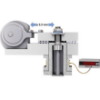
Beyond rigorous process inspections and mechanical property testing, we conduct hydrogen content measurements and delayed fracture tests on high-risk batches. The delayed fracture test utilizes the parallel bearing surface method or stress ring method. Samples are observed under continuously applied specified stress to see if they fracture within a set timeframe, simulating actual operating conditions to verify the product's resistance to hydrogen embrittlement.
In summary, hydrogen embrittlement is a manageable and preventable technical challenge. Through systematic material management, precise process control, and accurate post-treatment, Shenzhen Yongjing Precision Technology Co., Ltd. builds robust defensive lines. We ensure that every high-strength bolt we deliver possesses exceptional safety and durability, safeguarding our clients' equipment and structural integrity.

















 Login
Login








 Contact
 WeChat
 粤ICP备2025493240号-1