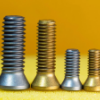
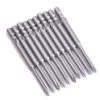
In the field of mechanical fastening, surface treatment is a core technical link that balances process reliability with cost control. High-quality surface treatment solutions can be precisely tailored to different application scenarios, enhancing the stability of the fastening system while reducing comprehensive costs across the entire life cycle. The following details key knowledge of fastener surface treatment and the technical value of solutions, based on core industry questions.
Q1: What is the core value of surface treatment for mechanical fasteners?
A1: Surface treatment is the key to achieving "basic connection + performance upgrade" for fasteners, with its core value reflected in three dimensions. First is corrosion protection and lifespan extension: coatings isolate the metal substrate from corrosive media such as moisture, acids, alkalis, and dust, preventing connection failures caused by rust. This is indispensable in scenarios like outdoor infrastructure, marine engineering, and chemical equipment. Second is performance optimization: coatings provide additional functions like lubrication, anti-loosening, and sealing, addressing pain points such as assembly jamming, vibration-induced loosening, and sealing leaks. Third is cost optimization: scenario-appropriate surface treatment solutions can reduce maintenance and replacement frequency, minimizing downtime and rework losses, achieving the dual goal of "enhanced reliability + reduced costs"—which is the core advantage of high-quality solutions.
Q2: What key fastening functions can functional coatings achieve?
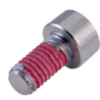
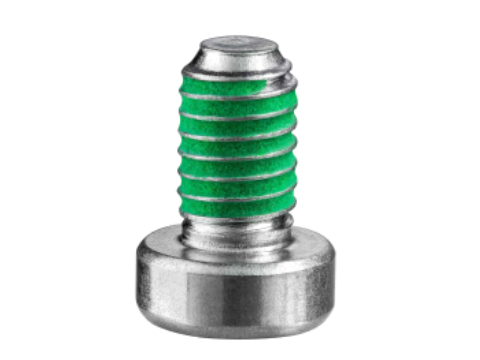
A2: Functional coatings use customized formula designs to achieve three core fastening functions based on application needs. First is locking and anti-loosening: through the gap-filling and elastic recovery properties of the coating, preload stability is maintained under vibration conditions, preventing threaded connections from loosening. This is suitable for high-frequency vibration scenarios like wind turbine towers and rail transit vehicles. Second is clamping and sealing: the dense structure formed by the coating enhances the clamping force of thread engagement while blocking the intrusion of moisture and oil into thread gaps, making it applicable to areas with high sealing requirements like automobile engines and hydraulic systems. Third is integrated composite functions: some high-end coatings can simultaneously achieve anti-loosening and sealing. For example, coatings for new energy vehicle battery pack bolts not only solve the risk of loosening from driving vibrations but also achieve IP67-level waterproof sealing.
Q3: What are the advantages of dry film lubricant coatings compared to traditional methods?
A3: Dry film lubricant coating is an innovative technology that replaces traditional grease lubrication, with core advantages focused on "stability, long-lasting effect, and integration." Structurally, it is a thin, non-electrolytic coating that organically fuses solid lubricant particles with a corrosion-resistant base material, eliminating the need for additional grease application and avoiding grease contamination issues. In terms of performance, traditional grease easily under high/low temperatures or severe vibration, whereas dry film lubricant coatings maintain a stable friction coefficient (typically controlled between 0.08-0.12) across a wide temperature range of -50℃ to 200℃, while also possessing excellent corrosion resistance, with salt spray test tolerance exceeding 500 hours. In terms of functional integration, it combines lubrication and corrosion protection into one, eliminating the need for separate anti-corrosion treatment processes. The comprehensive cost is 15%-20% lower than the traditional "lubrication + corrosion protection" combined solution.
Q4: How to select an appropriate coating solution for a specific scenario?
A4: Selecting a coating solution requires following the principle of "scenario-oriented + performance matching," achieving precise adaptation through a three-step method. Step 1: Requirement Breakdown—clarify core demands. For outdoor steel structures, prioritize corrosion protection levels; for precision instruments, focus on lubrication accuracy and cleanliness; for high-pressure equipment, emphasize sealing and pressure resistance. Step 2: Solution Screening—match core functions. For example, high-dust environments in agricultural machinery are suited for "anti-loosening + wear-resistant" composite coatings, while medical equipment requires "non-volatile + easy-to-clean" food-grade coatings. Step 3: Empirical Verification—test key indicators like temperature resistance, corrosion resistance, and friction coefficients by simulating working conditions to ensure coating performance perfectly matches scenario requirements, avoiding "over-treatment" or "insufficient performance."
Q5: What practical benefits can high-quality surface treatment solutions bring?
A5: Appropriate surface treatment solutions can deliver multiple benefits in terms of process and cost. On the process side, the stability of the coating can increase assembly qualification rates to over 99.5%, reducing product rework caused by fastening failures. Dry film lubricant coatings can reduce assembly torque fluctuation, improving torque consistency in mass production by over 20%. On the cost side, long-lasting anti-corrosion coatings can extend the replacement cycle of fasteners by 3-5 times, significantly reducing later-stage operation and maintenance costs in large-scale projects like bridges and wind farms. Integrated coatings eliminate multiple processes, shortening single-piece processing time by 30% and boosting production efficiency. Furthermore, precisely matched solutions can avoid cost waste caused by "over-coating," achieving an optimal balance between technical investment and benefits.
If you need to customize a surface treatment solution for a specific production scenario or require more technical details on coatings, please feel free to contact a professional technical service provider. Leveraging scenario-based experience, we can precisely match your needs, helping to enhance fastening process reliability and reduce comprehensive costs.



















 Login
Login








 Contact
 WeChat
 粤ICP备2025493240号-1