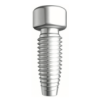
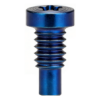
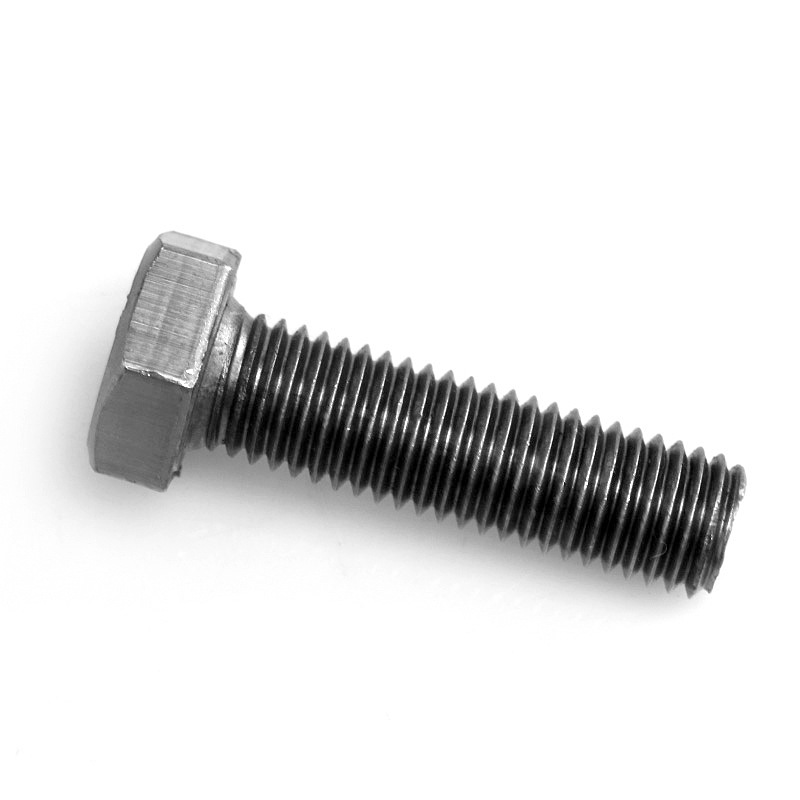
Applied from household door & window installation to aerospace core assembly, bolts serve as industrial skeletons across all industries. They transmit loads and secure structural components, whose quality directly governs equipment safety and service lifespan. As the industry adage goes: a single defective bolt may lead to complete equipment failure. Bolt production is sophisticated precision manufacturing consisting of seven core procedures instead of rough forging and cutting, with strict quality control throughout each stage.
Raw material selection lays the foundation of bolt mechanical performance. Materials are specified per service load of tension and shear. Low-carbon Q235 steel is widely used for general-purpose civil bolts for low cost and good machinability; medium-carbon 45# steel fits industrial bolts with strength upgradable via subsequent heat treatment; alloy structural steel like 30CrMnSiA is adopted for aerospace bolts to balance strength and toughness. Raw steel is supplied in wire rod form, followed by spheroidizing annealing. Rods are heated at 700–750℃ with prolonged holding to generate uniform spherical pearlite, lowering hardness for forming and preventing cracking during downstream processing, a critical step to secure production yield.
Annealed rods feature surface oxide scales detrimental to finished surface finish, requiring descaling via mechanical peeling or pickling. Mechanical descaling removes scales with wire brushes and rollers for eco-friendly high-efficiency production; acid pickling dissolves oxide for high-precision products. Cleaned rods go through cold drawing to reach target diameter, achieving dimensional precision and preliminary strengthening via work hardening. Subsequent cold heading shapes blanks into bolt head and shank. Compared with hot forging, cold heading preserves continuous metal fiber flow to boost bolt strength by over 20% and cut material waste, attaining stable yield above 99% at mainstream manufacturers.
Threading determines bolt fastening performance. Most standard bolts adopt thread rolling: paired rolling dies extrude shank metal to form threads by plastic deformation for high productivity and superior thread surface finish. High-precision threads are machined by turning or milling for accurate pitch and thread profile. Heat treatment via quenching plus tempering follows threading for grade customization: quenching at 850–900℃ with rapid cooling then tempering at 500–600℃ adjusts mechanical properties to cover grades from 4.8 to 12.9. Post-heat-treatment procedures include surface finishing such as zinc plating and phosphating, alongside incoming inspection including hardness and tensile tests before delivery. Strict full-chain process control enables miniature bolts to underpin modern heavy industry, embodying the core manufacturing philosophy that details decide final quality.



















 Login
Login








 Contact
 WeChat
 粤ICP备2025493240号-1