Against the backdrop of the supercar market, where extreme performance and precision craftsmanship serve as core competitive advantages, a small-scale recall has drawn significant industry attention to the assembly quality of fasteners. Recently, Volkswagen (China) Sales Co., Ltd. officially filed a recall plan with the State Administration for Market Regulation (SAMR). The plan targets a select number of imported 2024 Lamborghini REVUELTO vehicles produced between September 18, 2024, and October 8, 2024, involving a total of just 5 units. Although the scale of the recall is exceptionally small, its root cause—the failure to assemble and tighten the door ball joints according to manufacturing specifications—serves as a wake-up call for precision control in high-end automotive manufacturing and fastener applications. For fastener industry professionals, this seemingly niche recall highlights the critical value and rigid quality control requirements of precision fasteners in key systems of high-end automobiles.
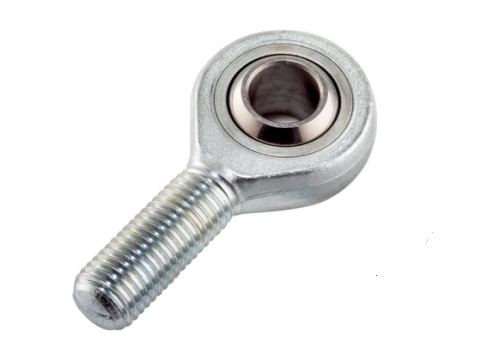
As the brand's new-generation flagship supercar, the Lamborghini REVUELTO is equipped with a plug-in hybrid system delivering a combined 1,015 horsepower. Its signature scissor doors, which open upwards, are a quintessential design element. The ball joint triggering this safety hazard is the core load-bearing component supporting this unique door system. According to the recall notice, the primary function of this ball joint is to support the door pneumatic spring, ensuring the door opens smoothly upwards and remains stable at any open position. From the perspective of fastener application principles, this component must not only withstand the thrust of the pneumatic spring but also balance the torque generated by the door's own weight, while allowing flexible rotation during the opening and closing process. Consequently, its requirements for assembly precision and tightening quality far exceed those of standard passenger vehicles.
Hazard Spotlight: A Small Component Loosening Triggers a Chain of Safety Risks
As the "invisible fulcrum" of the supercar door system, the assembly and tightening quality of the ball joint directly dictates the safety and reliability of door operation. The recall notice explicitly states that the ball joints in the affected vehicles "may not have been assembled and tightened according to manufacturing specifications." This manufacturing flaw directly leads to dual safety risks. In everyday use, the most immediate impact is abnormal door operation—a loosened ball joint increases opening resistance, resulting in a malfunction where the door is "difficult to open," thereby ruining the convenience expected of a supercar. More critically, in an extreme failure scenario, if the ball joint completely detaches from the body, the door will lose its core support and may suddenly close under its own weight while in the open position.
This risk is highly dangerous in real-world scenarios. If occupants are in the door's swing path while entering or exiting the vehicle, the sudden closure could crush or strike them. Given that the REVUELTO's doors are made of high-strength aluminum alloy, their substantial weight and rapid closing speed make severe injuries highly probable. Furthermore, if the door cannot be opened smoothly during an emergency escape, the safety risk is further exacerbated. Notably, the production cycle for the affected vehicles spanned only 20 days; the emergence of assembly issues within such a short timeframe points directly to vulnerabilities in the precise execution and control of production line processes.
Root Cause Analysis: Dual Process Failures in Assembly and Quality Inspection
Analyzing this issue from a fastener operations perspective reveals that the core problem is not a product defect in the ball joint itself, but rather lapses in the "assembly and tightening" processes. This exposes blind spots in detail management that are easily overlooked in high-end manufacturing. As a typical precision articulated fastener, the ball joint must meet dual technical requirements during assembly: first, positional accuracy, ensuring perfect concentricity between the ball joint, the pneumatic spring, and the door hinge to prevent uneven stress and localized wear; second, torque precision, utilizing professional torque tools to secure the ball joint to the design standard. This requires sufficient clamping force to prevent loosening, while avoiding excessive torque that could deform the component or damage the threads.
Based on the operational logic of supercar production lines, the emergence of this issue likely stems from oversights in two critical areas. On one hand, there may have been calibration deviations in the assembly tools. Although Lamborghini's production line utilizes automated or semi-automated equipment, failure to calibrate torque tools at specified intervals could result in actual output torque deviating from the set values, leading to inadequate tightening. On the other hand, operational non-compliance during manual interventions could be a factor; even if torque specifications are met, positional deviations during ball joint assembly can cause uneven stress distribution, accelerating loosening during use. More alarmingly, the failure of the quality inspection phase to detect this small-batch issue reflects a lack of "100% inspection for critical safety components" in high-end automotive manufacturing. For components directly tied to occupant safety like ball joints, relying solely on sampling may fail to cover all potential hazards.
Industry Implications: High-End Manufacturing Demands Precision Fastener Control
Why has a recall involving only 5 supercars garnered widespread industry attention? The core reason is that it underscores the iron rule in high-end automotive manufacturing that "details determine safety," providing three key takeaways for fastener application and quality control. First, the niche production volume of supercars cannot be an "exception" to quality control. Given their high technical complexity and strong component customization, stringent process traceability systems are essential. For ball joint assembly, this means implementing full-process traceability of "one person, one machine, one code," where the assembler, tool ID, and actual torque data for each ball joint are uploaded to the production system in real time, allowing precise identification of responsible links in case of an issue.
Second, collaboration between fastener companies and high-end automakers must transcend the "pure supply" model and transition toward "technical synergy." The assembly quality of precision components like ball joints depends not only on the product's material and precision but also heavily on the assembly process. Fastener suppliers should proactively provide supporting technical services, including detailed assembly manuals specifying recommended torque ranges, positioning benchmarks, and testing methods. For special supercar operating conditions, they could jointly develop intelligent ball joints with torque feedback functions to enable real-time monitoring of assembly quality. Lamborghini's remediation plan of "inspection plus torque adjustment" in this recall further validates the critical role of torque precision in eliminating hazards.
Finally, high-end brands must reconstruct the "quality inspection priority for safety components." The recall notice shows the affected vehicles had a production cycle of merely 20 days; process fluctuations within such a short timeframe must be mitigated by strengthening quality inspections. For critical safety components like ball joints, a dual inspection system of "100% full inspection plus sampling destructive testing" should be established. The former uses torque testing instruments to verify tightening quality individually, while the latter involves regular fatigue life testing of samples to ensure reliability under extreme conditions. While Volkswagen China's Lamborghini brand addressed the issue through free inspections at authorized dealers, eliminating existing hazards, it is more crucial to fundamentally improve production line control from the source.
Remediation and Long-Term Strategy: A Macro Quality Perspective Behind Small-Batch Recalls
Addressing this hazard, Volkswagen China's Lamborghini brand has demonstrated the responsibility expected of a high-end marque: authorized dealers will conduct free inspections of the ball joint installation status for the recalled vehicles and adjust the torque to standard values as needed, fundamentally resolving the inadequate tightening issue. Simultaneously, formal notifications via registered mail ensure precise and timely communication, preventing the continued use of hazardous vehicles due to missed information. This concise yet targeted remediation avoids the resource waste of excessive repairs while utilizing torque calibration—a standard control method in the fastener industry—to eliminate the hazard.
From a long-term industry development perspective, this recall serves as a vital warning for supercar and high-end automotive manufacturers: performance enhancements must not come at the expense of fundamental process quality. As the "last line of defense for connection safety," fastener assembly quality control must be integrated throughout the entire lifecycle of R&D, production, quality inspection, and after-sales service. For fastener operators, it is crucial to capitalize on high-end market demands by strengthening application-matching design with automakers during the R&D phase, and extending process guidance and quality traceability services during the service phase, helping clients build a "prevention-first" quality control system.




















 Login
Login









 Contact
 WeChat
 粤ICP备2025493240号-1