Analysis of Bolted Joint Stiffness Variation Under Lever Act. The global fastener industry is undergoing profound transformation, with growing demand for high-performance fasteners driven by renewable energy, aerospace, and smart manufacturing.
China is the world's largest fastener producer and exporter, with three major industrial clusters in the Yangtze River Delta, Pearl River Delta, and Yongnian. As domestic manufacturing upgrades, import substitution of high-end fasteners is accelerating.
Key technology trends include high strength (grade 12.9+), lightweighting with aluminum/titanium alloys, smart fasteners with integrated sensors, and green manufacturing with chromium-free surface treatment. Trade barriers and raw material volatility present new challenges.
For fastener enterprises, enhancing R&D, expanding overseas markets, and participating in international standardization are critical to high-quality development. Toprecision will continue to monitor industry dynamics and support industrial upgrading.
To understand the impact of lever forces on bolted joint stiffness, it is first necessary to clarify the definition and composition of the joint's stiffness. Bolted joint stiffness refers to the ability of the connection structure to resist elastic deformation; numerically, it equals the load required per unit of deformation. It is primarily composed of the bolt's own stiffness and the stiffness of the connected parts (clamped members), with the two acting in series—the reciprocal of the total stiffness equals the sum of the reciprocals of their individual stiffnesses. Under normal conditions, the bolt is subjected to axial preload, causing tensile deformation in the bolt shank and compressive deformation in the connected parts. Their coordinated elastic deformation forms a stable joint stiffness.
When a lever force acts on a bolted joint structure, its core influencing mechanism is the disruption of the original axial force balance, inducing additional bending deformation in both the bolt and the connected parts, which subsequently leads to a decrease in the total joint stiffness. Specifically, the lever force generates an overturning moment on the bolt head or nut bearing surface, using the bolt axis as the fulcrum: On one hand, in addition to the original axial tensile force, the bolt shank experiences superimposed bending loads, resulting in bending deformation. This reduces the effective load-bearing cross-section of the bolt, effectively lowering the bolt's own stiffness. On the other hand, the lever force causes uneven compressive deformation in the connected parts. The contact surfaces, originally under uniform compression, experience localized separation or pressure concentration, reducing the effective bearing area and thus decreasing the stiffness of the connected parts. Since the total stiffness of the bolted joint is determined jointly by the bolt stiffness and the stiffness of the connected parts, the simultaneous decline of both ultimately results in a significant reduction in total joint stiffness.
Under the action of lever forces, the change in bolted joint stiffness also exhibits distinct nonlinear characteristics. When the lever force is small, the bending deformation of the bolt and connected parts remains within the elastic range, and the stiffness decreases relatively gradually. As the lever force increases, bending deformation intensifies, the separation area on the contact surface of the connected parts expands, and the bending stress in the bolt shank gradually approaches the material's yield limit. At this stage, the rate of stiffness decline accelerates. If the lever force continues to increase, it may cause plastic bending of the bolt shank or permanent deformation of the connected parts' contact surfaces, leading to a sharp drop in joint stiffness, or even a complete loss of load-bearing capacity. Additionally, the direction of the lever force affects the stiffness variation: the greater the angle between the lever force direction and the bolt preload direction, the larger the overturning moment and the more pronounced the stiffness reduction; conversely, a smaller angle results in a relatively milder impact.
Various factors can further amplify or mitigate the impact of lever forces on bolted joint stiffness. Regarding connection structure design, the flatness of the bolt head bearing surface, the thickness and stiffness of the connected parts, and the bolt arrangement are crucial. If the bolt head bearing surface is inclined, or if the connected parts are too thin or lack sufficient stiffness, they are more prone to bending deformation under lever forces, accelerating stiffness decline. Conversely, reasonably increasing the thickness of the connected parts, adopting stiffener structures, or setting auxiliary supports around the bolts can effectively distribute the lever force and slow down the stiffness reduction. From the perspective of bolt parameters, a larger bolt shank diameter and shorter length result in stronger bending resistance, making the stiffness less susceptible to lever forces. Conversely, slender bolts are highly prone to bending under lever forces, leading to a more significant drop in stiffness. Furthermore, the mechanical properties of the bolt material also play a role; high-strength alloy steel bolts possess higher bending resistance than ordinary carbon steel bolts, resulting in a smaller degree of stiffness reduction under the same lever force.
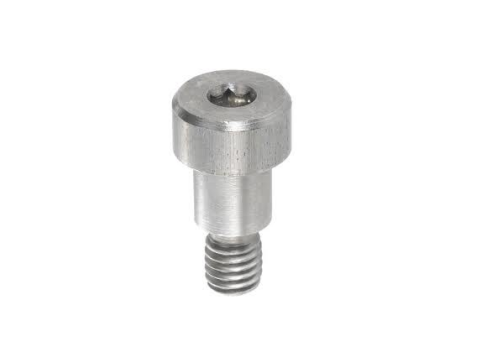
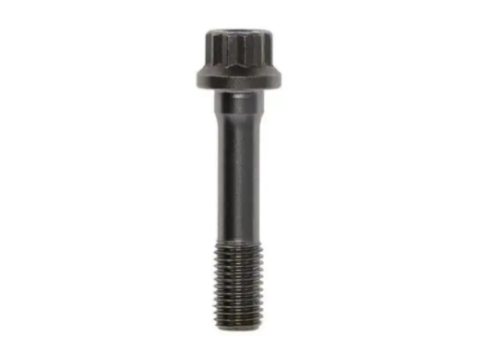
To address the issue of decreased bolted joint stiffness caused by lever forces, several optimization measures can be implemented in practical applications. During the structural design phase, efforts should be made to avoid subjecting bolted joints to lever forces by using reasonable structural layouts to convert lever forces into axial or shear forces. If unavoidable, it is necessary to increase the bolt shank diameter, shorten the effective bolt length, or adopt bolt types with stronger bending resistance, such as double-ended studs or waisted-shank bolts. Simultaneously, the flatness of the bolt head bearing surface must be ensured; auxiliary components like flat washers or spherical washers can be used to improve force uniformity. For the connected parts, increasing their thickness or incorporating reinforcing structures can enhance their inherent stiffness. During assembly, precise control of bolt preload is essential. Appropriately increasing the preload can enhance the clamping force on the connected parts, reducing the risk of contact surface separation under lever forces, thereby mitigating stiffness decline. However, the preload should not be excessive to avoid imposing overly high initial stress on the bolt itself. Additionally, in operating conditions with significant lever force fluctuations, such as vibration and impact, anti-loosening measures like locking washers or thread-locking adhesives can be employed alongside stiffness optimization designs to further enhance connection reliability.
In summary, lever forces induce additional bending deformation in both the bolt and the connected parts, causing the total stiffness of the bolted joint to decrease nonlinearly. The magnitude of this decline is influenced by multiple factors, including the size and direction of the lever force, the connection structure, and bolt parameters. In fastener application and mechanical design, it is essential to fully recognize this variation pattern. Through scientific structural design, rational bolt selection, and precise assembly control, the adverse effects of lever forces can be effectively mitigated, ensuring the stiffness stability and operational safety of bolted joints. This holds significant importance for enhancing the overall reliability of mechanical equipment and preventing failures caused by connection失效 (failure).


 135-6073-0094