

























Products
Solutions
Applications
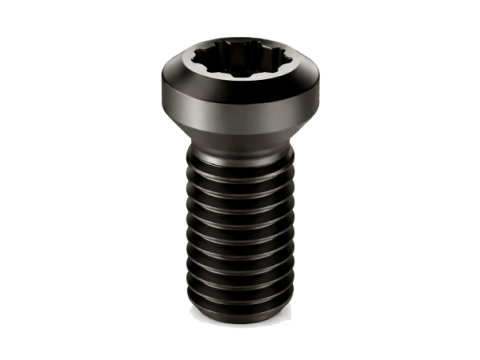
According to the China Trade Remedies Information Network, on January 29, 2026, Ukraine's Interdepartmental International Trade Commission issued an official announcement. Based on Resolution No. AD-591/2026/441-01 dated January 26, 2026, the commission delivered a definitive affirmative ruling in the anti-circumvention investigation concerning steel fasteners originating from China. The core finding of this final ruling is that subject steel fasteners from China, including screws, bolts, and nuts, were being transshipped through Malaysia to Ukraine to circumvent anti-dumping duties. Consequently, it was decided to impose a 67.40% anti-dumping duty on subject products from Malaysia, adopting the general rate established in Resolution No. AD-465/2020/4411-03 on September 21, 2020. These measures officially take effect 10 days after the announcement date, covering all products under Ukrainian tariff codes 7318156890, 7318158290, 7318158890, 7318159590, 7318169290, and 7318169990.
This anti-circumvention ruling is not an isolated incident but a continuation of Ukraine's trade supervision on Chinese steel fasteners, reflecting a microcosm of the global wave of trade remedies in the fastener industry. Looking back to 2020, Ukraine had already implemented anti-dumping measures against Chinese steel fasteners, setting a general rate of 67.40% to curb the impact of these products on the local market at that time. However, as these measures took effect, some enterprises began using third-country transshipment to maintain export volumes, with Malaysia becoming the primary transshipment channel. This directly prompted Ukraine to initiate an anti-circumvention investigation. After undergoing stages of investigation, evidence collection, hearings, and deliberations, the final affirmative ruling was made, highlighting Ukraine's determination to regulate trade circumvention practices.
To understand the impact of this final ruling, it is essential to first clarify the core attributes and trade value of the subject products. The subject steel fasteners, such as screws, bolts, and nuts, are indispensable basic components in manufacturing, widely used in key fields like construction, automotive, machinery, and energy. Their quality and supply stability directly affect the safety and reliability of end products. As a global powerhouse in fastener production and export, China holds a significant position in global fastener trade thanks to its complete industrial chain, mature production processes, and cost advantages. In 2025, the total global fastener trade volume reached $72.6 billion, with China ranking among the top in export share. Steel fasteners are a major export force, encompassing both mass-produced low-to-mid-end products and high-end customized products. Malaysia serves as one of the important transit hubs for China's fastener exports, leveraging its locational advantages and trade policies to act as a bridge connecting overseas markets for some enterprises.
From the core logic of the anti-circumvention investigation, transshipment circumvention is the key trigger for this final ruling—a practice not uncommon in international trade. Transshipment trade, also known as intermediary trade, refers to import and export transactions completed through a third country rather than direct trade between the producing and consuming countries. While normal transshipment trade can promote the development of logistics and shipping services and optimize the global trade layout, illicit transshipment to evade trade remedy measures undermines trade fairness, harms the interests of domestic industries in importing countries, and violates international trade rules. Ukraine's ruling that Chinese subject products circumvented anti-dumping duties via Malaysian transshipment essentially means some enterprises exploited the characteristics of transshipment trade to conceal the products' country of origin and evade established tariff obligations. This is a key violation targeted by trade regulators worldwide—relevant surveys by the State Administration of Foreign Exchange show that illicit transshipment trade not only leads to abnormal cross-border capital flows but also crowds out financial resources for the real economy, disrupting the global trade order.
The introduction of this final ruling reflects multiple trade and industrial factors. From Ukraine's domestic perspective, the steel fastener industry is a foundational segment of its manufacturing sector, but local enterprises lag behind Chinese companies in production scale and technological level, struggling to compete on price and capacity. The previous implementation of anti-dumping measures had alleviated the impact of Chinese products on the local market to some extent. However, the emergence of transshipment circumvention significantly undermined the effectiveness of the original measures, once again squeezing the market share of local enterprises. Therefore, strengthening regulation through an anti-circumvention final ruling has become an important means for Ukraine to protect its domestic industry and maintain market fairness.
From the global trade environment perspective, trade protectionism has continued to rise in recent years, making the fastener industry a hotspot for trade remedies. Since 2025, multiple countries and regions have successively initiated trade remedy investigations against Chinese fasteners. India terminated its anti-dumping investigation into Chinese fasteners, South Africa imposed provisional anti-dumping duties on Chinese hexagon head screws and bolts, the European Union made an affirmative preliminary ruling on anti-dumping duties against Chinese headless screws, and countries like Canada, Mexico, and Australia have also introduced targeted measures, forming multiple constraints on China's fastener exports. Ukraine's final ruling further highlights the increasingly complex international trade environment faced by Chinese fastener exports, with trade barriers becoming normalized and diversified.
This anti-circumvention final ruling will have differentiated impacts on the trade relations between China, Malaysia, and Ukraine, with the most direct shock hitting relevant Chinese exporting enterprises. For Chinese enterprises mainly exporting steel fasteners to Ukraine, the previously used transshipment channel through Malaysia is now blocked. If they export directly to Ukraine, they must bear the hefty 67.40% anti-dumping duty. This will drastically increase product export costs and weaken price competitiveness. Some small and medium-sized enterprises may be forced to exit the Ukrainian market due to compressed profits, and existing export orders to Ukraine also face adjustment pressures. Meanwhile, this final ruling may trigger a chain reaction, with other countries or regions possibly emulating Ukraine's regulatory model to strengthen checks on Chinese fastener transshipment trade, further expanding the scope of trade remedies.
For Malaysia, this final ruling will impact its transshipment trade landscape. As an important transit country for China's fastener exports, relevant logistics and trade enterprises in Malaysia previously gained certain revenues from transshipment business. With Ukraine imposing duties on subject products from Malaysia, the volume of fastener trade transshipped from China through Malaysia to Ukraine will shrink significantly. Relevant transit enterprises need to adjust their business layouts and seek new trade growth points to avoid over-reliance on a single transshipment category and market. Additionally, this event may prompt Malaysia to strengthen compliance supervision of transshipment trade to prevent trade disputes arising from illicit transshipment and safeguard the reputation of its intermediary trade.
For Ukraine's domestic fastener enterprises, this final ruling will bring short-term benefits. The high anti-dumping duty will effectively curb transshipment circumvention, reduce the impact of low-priced imported products, create more market space for local enterprises, and help the domestic industry expand production scale and increase market share. However, in the long run, over-reliance on trade protection measures is not a sustainable strategy. If local enterprises fail to seize the opportunity to improve production technology, optimize product structure, and enhance product quality and cost-effectiveness, they will still struggle to cope with global market competition. They may even fall into stagnation due to a lack of competitive pressure, ultimately affecting the sustainable development of Ukraine's fastener industry and increasing production costs for Ukraine's terminal manufacturing sectors—after all, the high cost-performance advantage of Chinese fasteners helps terminal enterprises reduce procurement costs and enhance product competitiveness.
Facing this final ruling, relevant Chinese exporting enterprises are not without options. They need to base themselves on compliant operations, proactively adjust development strategies, and actively respond to trade risks. First, enterprises should comprehensively review their export businesses, strictly verify relevant processes for exports to Ukraine and transshipments via Malaysia, eliminate illicit transshipment practices, and ensure trade operations comply with the trade rules of Ukraine and related countries to avoid triggering new trade disputes. Second, for enterprises that still have export demands to Ukraine, they can try cooperating with local Ukrainian enterprises. Through technical cooperation, joint ventures, and other methods, they can circumvent trade barriers, achieve localized production and sales, reduce tariff costs, and optimize product supply closer to market demands.
Furthermore, enterprises should accelerate diversified market layouts to reduce reliance on a single market. Currently, China's fastener exports face trade barriers from multiple countries. Enterprises need to proactively explore emerging markets, focusing on tapping into the market potential of RCEP member countries—the trade volume of fasteners among RCEP members grew by 17% in 2025, offering vast market space—while consolidating traditional advantageous markets and enhancing market share through differentiated competition to disperse trade risks. Additionally, enterprises should focus on product upgrading and technological innovation, breaking away from reliance on mass-produced low-to-mid-end products. By increasing R&D investment in high-strength, corrosion-resistant, and lightweight high-end steel fasteners, they can enhance product added value and core competitiveness, breaking through trade barriers with technological advantages and achieving a transformation from "price competition" to "quality competition" and "technological competition."
Beyond the efforts of enterprises themselves, industry associations should also play a bridging role to help enterprises cope with trade risks. Relevant associations like the China Chamber of Commerce for Import and Export of Metals, Minerals & Chemicals Products can integrate industry resources, provide legal consultation and response guidance for involved enterprises, organize enterprise exchanges and cooperation, share experiences and techniques in responding to trade remedies, and promote industry synergy. At the same time, associations can strengthen communication and negotiation with relevant industry organizations in Ukraine and Malaysia, build dialogue platforms, interpret trade rules, promote the reaching of trade consensus between both sides, reduce trade friction, and safeguard the legitimate rights and interests of China's fastener industry.
This anti-circumvention final ruling by Ukraine on Chinese steel fasteners also serves as a warning to China's fastener industry, highlighting the compliance challenges and upgrade pressures faced in international development. Currently, the global trade order is undergoing profound adjustments, and trade protectionism and unilateralism persist. As an important category of China's foreign trade exports, fasteners will face a normalized trend of trade remedy investigations. This requires the entire industry to abandon extensive development models, focus on compliant operations, strengthen technological innovation, improve product quality, promote industrial transformation and upgrading, and proactively adapt to changes in global trade rules to actively respond to various trade risks, so as to gain a firm foothold in the complex international market.
From a broader global trade perspective, trade protection measures will ultimately harm the stability and smooth flow of global industrial and supply chains. The fastener industry is a foundational link in global manufacturing, and collaborative cooperation within the global industrial chain is key to improving industry efficiency and reducing production costs. Excessive trade barriers will fragment industrial and supply chains, increase the operating costs of global manufacturing, and ultimately harm the interests of consumers in all countries. Therefore, all countries should uphold fair, open, cooperative, and win-win trade concepts, resolve trade differences through dialogue and negotiation, abandon trade protectionism, jointly maintain a fair trade order in the global fastener industry, and promote the stable and healthy development of global industrial and supply chains.
The affirmative anti-circumvention final ruling made by Ukraine not only affects the fastener trade pattern among China, Ukraine, and Malaysia but also sounds an alarm for the international development of China's fastener industry. For Chinese enterprises, only by adhering to the bottom line of compliance, accelerating transformation and upgrading, and expanding diversified markets can they effectively respond to various trade risks and achieve high-quality development. For the entire industry, only by gathering synergy and enhancing core competitiveness can they take the initiative in the global market, promote the transformation of Chinese fasteners from "Made in China" to "Intelligent Manufacturing in China" and "High-Quality China," and play a more important role in the global industrial chain. In the future, with the continuous upgrading of China's fastener industry and the increasingly perfect trade compliance system, it is believed that Chinese enterprises will be able to calmly cope with various trade challenges and achieve sustained development in the global market.
Professional consultant team online, ready to provide solutions for you
Contact Now