






















 Login
Login







During fastener use, fracture is one of the most common failures. Many people instinctively blame "poor fastener quality," leading to disputes with suppliers. However, industry data shows that over 70% of fastener fractures are not caused by material or processing defects, but by overload during improper installation. As a fastener website operator, we frequently receive such inquiries. This article breaks down four easily overlooked overload installation practices to help identify true causes, avoid misuse, and ensure optimal fastener performance.
First, a core principle: every fastener has defined limits for tensile strength, shear strength, and fatigue strength per industry standards. "Overload installation" means applying loads exceeding these limits through human error or assembly deviations, causing thread damage, material fatigue, and eventual fracture. In industrial equipment, automotive manufacturing, and construction—where reliability is critical—overload-induced fractures can lead to downtime, safety incidents, and major economic losses.
1. Torque Overload – Blindly Pursuing "Tighter Is Better"
This is the most common mistake. Many believe tighter equals safer, ignoring torque limits. Different specifications and strength grades have standard torque values. For example, a Grade 8.8 M12 bolt has a standard torque of approximately 80–100 N·m. Forcibly tightening beyond 150 N·m causes tensile deformation, thread stripping, and eventual fracture. More insidiously, overload may not cause immediate fracture but induces internal fatigue damage, leading to delayed fracture under vibration or load changes.
Solution: Use appropriate torque wrenches based on fastener specifications, strength grade, and application. Tighten strictly to standard torque—do not rely on experience or brute force. Perform torque verification after tightening critical equipment fasteners.
2. Eccentric Overload from Assembly Misalignment
Improper alignment during installation causes eccentric or tilted loading, leading to uneven stress and localized overload fracture. This is common in large equipment assembly and steel structures but often overlooked. For instance, when flanges are uneven or bolt holes misaligned, forcing the bolt in subjects it to both axial tension and transverse shear—far beyond design limits, causing stress concentration and eventual fracture. Partial thread engagement also reduces load area, causing localized overload.
Solution: Check component flatness and hole alignment before assembly. Adjust parts for minor misalignment—never force assembly. For significant deviations, correct or replace components before installation.
3. Fatigue Overload from Reusing Old Fasteners
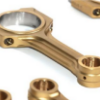
Some reuse disassembled fasteners to save costs, ignoring fatigue overload risks. After initial installation, tightening, and removal, fasteners develop internal fatigue stress, thread wear, and deformation—significantly reducing load capacity. High-strength bolts, once tensioned beyond yield, have drastically shortened fatigue life even without visible damage. Reusing them under normal loads can cause fatigue fracture. Connecting rods in engines and anchor bolts in equipment are subject to high-frequency vibration and alternating loads—never reuse them.
Solution: Follow "single-use" principle for high-load, high-vibration fasteners—replace after removal. For less critical applications, inspect before reuse; discard any with thread wear, deformation, or corrosion.
4. Assembly Overload from Foreign Material
Iron filings, dust, oil, or debris in bolt holes or on threads—if not cleaned before assembly—prevent proper installation and cause overload fracture. Debris in bolt holes creates extra resistance during tightening, indirectly causing torque overload. Oil on threads reduces friction, causing "false tightening"—insufficient preload leads to loosening, alternating loads, and fatigue fracture. Hard particles can scratch threads, inducing stress concentration.
Solution: Always clean bolt holes and thread surfaces before assembly. For high-precision applications, use compressed air or wiping. Lubricate if necessary (while following proper methods to avoid affecting preload) to ensure smooth assembly and uniform stress distribution.
Additional Considerations
Other factors can also cause overload fractures: mixing wrong washers, selecting incorrect bolt specifications, or improper installation sequence. Often, fractures blamed on quality are actually due to improper human installation. Correct installation procedures are even more important than selecting high-quality fasteners.
For businesses: strengthen installer training, standardize assembly processes, and specify torque and alignment requirements.
For individual users: avoid operating by experience alone—pay attention to installation details to effectively reduce fractures.
Final Note
If all above overload causes are ruled out and fractures persist, then investigate product quality (substandard materials, processing defects). Contact suppliers for testing to protect your rights. We hope this article helps correctly identify causes of fastener fractures, avoid installation errors, and support the standardized development of the fastener industry.



 粤ICP备2025493240号-1